Tourist Visa on Arrival in India for 43 countries including Australia

Tourist Visa On Arrival


LATEST UPDATE:

—————————————————————

https://yadusingh.wordpress.com/2016/04/05/indian-e-tourist-visa-now-for-150-countries/

https://yadusingh.wordpress.com/2015/09/30/e-tourist-visa-etv-for-india/ Dated 30th September, 2015

———————————————————————

Government of India has started Tourist Visa on Arrival (TVoA) enabled by Electronic Travel Authorisation (ETA), which is a great news. It should remove the hassle which many experienced while obtaining Visa for India. This facility should increase the tourists numbers to India. It was announced by India’s Home Minister, Sri Rajnath Singh and Minister of State, Tourism, Dr Mahesh Sharma yesterday.

TVoA ENABLED BY ETA-EXPLAINED

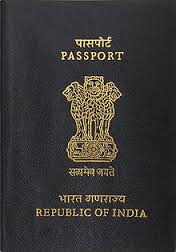
The purpose of Tourist Visa on Arrival (TVOA) enabled by Electronic Travel Authorisation (ETA) is to facilitate foreign travellers visiting India. This facility   has been extended to Nationals of  following countries: Australia, Brazil, Cambodia, Cook Islands, Djibouti, Federated States of Micronesia, Fiji, Finland, Germany, Indonesia, Israel, Japan, Jordan, Kenya, Kingdom of Tongo, Laos, Luxembourg, Mauritius, Mexico, Myanmar, New Zealand, Niue, Norway, Oman, Palestine, Papua and New Guinea, Philippines, Republic of Kiribati, Republic of Korea (i.e. South Korea), Republic of Marshall Islands, Republic of Nauru, Republic of Palau, Russia, Samoa, Singapore, Solomon Islands, Thailand, Tuvalu, UAE, Ukraine, USA, Vietnam, Vanuatu. List of more countries eligible for TVoA may be notified by Government from time to time.

PURPOSE AND VALIDITY OF TVoA ENABLED BY ETA

  • Foreigners whose sole objective of visiting India is recreation, sight- seeing, short duration medical treatment, casual business visit, casual visit to meet friends or relatives etc. Not valid for any other purpose/activities.
  • Entry into India within 30 days from the date of approval of ETA.
  • Valid for 30 days stay in India from the date of arrival in India.
  • Allowed to enter and depart from any of the 9 Airports, viz Bengaluru, Chennai, Kochi, Delhi, Goa, Hyderabad, Kolkata, Mumbai & Thiruvananthapuram.
  • Cannot be availed more than twice in a calendar year. 

WHO ALL ARE ELIGIBLE:-

  • Foreigner of above countries who holds an Ordinary passport with minimum six months validity.
  • Foreigners travelling on Passport other than ordinary passport such as Diplomatic, Official, Special and Service passports are not eligible for TVOA service.
  • Should not have a residence or occupation in India.
  • Travellers should have return ticket or onward journey ticket with sufficient money to spend during his/her stay.
  • International Travellers having Pakistani Passport or Pakistani origin may please apply for regular visa at Indian Mission

INSTRUCTIONS FOR TOURIST VISA ON ARRIVAL (ENABLED BY ETA): 

  • Applicants may apply online at https://indianvisaonline.gov.in/visa/tvoa.html
  • TVOA links may also be found in website of Ministry of Tourism, Ministry of Home Affairs, Ministry of External Affairs, Bureau of Immigration, Incredible India, etc.
  • The online application should be submitted minimum 4 days in advance and maximum 30 days of proposed date of travel.
  • Recent Front facing photograph with white background and photo page of Passport to be uploaded while applying.
  • The application is liable to be rejected if the uploaded document and photograph are not clear and not as per specification.
  • A fee of US $60/- (+ bank transaction charges) per passenger to be paid online for the grant of ETA for Tourist Visa-on-Arrival.
  • Fee once paid is not refundable under any circumstance.
  • Online application will be processed only after fee is paid online.
  • Decision on TVoA Application will be conveyed by e-mail. Therefore, applicants are advised to ensure that correct e-mail address is provided.
  • Applicant can also track the status of their application online on the TVoA website by selecting the link “VISA STATUS”, and entering their Application ID No and Passport No.
  • Applicant should carry a copy of ETA along with him/her at the time of travel.
  • Tourist Visa on Arrival once issued is non-extendable, non-convertible & not valid for visiting Protected/Restricted and Cantonment Areas.
  • Biometric details of the applicant will be mandatorily captured at the TVOA Counter at the Airport on arrival in India.
  • This facility is in addition to the existing Visa Services. 

DOCUMENTS REQUIRED TO BE SUBMITTED ONLINE ALONG WITH APPLICATION

  • Scanned Page of Passport containing photo and personal details.
  • Format –PDF; Size : Minimum 10 KB ,Maximum 300 KB 
  • The digital photograph to be uploaded

Format – JPEG; Size :    Minimum 10 KB,  Maximum 1 MB

  • The height and width of the Photo must be equal.
  • The minimum dimensions are 350 pixels (width) x 350 pixels (height).
  • The maximum dimensions are 1000 pixels (width) x 1000 pixels (height).
  • Photo should present Full face, front view, eyes open.
  • Center head within frame and present full head from top of hair to bottom of chin.
  • Background should be plain light colored or white background.
  • No shadows on the face or on the background.
  • Without borders. 

     Verification by Airlines while issuing boarding pass to ETA holder

  • Traveller holding ETA arrives at Airline Counter.
  • Carrier/Airline checks the genuineness /validity of ETA in the TVoA website (specific instructions will be issued separately to Carriers/ Airlines)
  • Once ETA is verified, the carrier/Airline will issue Boarding Pass to the ETA holder.

TVOA Help Desk- contact details:

24X7 assistance is available at phone: +91-11-24300666, or email: indiatvoa@gov.in

For Tourist Information on India you, may contact India Tourism in Sydney at +61292219555 Email:info@indiatourism.com.au   Web: incredibleindia.org

(Info from India Tourism, Sydney)

————————————————————————————————————————————

Dr Yadu Singh/Sydney/28th Nov, 2014

http://www.twitter.com/dryadusingh

http://www.facebook.com/dryadusingh

My speech at the UWS event for Indian community on 24th Nov, 2014

Dr Yadu SinghThis is the speech I delivered, as a guest speaker, at the University of Western Sydney (UWS) event for Indian community at Parravilla, Parramatta on Monday, 24th November, 2014. —————————————————————————————————–


Thank you for the kind words.

Prof Peter Shergold, Chancellor of University of Western Sydney, dignitaries, ladies and gentlemen, 

Namaste and good evening, 

I am grateful and feel privileged to have this opportunity to speak to you tonight. 


SO WHERE ARE WE – AS A COMMUNITY- TODAY, AND WHERE DO WE NEED TO BE TOMORROW? 

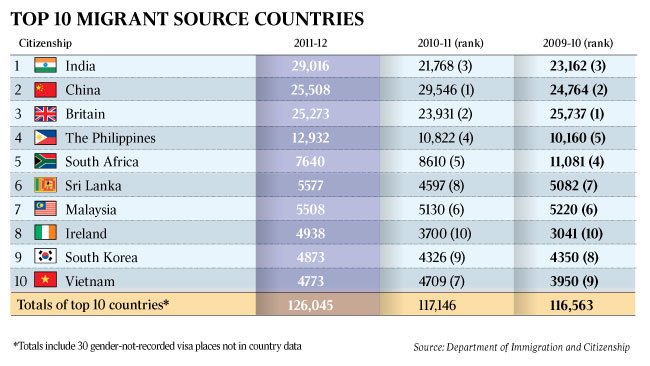
There are about 500,000 people of Indian heritage in Australia and more than 100,000 of them live in New South Wales.  Most of the migrants from India have arrived in the last 10 years and India has been the top source of migrants to Australia over the last few years.  Most people have come to this country as skilled migrants. Obviously, skilled migrants contribute to the Australian economy significantly.  Our people not only take part in the service industry and public services, many of them are also into businesses, particularly small businesses, thus creating jobs.  Indian migrants give significant importance for education of their children.  It is not uncommon that they work hard, sometimes long hours and even two jobs, to make enough money so that they are able to send their children to private schools. Indian migrants are generally law-abiding people and their focus is significantly on the families and family values.  Even after they become Australian Citizens, they continue to remain in touch with their extended families back home in India.  This is something which has a great advantage to India. The inward remittance of 70 billion US dollars to India by overseas Indians in the years 2013-14 shows how valuable this is for India. To put this in perspective, the bilateral trade between Australia and India is only $15 billion Australian dollars and the bilateral trade between India and China is $60 billion US dollars, 2/3rd of which in each case is in favour of the other party. With the new Government led by Prime Minister Narendra Modi taking office in May 2014, it is likely that investment policies will be streamlined.  This is expected to accelerate investment in India not only from businesses from all over the world but also from Indians who are living overseas.  Overseas Indians have great attachment with India. This would be strengthened, particularly for second and subsequent generations, and may even increase investment from them, if India were to see merits in granting dual citizenship to overseas Indians, just like the USA, UK, Canada, Australia and most developed and democratic nations grant this to their citizens.

Focusing on New South Wales, most Indian Australians are in Sydney, especially Western Sydney. There are constituencies where Indians constitute more than 15% of voters, thus able to influence outcomes of elections. To give an example, my surname “Singh” is the most common surname in Blacktown. Indian Australians have significant presence in trades like medicine, law, banking, accounting, IT, food and catering, migration services and small to medium consumer businesses.  They are creating jobs for quite a number of people as you would expect from the small business sector in any part of the economy.  Many of us have good names in the professional arena. Some of us have started to make a mark in charity related work. Admirably, there are some who have become involved in helping the homeless with food and clothing.  This is all laudable, but I know we can do more.

Some of us are fortunate enough to have our elderly parents moving to Australia.  But with a passage of time, many of them feel lonely because there are not many people with whom they can socialize with when their family is away due to the usual commitments like work or education.  Many of them have an element of isolation and depression.  We do have many groups catering to them, but this definitely needs some more thinking, more work and co-ordination. We also need to think about culturally appropriate nursing homes and other care facilities, where our elderly people can be placed or cared for, when it becomes necessary. In the twilight years of their life it would be important that our elders are provided with solutions around language barriers and dietary requirements which they have been accustomed to.

Like any other migrant group, which comes to these shores with good education, our people do get jobs without much difficulty. There are definitely some who struggle to find jobs which are commensurate with their training and experience. Lack of local experience is often quoted when they are declined employment.  This is one area where incentives to employers as a government policy could be worth lobbying for. Even though there are Government services which try and aid employment, there is a need for some thought from the community to guide our newer migrants helping them to settle into life and employment. Mentoring of newer migrants, when necessary, will be very helpful.

There are hundreds of political parties in India which have their support base mostly in a particular geographical part of India. This is reflected here too. While there are a few pan-Indian based community associations, a lot more associations in our community are based on language or region of India.  It is not necessarily a bad thing because the basic purpose of community organisations is comradery and friendship among people who relate to that particular set of criteria. Indians love to have community associations, replicating the experience in India. There is often a fierce competition among associations which, at times, is irrational and illogical.  They end up duplicating or even triplicating the same activity to satisfy their ego and “Me too” syndrome. There is a need for some consolidation and understanding among community associations particularly on matters of common community goals.  These goals could be mentoring of new migrants for employment and settlement, health education on important health matters and lobbying the political leadership in favour of community interests. It would be productive for community associations to become more accepting of their counterparts and working with one another towards common goals. A dialogue must start and some key Indian media must take the initiative for this job. It is imperative that we put our egos behind and recognise the good qualities of our people.  Mirroring what happens in India, many community leaders continue to hold their positions for 10, 20 or even 25 years which stifles the growth of new ideas and perpetuate ego-based unnecessary competition. We need young Indians to be active and we should encourage them to take leadership roles within the associations. Taking a cue from Australian politics, we need to start preparing the next set of leaders in our community. What is the point of holding a position with nothing to show as a result apart from some pictures on Facebook? Triviality such as taking pictures with leaders cannot be the sole focus of our community leaders.

It is vital to have leaders who understand their responsibilities towards the community and are effective communicators. A lot more could be done if the direction we as a community take is relevant and productive. Being an optimist, I envision a community where we would engage in meaningful dialogue among ourselves so that we are able to share problems and develop solutions. Only then will we be able to serve for the benefit of our community. For example, an Indian cultural center that is actually accessible. Or addressing the concerning fact that fewer women of  Indian heritage use mammogram screening compared to the screening rates in the general Australian population.

In regards to our political participation, I know Subcontinent Friends of Labor is an active group of Labor party members and supporters. Similarly, Liberal Friends of India has been quite energetic in creating a network of Liberal party supporters. But more can be done. I believe that more and more of us should join the political process at various levels if we are ever going to gain greater political representation in Parliament.

Except for Senator Lisa Singh, a representative of Tasmania in the Federal Senate there is no other person from an Indian heritage who is a member of a State or Federal Parliament. There are, however, several councilors and a few Deputy Mayors too, but, to the best of my knowledge, there is no person from the Indian-Australian community who is a Mayor in this country.  When we compare this with other ethnic backgrounds particularly Lebanese and Chinese, the contrast is quite stark.  It is a common point of discussion among us in moments of reflection.  It is clear that division in our community, based on ego and some other factors has created a situation preventing us from having a significant political presence, which is commensurate with our numbers.

So what is the solution? Do we vote for every Indian who contests in an election? I have no doubt that a mature community will base its decision on the ability and capacity of candidates instead of their race or religion. We want the best MPs to represent us in Parliament and factors like race and religion should not be given undue importance. We should encourage Indians to join political parties and participate in the processes including pre-selections.  I don’t believe it is a good idea to form a political party based on ethnicity, or an association based on caste.

Australia-based Government of India officials’ interactions with the community are, at times, less than satisfactory either because of their services, which may not meet our expectations or because they have meddled in community politics. This is counterproductive and needs to change. GOI officials need to understand, and accept, that they are public servants and are here to be of assistance to NRIs/PIOs, in addition to fulfilling their responsibilities, given to them by GOI. It is of mutual interest and benefit to have a constructive and supportive relationship between GOI agencies and the diaspora.

Our media is active, vibrant and crowded, which is not too dissimilar to community associations. They do, and can play, a very vital role by using their reach and clout for bridging divisions in the community, supporting good leadership and good work, and advocating for key community goals. They must stay away from partisan agenda, which, sadly, is the case with a few of them.

So, ladies and gentlemen, Indian Australians are indeed a great community which is highly qualified and politically aware.  Despite the size of our community we have not achieved satisfactory success in political representation, largely because of our own deficiencies.  This will, and can change if we refocus our energies and vision. We can do this refocusing if we start recognizing the good qualities and work of our people giving them that extra bit of support. We need to start networking and coordinating with the plethora of community groups for our common goals. We need to control our envy, “Tall Poppy Syndrome” or “Crab” mentality, if we ever want to take our community to its deserved heights. I believe that it is doable as we are smart and pragmatic people.  Nothing is impossible and there is nothing which we cannot achieve if we put our hearts together as a community. We must be united for and by our common goals for the community.

Thank you very much for your attention.

Namaste!

———————————————————————————————————————————— Dr Yadu Singh, Sydney, 25th Nov, 2014 http://www.twitter.com/dryadusingh http://www.facebook.com/dryadusingh

Expectations from Prime Minister Modi

Dr Yadu SinghSydney, 14th November, 2014

Expectations from the Modi Govt

Prime Minister of India, Narendra Modi, is visiting Australia between 15th and 18th Nov, 2014. After attending G20 summit in Brisbane on 15th and 16th November, he will start his state visit. Indian community is excited with this visit. This is the first visit by an Indian Prime Minister after PM Rajiv Gandhi visited Australia in 1986. PM Modi will interact with the community in Sydney and Melbourne, in addition to addressing a Joint session of Australian Parliament.

Prime Minister Modi’s image is that of a decisive and a “can do” leader. Indians, not just in India but around the world, are optimistic that things will change for the better and the Indian economy will grow rapidly.

When I wrote a post in June, 2014, I mentioned many things which people expected. Many of those things have either been delivered or getting delivered. Prime Ministerial visit to Australia is one of them. Nuclear trade deal has already been signed when Prime Minister Tony Abbott visited India in September. Australian citizens getting the facility of Visa on arrival in India is another one which is in the process of getting implemented. Serious work is in progress in regards to Black money, stashed in overseas Banks. Supreme Court’s activism is playing an important role in it. Investigations and prosecutions are likely to commence soon. Based on my interactions with many Indians in Australia, there are a few more things that people expect the new government to deliver.

Genuine dual citizenship: This has been discussed and debated for long. There is an almost universal demand that overseas Indians be given a right to hold genuine dual citizenship with voting and property rights, if the country of their citizenship has no issue with this and if there are no security issues with granting dual citizenship to any particular overseas Indian. If USA, UK, Australia and most of developed and democratic countries as well as some countries in the region see no issues in granting dual citizenship to their citizens, then people argue that there is no rational basis for India to deny dual citizenship to Indians. PM Modi has the political capital to deliver this long-standing demand. A petition and campaign for Dual citizenship is running on Change.org (http://tinyurl.com/kxtlosw) and Social media presently (http://tinyurl.com/m4b4luu).

Effective anti-corruption body: A group of 10-15 people from civil society including eminent jurists and overseas Indians (if possible) as well as politicians should be asked to review the Lokpal Act, passed by the Lok Sabha earlier, and suggest steps to rectify weaknesses to make it an effective corruption fighting body. Such body should have sufficient resources to discharge its functions. Unlike previous Govts, this whole process to fine-tune this should not take more than one year from the time NDA Govt took office.

The PM’s global Overseas Indians Advisory body: The PM should revamp his Global Advisory Body, constituted by the previous Govt. People in it should be those who have significant presence, influence and interactions among Indians in their countries. The practice of Indian diplomats recommending their sycophants to become members of this body should be done away with.

Country specific Overseas Indian Advisory body: Countries with significant overseas Indian populations (Australia is certainly one such country) should have an advisory body of not more than 10 people, which can be used for consultations and other advisory purposes, not only by the local GOI authorities/agencies, but also the relevant authorities/agencies in India. Its term should be for not more than 2 years.

Annual consultation between High Commission and Community: Previous High Commissioner of India in Australia, and current External Affairs Secretary, Smt Sujatha Singh, started a novel, and productive, mechanism to meet the community representatives in Canberra on a yearly basis. Representatives from all over Australia would assemble on a weekend to discuss and suggest things to Indian diplomats. Current High Commissioner, Biren Nanda, did not continue this practice. The communication from High Commission and community has been limited and confined to a small group of people, who are close to HCI. Previous practice of community consultation needs to be reactivated.

Annual dialogue between Indian and Australian leaders: Indian Australians will like to see formal and regular annual meetings between PMs, Foreign Affairs Ministers and Defence Ministers, with venues alternating between India and Australia.

Free Trade Agreement (FTA): The pace of the discussions and negotiations should be accelerated so that FTA can be concluded by the end of 2015. This will accelerate bilateral trade which has come down to about $15 billion from previous high of $21 billion. This is important as Australia already has FTAs with Japan, South Korea and China.

Bilateral and multi-lateral defence exercises between India and Australia: India and Australia should work actively to enhance their defence & strategic relations bilaterally and multilaterally in the pattern agreed prior to the 2007 Rudd Govt in Australia.

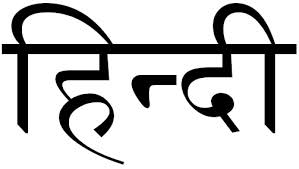
Hindi teachings in Australian Universities: To increase India’s soft power and increase the numbers of India-literate Australians, India should consider seriously funding such teaching courses in at least one University each in Sydney and Melbourne. Discussions should be had between relevant authorities to explore equal sharing of cost between Australia and India.

Facilitations of Australian Universities and TAFE to have campuses in India: Many Australian institutions are ranked quite highly in various world Universities ranking systems. Collaborations in this field should be actively facilitated and encouraged, following a pragmatic and win-win module. Indian regulations to facilitate this should be considered.

Recognition of TAFE diploma in India: Many Indian students come to Australia to train in TAFE institutes. Many then move on to Universities to complete degrees. In addition to the diplomas not being recognised to the extent that the students wanting to pursue this study in Australia do not even get the education loans, Association of Indian Universities (the peak body responsible for recognising foreign degrees) does not recognise even Bachelor degrees that may have resulted from a credit transfer after a diploma resulting in the degree component being lesser than 3 year duration. (Diploma to Degree). This is a unique feature of Australian Qualification framework and so should be understood by Educational authorities. Quite a good numbers of Indians in Australia have earned their degrees through this pathway. TAFE institutes are a unique institution and it will be beneficial for India to consider recognizing diplomas from TAFE.

Bilateral Internship positions for Australians and Indians: Institutes and Universities of repute in both countries should be encouraged to develop mechanisms to have short term (3-6 months) placements for students and researchers to enhance collaboration in science and research.

Indian media’s bureau/representatives in Australia: During 2009-10, Indian media reported issues involving Indian students in an exaggerated way, erroneously attributing racism in literally every incident. They did not interact with local long-term Indians. It was harder for media to have a grasp of the ground realities. It will be helpful if key media outlets consider basing their representatives in Australia to cover Oceania. With increasing trade related activities between Australia and India and with increased number of Indians here, there could be sufficient justification for such decisions. Indian Govt can encourage media houses to take up this matter. A good beginning could be of a posting a full time Press Trust of India (PTI) reporter in Australia.

Indian Consulate in Brisbane: Queensland is an important state for Indian investment. Indian business houses like the Adani group have an important and a significant presence in this state. It is important to have an Indian Consulate in Brisbane.

India House or Indian Cultural Centre in major capital cities: There are more than 500,000 people of Indian heritage in Australia, with a big concentration in Sydney and Melbourne. People believe that there should be Indian cultural centers in Australia, at least in Sydney and Melbourne. While some funding will be raised locally, a significant part of the funds should come from Indian Govt. Govt of India (GOI) Funds, if any, allocated for something of this nature to be established in the Indian Consulate premises in Sydney CBD should be reviewed and re-allocated for a center of this nature in areas like Parramatta or Blacktown, where the Indian community has a substantial presence. Sydney CBD is not a practical or appropriate site for an Indian Cultural Centre.

Overseas Indians’ property in India: Many overseas Indians are seeing that their properties are illegally occupied and face threats to their safety when they visit India. Court cases go on for extended periods of time. Indian Penal Code and relevant laws should be amended to tackle this menace.

Interactions between GOI agencies and Indian Australian community: It is often felt that GOI authorities in Australia do not interact with people sufficiently, thus leading to a communication gap. It is a common experience that there is a significant gap between what we expect and what is delivered. It is also felt that GOI officials often get embroiled in local community politics and play “favoritism” games depending on who they like or dislike. It is quite irrational and subjective. Steps should be implemented to improve the situation.

Minister for Overseas Indian Affairs visit to Australia: With approx. 500,000 people of Indian heritage in Australia, a biennial visit of Minister of Overseas Indian Affairs (The Hon Sushma Swaraj) or her deputy, The Hon Gen (Retd) V K Singh or External Affairs Secretary, should be included in the official GOI travel calendar. This will help facilitate interactions with the community and facilitate Overseas Indians’ investment in India.

Streamlined grievance redressal mechanism for Overseas Indians: Overseas Indian Affairs ministry has often not been very helpful and help has often not come in a timely fashion due to excessive bureaucratic influences. This should be reviewed and streamlined.

Exchanges between Academicians and civil Society leaders: We need regular bilateral exchange visits of academics, journalists, leaders and civil society leaders. This will help improve relations between the two countries. The scope and numbers should be increased.

In summary, it will be of mutual benefit to the community in Australia and India if the Indian government is proactive in considering the interests and welfare of the Indian community down under.


Dr Yadu Singh/Sydney/14th November, 2014

dryadusingh@gmail.com

http://www.twitter.com/dryadusingh

http://www.facebook.com/dryadusingh

au.linkedin.com/in/dryadusingh/


Press release on Dual Citizenship

Dr Yadu SinghSydney, Australia

14th November, 2014

Press Release

Indian community in Australia starts an online campaign to urge Indian Prime Minister, Sri Narendra Modi, to grant dual citizenship to overseas Indians.

Spokesperson for the campaign and President of Indian Australian Association of NSW Inc, Dr. Yadu Singh said “It’s time that Indian government grants NRIs dual citizenship”.

He further said “There are an estimated 25 million non-resident Indians (NRIs), people of Indian origin (PIOs) and overseas citizens of India (OCIs) spread across more than 200 countries. Cumulatively, they contributed about $70 billion in remittances to India in 2013-14”.

“The recent changes in the PIO and OCI cards announced by Prime Minister Narendra Modi are welcome, but they do not meet the long-term demand of dual citizenship by overseas Indians”.

“The overseas citizenship card (OCC) falls well short of genuine dual citizenship. Many of us overseas Indians have been demanding genuine dual citizenship, with full political and economic rights in India on par with the rights enjoyed by Indian citizens. Former attorney general Soli Sorabjee was right in stating in 2005: “If we want to involve the diaspora, then we can’t deny them the right to vote or the right to occupy important office.”

Overseas Indians, whether they hold Indian passports or have foreign passports, have an emotional bond with India. That holds true for a majority of people of Indian heritage. When major democratic and developed countries like USA, Canada, UK and Australia have no issue with dual citizenship, there can’t be a real justification for India to treat its own people unfavourably.

The promise of dual citizenship was made by former Prime Minister Atal Behari Vajpayee in 2003. Since then there have been statements from senior politicians about them favouring dual citizenship. But the matter has not progressed further. Statements are not enough. The following actions should be taken: 1. Granting Indian passports (dual citizenship) to overseas citizens of Indian heritage with full political and economic rights 2. Granting of convenient voting rights to such dual passport-holding overseas Indians as well as overseas Indians with Indian passports (NRIs), which can be exercised either at the consulate, high commission or embassy premises in their country of residence and through postal or online facilities.

India should consider taking a cue from Australia’s repeal of Section 17 of the Australian Citizenship Act 1948 that took effect from April 2002 permitting dual citizenship.

Dr Singh also said “It is important for second and subsequent generations of Indians, besides first generation, to stay emotionally and politically connected with India. Dual citizenship will make it more likely that this will happen”.

Prime Minister Modi has the political capital, strength in the Parliament and the goodwill for/from the overseas Indians, who supported him massively, to get the Parliament to grant dual citizenship to Overseas Indians.

The campaign has just started from Australia. It has created great excitement in Indian community. It is gaining momentum and it will get enthusiastic support from Indian diaspora all over the world, particularly United States of America, Canada, UK and Australia. It will continue to be run until India sees merits in granting dual citizenship.

Dr. Singh said “I will make an appeal to PM Modi personally if there is an opportunity to meet him”.

Appeal is run via Change.org (https://www.change.org/p/the-honorable-sri-narendra-modi-appeal-to-grant-dual-citizenship-to-overseas-indians and Social media (www.facebook.com/IndianDualCitizenship)

Further comment: Dr Yadu Singh, dryadusingh@gmail.com +61 413 375 669

Sign the petition for Dual Citizenship for Overseas Indians

Dual Citizenship

Please SIGN this petition below and FORWARD it to others in your network.

https://www.change.org/p/the-honorable-sri-narendra-modi-appeal-to-grant-dual-citizenship-to-overseas-indians

Please visit this Faceook page on Dual Citizenship for Overseas Indians and “Like” it. Please share it.

https://www.facebook.com/#!/IndianDualCitizenship

Indian Diaspora is requested to SIGN the petition and JOIN in the campaign.

Thank  you on behalf of Indian Dual Citizenship Campaign

Yadu Singh/Saturday/8th Nov, 2014/Sydney, Australia

indiandualcitizenship@gmail.com

http://www.Facebook.com/IndianDualCitizenship

————————————————————————————————————————————————

————————————————————————————————————————————————

http://www.twitter.com/dryadusingh

http://www.facebook.com/dryadusingh

Opinion piece on dual citizenship in The Economic Times

Dr Yadu SinghIt’s time Indian government granted NRIs dual citizenship

October 31, 2014, 4:16 am IST in ET Commentary | India | ET

There are an estimated 25 million non-resident Indians (NRIs), people of Indian origin (PIOs) and overseas citizens of India (OCIs) spread across more than 200 countries. Cumulatively, they contributed about $70 billion in remittances to India in 2013-14. The recent changes in the PIO and OCI cards announced by Prime Minister Narendra Modi are welcome.

But they do not meet the long-term demand of dual citizenship by overseas Indians. The overseas citizenship card (OCC) falls well short of genuine dual citizenship. Many of us overseas Indians have been demanding genuine dual citizenship, with full political and economic rights in India on par with the rights enjoyed by Indian citizens. Former attorney general Soli Sorabjee was right in stating in 2005: “If we want to involve the diaspora, then we can’t deny them the right to vote or the right to occupy important office.”

Overseas Indians, whether they hold Indian passports or have foreign passports, have an emotional bond with India. That holds true for a majority of people of Indian heritage. When major democratic and developed countries have no issue with dual citizenship, there can’t be a real justification for India to treat its own people unfavourably.

The promise of dual citizenship was made by former Prime Minister Atal Behari Vajpayee in 2003. Since then there have been statements from senior politicians about them favouring dual citizenship. But the matter has not progressed further. Statements are not enough. The following actions should be taken: 1. Granting Indian passports (dual citizenship) to overseas citizens of Indian heritage with full rights including voting and political rights. 2. Granting of convenient voting rights to such dual passport-holding overseas Indians as well as overseas Indians with Indian passports (NRIs), which can be exercised either at the consulate, high commission or embassy premises in their country of residence and through postal or online facilities.

India should consider taking a cue from Australia’s repeal of Section 17 of the Australian Citizenship Act 1948 that took effect from April 2002 permitting dual citizenship.

(The author is a resident of Sydney, Australia)

http://blogs.economictimes.indiatimes.com/et-commentary/its-time-indian-government-granted-nris-dual-citizenship/ http://epaperbeta.timesofindia.com/Article.aspx?eid=31816&articlexml=Give-Us-This-Day-Our-Dual-Citizenship-31102014015034# OPED_Oct31_CAP

————————————————————————————————————————————————————————————————————————————————————————————————————————————————————————

Dr Yadu Singh, Sydney, Australia/4th Nov, 2014

http://www.twitter.com/dryadusingh

http://www.facebook.com/dryadusingh

au.linkedin.com/in/dryadusingh/

Happy Diwali

Sydney, 23rd October, 2014

Happy Diwali 

May this Diwali bring you and your family all the joy, success, health and wealth!

May there be Peace in the whole world!

————————————————————————————————————————————————————————————————–

On This Diwali Lets pray to Almighty God for :

ॐ असतो मा सद्गमय ।
तमसो मा ज्योतिर्गमय ।
मृत्योर्मा अमृतं गमय ।
ॐ शान्तिः शान्तिः शान्तिः ॥
Om Asato Maa Sad-Gamaya |
Tamaso Maa Jyotir-Gamaya |
Mrtyor-Maa Amrtam Gamaya |
Om Shaantih Shaantih Shaantih ||

Meaning:
1: Om, Lead us from Unreality (of Transitory Existence) to the Reality (of Self),
2: Lead us from the Darkness (of Ignorance) to the Light (of Spiritual Knowledge),
3: Lead us from the Fear of Death to the Knowledge of Immortality.
4: Om Peace, Peace, Peace.

 Brihadaranyaka, Upanishad 1.3.28

————————————————————————————————————————————————————————————————–

Happy Diwali! Happy new year!!

From Dr Yadu Singh & family

————————————————————————————————————————————————————————————————–

www.twitter.com/dryadusingh

http://www.facebook.com/dryadusingh

au.linkedin.com/in/dryadusingh/

Low Breast Cancer screening rates among Indian and Sri Lankan women in NSW need to change

Free Community seminar for info on Breast Cancer screening

Free Community seminar for info on Breast Cancer screening

ADDRESSING LOW BREAST SCREENING RATES IN SRI LANKAN AND INDIAN WOMEN IN NSW

Did you know that breast cancer is a leading cause of death in women in India and Sri Lanka?

In Australia, the Department of Health and Aging seeks to persuade women aged 50 to 69 years to have a Mammography every two years.   This strategy is adopted because the risk of developing breast cancer  increases with age. Research shows that “75 per cent of all breast cancers occur in women over the age of 50 years.”  According to Cancer Australia, in 2009 the average age of breast cancer diagnosis in Australia was 60.7 years  and, in 2010, 52.5% of new breast cancer cases diagnosed were in women aged 50–69 years. This age-related risk is also reflected in many other studies.

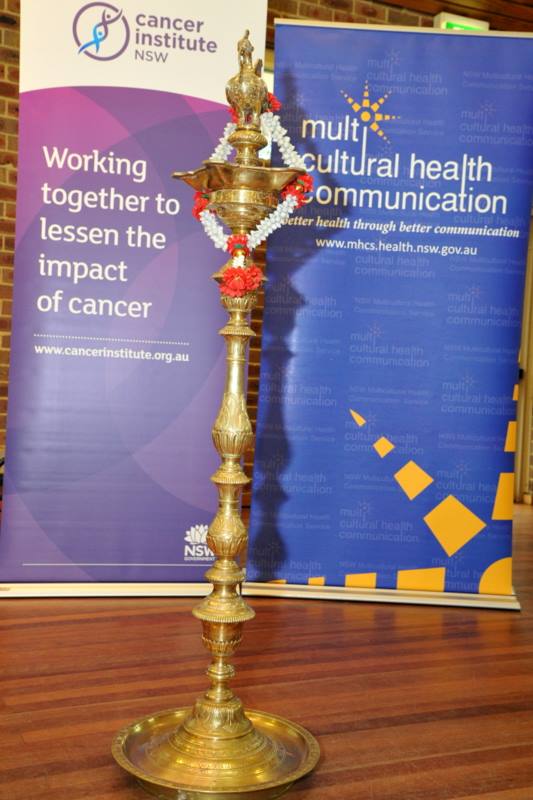
Breast Cancer community meeting BannersLast month, I attended an Indian and Sri Lankan community leaders forum organised by the NSW Multicultural Health Communication Service (http://www.mhcs.health.nsw.gov.au), which partnered with the NSW Refugee Health Service (http://www.swslhd.nsw.gov.au/refugee) and the Cancer Institute NSW (http://www.cancerinstitute.org.au).

At this forum I found some disturbing news:

  1. In NSW, approximately one in five women of Tamil or Hindi speaking background participate in breast screening. This compares with screening participation of about one in two women in the general population.
  2. The vast majority of women who speak Hindi or Tamil in NSW do not regularly attend BreastScreen.
  3. In NSW, Tamil speaking women are about 4 times less likely to participate in breast screening compared with women in the general population.
  4. In NSW, Hindi speaking women are about one third less likely to participate in breast screening compared with women in the general population.
  5. Hindi and Tamil speaking women are the two culturally and linguistically diverse groups least likely to participate in breast screening in NSW.
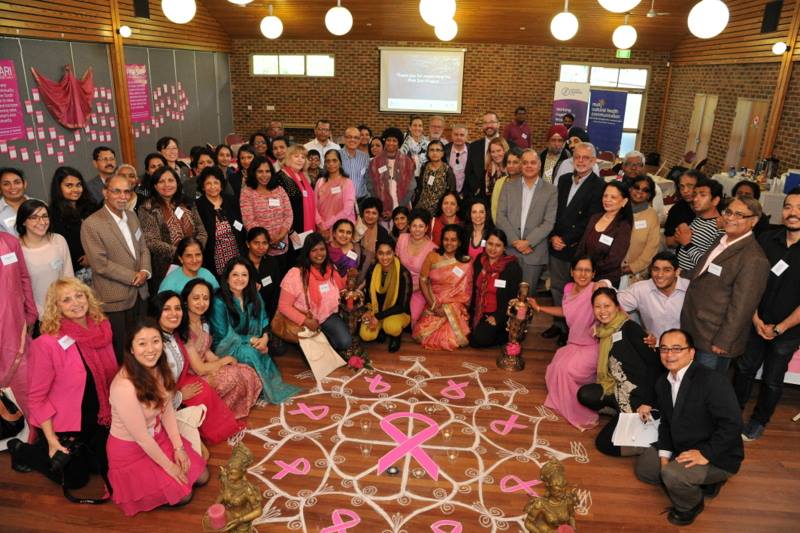
Breast Cancer Screening Community Forum

Community leaders, members and organisers at Thornleigh Community Centre

Pink Sari ProjectThe “Pink Sari” Project is a community based initiative that is helping to address that – to bring various organisations together to increase breast screening rates in women from Indian and Sri Lankan communities in NSW. The Pink Sari Project was launched at the forum. Over 80 people attended the forum to learn how they can all pledge their support to help save the lives of mothers, grandmothers, daughters and sisters in the Indian and Sri Lankan communities.
One of their strongest advocates is Indian-born, Parramatta-based doctor, Dr. Palu Malaowalla who is also a breast cancer survivor. She says, “As a doctor, I do breast checks for everyone yet I didn’t find my own cancer. Even the surgeons couldn’t find it. It was only on mammogram that it was detected. That saved my life.”

You can view Palu’s interview here: https://www.youtube.com/watch?v=vc8f0PEsXmE

Meredith Kay, Director of the BreastScreen NSW, Northern Sydney Local Health District said “nine out of ten breast cancers occur in women with no family history, so being ‘breast aware’ and spending 30 minutes every two years will bring peace of mind”.  “Women need to be aware that early detection significantly increases the chance of survival from breast cancer to as much as 97%, and for women aged 50-74, a mammogram every two years can detect a breast cancer the size of a grain of rice, long before it can be felt or seen”.

Studies have identified a number of factors as influencing and/or mitigating attitudes among South Asian immigrant women including those from India and Sri Lankan in relation to breast screening. These include:

• Lack of knowledge about breast cancer and health matters;

• Fear and superstitions;

• Family honour;

• Lack of time;

• Modesty and

•Misunderstanding and lack of English language proficiency in some cases.

COMMUNITY INFORMATION SESSION
Why do we have low rates? What can be done? What is the current understanding of breast cancer?
What are the myths and more importantly FACTS about BreastScreening /Mammograms?

Sunday, 1.30PM to 3.30PM, 16 November 2014 at Ermington Community Centre, Ermington, NSW 2115.

Indian and Sri Lankan community members, associations and media are encouraged to attend. Community members, especially women from Pakistani, Bangladeshi and Nepali background are very welcome to attend.

Dr Yadu Singh/Sydney/21st October, 2014

dryadusingh@gmail.com

http://www.twitter.com/dryadusingh

http://www.facebook.com/dryadusingh

(With inputs and contribution from Pink Sari Project team)

Heartless and outrageous: a national inquiry needed to fine-tune surrogacy

Sydney, 9th October, 2014

Reading the newspapers this morning, I feel concerned and perturbed with some issues around surrogacy.

http://www.smh.com.au/national/australian-couple-abandons-surrogate-baby-in-india-20141008-113cmk.html

http://www.sbs.com.au/news/article/2014/10/08/calls-national-inquiry-after-another-australian-couple-abandon-surrogate-baby

http://www.theaustralian.com.au/national-affairs/foreign-affairs/former-foreign-ministers-dont-recall-abandoned-india-surrogate-baby/story-fn59nm2j-1227084574732

Only recently, we were told that  baby Gammy was abandoned by an Australian couple in Thailand, because he has Down’s syndrome. His twin sister, who was healthy, was brought to Australia. http://www.abc.net.au/7.30/content/2014/s4089822.htm

In the currently reported case, which has been investigated by ABC, and reported extensively, an agency arranged a surrogate mother in India, who gave birth to twins in 2012. Australian family took only one child, based on the gender, but did not bring the other child to Australia.

They did this, despite efforts from Australian High Commission in India, which tried to persuade the couple to bring both children to Australia. They even delayed issuing visa to encourage the couple to change their minds. It has been reported that an Australian politician pressured Australian High Commission to help this couple. Former Australian Foreign Affairs ministers, Bob Carr and Kevin Rudd, have denied that they were involved in pressuring Australian Consular officials.

Who is this politician then? I think Australians deserve to know his/her name.

http://www.surrogacyaustralia.org/about-us/general-info-on-overseas-surrogacy link provides how surrogacy operates, and is conducted.

I have no doubt that surrogacy plays a very important role in helping childless parents.

Family Court Chief Justice, Diana Bryant, has been quoted that the abandoned child was passed on to another family and money possibly changed hands to facilitate this. She thought this amounted to “child trafficking”.

Federal Circuit Court Chief Judge, John Pascoe, has asked for a national inquiry into surrogacy.

I am unable to understand how parents abandon children born out of surrogacy arrangements. These children are their own.

I am also concerned about gender or the health of the child being used as a factor in this decision. The question is who is responsible for the abandoned child. The answer to this is that it can not be the surrogate mother unless she makes an informed decision to agree to it by keeping the baby with her. Commissioning parents must be the ones who should be responsible for looking after the kid (s) born out of surrogacy arrangements.

It is not only a moral issue, but it clearly is a legal issue too.

A national inquiry is indeed needed to fine-tune and streamline surrogacy in Australia.

Dr Yadu Singh

http://www.twitter.com/dryadusingh

http://www.facebook.com/dryadusingh

Parramasala: politics and beyond

Sydney, 8th October, 2014

Parramasala is a key festival, organised by the NSW Government. Held in Parramatta, the heart of Western Sydney, it is in its fifth year. Starting out as an Australian festival of South Asian arts and culture, it is now very multicultural. Performances include those from the cultures of South America, the Pacific Islands, the Middle East and Europe, besides the Indian subcontinent.

According to the Parramasala organisers, 44 per cent of the performances are from the Indian subcontinent backgrounds, and 36 per cent of these are from India, while the other 56 per cent are from a wide and diverse range of backgrounds. There are more than 20 nationalities and cultures represented at Parramasala 2014. Importantly, 96 per cent of the Parramasala performances are free events, which is impressive and commendable.

While Parramatta precincts, especially Prince Alfred Park and Riverside Theatre, will continue to be the centre of the festival, Harris Park, the Little India of Sydney, will be included for the first time. Harris Park Bollywood Block “Curry On” party on Saturday, 18 October, will have a parade, cultural performances from a stage in the roundabout of Wigram and Marion Streets, and food carts, serving delicacies by popular restaurants of Harris Park. This should definitely be an added attraction for those attending Parramasala.

The Parramasala board is ably chaired by Dr Harry Harinath and steered by Di Henry, an internationally renowned producer and director of events, exhibitions, operations, media campaigns and marketing. It is in able and competent hands, and can’t go wrong.

Looking at the program list, one cannot but admire the variety and quality. Whether you like street parades, Bollywood performances, Indian cultural dances, comedy, Flamenco dances, Belly dances, Kurdish music, African performances or Pacific Island dances, Parramasala has it all. Really, what more can one ask for from a festival?
Shiamak Davar group will be performing, and a Qawwali event is included too. Popular drama “Kanjoos” (Miser), directed by talented Saba Zaidi Abdi is part of it too.

The South Asian Film component will showcase talent from South Asian film professionals.

It is clear that Parramasala 2014 is bigger and definitely better than before.

Organized by Destination NSW, and Partnered by Parramatta Council, Parramasala is destined to achieve its due place in the cultural calendar of NSW.

That Parramasala is an important event for the Indian sub-continent community was evidenced by some social media commentary about who was invited and who was not invited for the launch of Parramasala at Harris Park on 27 August, 2014.
Its importance was further established when two Indian community newspapers had a debate over the festival. I don’t intend to comment about any controversy, nor do I want to take sides in a slanging match.

I will, however, say this: Parramasala is essentially a Govt of NSW event, supported by the Parramatta Council. They do have the right to select the board and the program director. They are the ones who have the rightful authority to organise it the way they want to do it. Parramasala is neither a pure nor an exclusively Indian sub-continental event. It is much beyond that, and it must stay that way.

While it is always important to be inclusive and consult as many stake-holders and interested parties as possible, it is never going to be possible to consult everyone who might consider themselves stake-holders. In any case the Parramasala board is accessible to all who wish to be heard; we can write to them or call them with our suggestions and feedback.

Similarly, it is never going to be possible to invite everyone for any event. Parramasala is no exception. Parramasala cannot invite every single South Asian business in Sydney (there are reportedly thousands of South Asian businesses); nor is it practical for all the community groups and associations to be invited for key events. We need to be pragmatic and realistic.

We need to see the bigger picture.

If I have to say anything more on it, I will say that Parramasala Board should make a list of people it should consult and a list of people it should invite for key events. This list should be based on some objective parameters, not the “liking” or “disliking” of some of the people who are associated with Parramasala. Networking ability and reach in the community should probably be part of such parameters. I could not quite understand why talented film professional Ana Tiwary was not invited. After all, Ana works with ABC, and in fact her acclaimed documentary on Indian students was screened in Parramasala last year. There is definitely scope for fine-tuning the networking and invitation lists for any Govt-assisted or organised event, using objective criterion.

Parramasala was initially launched by NSW Premier, Kristina Keneally, in 2010, soon after the Indian student issue had made headlines in India and Australia, and just a few months before the NSW state election in March 2011. It attracted a lot of attention, especially from the Indian sub-continental communities. The media too covered it prominently. There was, however, some uncertainty about its continuation last year, until the NSW Govt finally decided to continue funding it. In fact, the launch of Parramasala last year was quite disorganised, and even the Parramatta Mayor, John Chedid, was not in the loop, solely due to politics of people who pulled strings in the previous NSW Govt. John Chedid has been a strong supporter of Parramasala in general, and a strong protagonist in taking part of Parramasala to Harris Park. I might add here that most of the members from the Parramatta Mayor’s advisory committee (myself included) on Parramasala were not even aware of the launch last year. “Favoritism” was the only criterion for last year’s launch invitations. It was childish, and not a smart move by any means.

Parramasala, which started out as a festival of South Asian arts and culture as its focus, has now become a truly multicultural event. Even though it is not a necessarily bad move, I believe South Asia must continue to be its focus. I suggest that efforts must be made to have at least 60 per cent of the performances from South Asian background.

Parramasala has all the ingredients of a truly popular festival in a successful multicultural state like NSW, if we all work together. Taking the cue from what Prime Minister Tony Abbott said recently, we all need to be part of “Team NSW for Parramasala” led by the Premier and Chair of Board of Parramasala. “Team NSW for Parramasala” obviously will include NSW Govt led by Premier Mike Baird, Destination NSW, Community Relations Commission, Indian sub-continent communities and sub-continental media.

May I also suggest to members of the Indian sub-continent community and the media to not worry about what Parramasala is giving them personally, but ask what they are giving to Parramasala to make it the most successful event this year and beyond?

If I were running Parramasala, or had the ears of Parramasala Board, and they were listening to me, I will do everything to ask as many people of the Indian sub-continent community and the media, and supporters of multiculturalism in NSW, to join the campaign to not only promote it through their social media platforms like Facebook and Twitter, but also to make sure they attend the event from 17-19 October, 2014.

The Parramasala logo will be in my profile picture on Facebook and Twitter, starting 10 October. I urge everyone in my network, and in my friends’ network, to do something similar to get the word out.

Parramasala is a festival for me, my family and friends, and I, like them, will be attending, and promoting, it with enthusiasm.

Published in Indian Sun news magazine http://www.theindiansun.com.au/parramasala-2014-politics-and-beyond/

———————————————————————————————————————————————————————–
Dr Yadu Singh is a Sydney based cardiologist and the President of Indian Australian Association of NSW. He is an active member of the community. He is also active in social media and writes regularly in his Blog http://www.yadusingh.wordpress.com More details of Parramasala: http://www.parramasala.com

———————————————————————————————————————————————————————–

Sort out the impasse created by Indian Civil Liability for Nuclear Damage Act to accelerate nuclear energy production

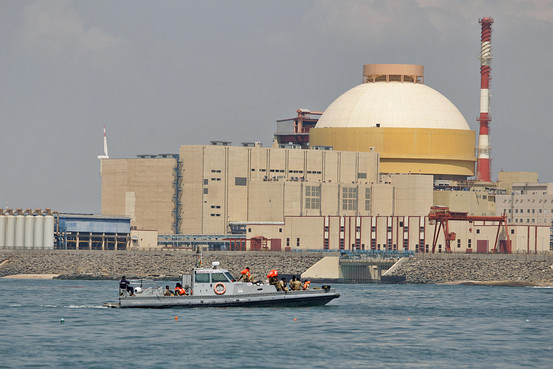
Kudankulam Atomic power plant Associated Press Pic

Kudankulam Atomic power plant Associated Press Pic

Sydney, 3rd October, 2014

India wanted and projected the goals to have 20,000 MWe from nuclear energy by 2020 and 60,000 MWe by 2030. With the impasse created due to Civil Liability For Nuclear Damage Act 2010, the target for 2020 has been scaled down to about 11080 MWe. Indigenously produced Pressurised Heavy Water Reactors (PHWRs) can not produce electricity in sufficient amounts when compared to what can be done with imported Light Water Reactors (LWRs). No wonder that India is producing only 5780 MWe from Nuclear energy currently.

With Indo-US Nuclear Cooperation Agreement in 2008, and waiver from the Nuclear Suppliers’ Group (NSG), India was able to get rid of two decades-old embargo on nuclear trade, which was imposed on it after 1998 nuclear tests. India was expected to sign and ratify Convention on Supplementary Compensation (CSC) and enact a Civil nuclear liability Act, which was commensurate with CSC, to facilitate importation of Nuclear plants/reactors and components. India signed CSC in 2010, just a few months before the Nuclear Liability Act was passed, but has not ratified it as yet.

Nuclear Civil Liability Act (Civil Liability For Nuclear Damage Act) was passed in Indian Parliament in 2010.  The Act has now become a major stumbling block for the suppliers of Nuclear energy plants and components, irrespective of where they are from. As a result, no supplier-domestic or international- is willing to supply such plants to India.

India has deals with many countries for the importation of Uranium, but no deal with suppliers of Plants or components to use that Uranium.

Its result is that Nuclear energy production has not had the projected growth. This is affecting Indian economic growth.

This needs to change.

All the Conventions-Vienna, Brussels and Paris, and CSC have one common stipulation, and that is about absolute exclusion of any liability of suppliers for any nuclear accident. Liability lies exclusively with the Operator of Nuclear Plants, and the Operator does not have a recourse to sue the Supplier. Indian Nuclear Liability Act  has given this recourse to the Operators to sue the Suppliers for the liability if there was any latent or patent defect in the Plant and/or substandard service. On the surface, this does not look unusual but this provision clearly violates CSC provisions.

If India ratifies CSC, which it had promised many years ago, right to recourse provision will become null and void. USA does not accept validity of any provision of any Liability law if it violates CSC provisions. If India gives this exemption to USA suppliers like Westinghouse Electric or GE Electric, then it will have to do the same to French and Russian suppliers.

Section 17 b and Section 46 of Civil Liability For Nuclear Damage Act 2010, which give right to recourse for the Operators to sue the Suppliers and also the right to victims to  use provision of Indian Tort law, are in breach of CSC provisions. Not only the operators can use right to recourse and sue Suppliers for the loss, victims can also sue suppliers under provisions of section 46.

Indian Liability to the operator is capped at $1500 Crore ($250 million), which is a relatively small amount to compensate damage from a nuclear accident. Many other countries have much bigger, or even unlimited, amount as the cap for such damage liability.

There is no doubt that new Govt in New Delhi needs to tackle this impasse quickly and reach a mutually acceptable formula. This could be via an amendment to bring Indian Liability Act in line with CSC or via some other mechanism like well-defined insurance package to the suppliers from some insurance companies.

India needs pragmatism to remove the impasse to have sufficient nuclear energy. Previous Indian Govt led by Dr Manmohan Singh had to accept amendments in the original draft of the Civil Liability For Nuclear Damage Act 2010 Bill, simply because it did not have sufficient goodwill or strength to overcome the opposition in the Parliament, but current Govt led by Mr Narendra Modi should be able to tackle this matter because it is not compromised with coalition compulsions.

India needs energy, which can be produced easily, speedily, and does not cause harmful effects to the environment. To do so, it needs nuclear reactors from USA, France and Russia. They do not want to sell these reactors/plants until Suppliers’ liability issues from Section 17 b of Civil Liability For Nuclear Damage Act 2010 is sorted out amicably.

Dr Yadu Singh

http://www.twitter.com/dryadusingh

http://www.facebook.com/dryadusingh


G20 Finance ministers meeting in Cairns, 20-21 Sept, 2014 made some very important policy decisions!

24rd Sept, 2014

G20 meeting of Finance ministers and Central Banks Governors on 20-21 Sept, 2014 at Cairns was an important meeting. It made many policy commitments, which, if implemented, will help the world economy significantly.

G20 is the group of 20 important nations comprising of Argentina, Australia, Brazil, Canada, China, France, Germany, India, Indonesia, Italy, Japan, Republic of Korea, Mexico, Russia, Saudi Arabia, South Africa, Turkey, the United Kingdom, the United States and the European Union.

It has the 85% of the global GDP and 75% of the global trade.

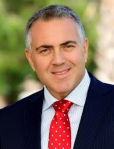
This G20 meeting was chaired by Joe Hockey, Australian Treasurer. Indian Trade minister, Mrs Nirmala Sitharaman attended the meet. Reserve Bank of India Governor, Mr Raghuram Rajan also attended it. Finance minister, Arun Jaitley, could not attend it due to illness.

It has put out a communique at the end of the meet. Link is here: http://www.dailymail.co.uk/wires/reuters/article-2763870/TEXT-Communique-G20-Finance-Ministers-Central-Bankers-meeting.html

Salient outcome of the meeting:

  • More than 900 policy initiatives, most of them new
  • plans/policies to increase global GDP by 2% by 2018
  • Plans/policies add $US2 trillion to global economy by 2018
  • Plans to create millions of jobs
  • Plans/policies to boost infrastructure investment, with creation of database to match quality projects and investors
  • Labour market reform
  • Policies to curb tax avoidance and evasion ie  “black money”

Base Erosion and Profit Shifting (BEPS) action plan requires a commitment to finalising all action items in 2015. G20 meeting endorsed the finalised global Common Reporting Standard for automatic exchange of tax information on a reciprocal basis, providing an ability to tackle and deter cross-border tax evasion.  Information exchange on this will begin automatically between each other and with other countries by 2017,  subject to the completion of necessary legislative procedures.

Black money is a significant problem for many countries. India is a particular victim, but is not alone in this category.  Curbing black money and bringing it back should help the national economies and their people. It is reported (http://www.theguardian.com/global-development/2014/sep/03/one-g20-cracking-down-corruption) that “black money” costs poorer countries a trillion dollars annually.

These policy decisions are good, but only time will tell whether each country implements them fully. Past experience suggests that the implementation of such decisions is less than desired.

Based on information from G20 Information Centre of University of Toronto (http://www.g20.utoronto.ca/), Australia implemented only 69% of its commitments, China 50%, and Saudi Arabia only 47%, after last year’s G20 summit in St Petersburg. Obviously, it will be better if these numbers are in the range of 90-100% bracket.

IMF-OECD expertise will be available to the member nations to monitor implementation of these policy commitments.

G20 Leaders’ summit is due to be held in Brisbane on 15-16th Nov, 2014. Indian Prime minister, Narendra Modi is attending this meeting. This will be the first visit to Australia by an Indian PM in the last 26 years. Late Sri Rajiv Gandhi was the last Indian PM who visited Australia.


Dr Yadu Singh/Sydney, Australia

http://www.twitter.com/dryadusingh

http://www.facebook.com/dryadusingh

au.linkedin.com/in/dryadusingh/

Chinese investment in India is good, but border dispute needs to be settled soon!

Sydney, Sunday, 14th September, 2014

Chinese President, Xi Jinping, is visiting India this week. He will be in India on 17th -18th September 2014. Indian Prime Minister, Narendra Modi and President Jinping have already met at a BRICS nations (Brazil, Russia, India, China, South Africa) summit recently.

(Pictures from Google and PTI)

PM Modi has had a very successful visit to Japan a couple of days ago. He shares great equations with Japanese PM Shinzo Abe. Japan has decided to invest $35 billion in India over next few years. They have taken responsiblity for  Mumbai-Ahmedabad fast train too.

China wants to beat the investment from Japan, which is not difficult to understand due to geo-political competition between China and Japan at play presently. India is obviously the beneficiary, but that does not mean India should do away with its trusted friends. It is known that China is uncomfortable and concerned with India’s growing strategic proximity with USA and Japan. This mammoth investment is largely due to this factor.

Reports say that China wants to invest between $100-300 billion in India over next few years. How much is this investment exactly will be clear when it is announced officially.  It is known that China has $3.95 trillion cash reserve, of which it wishes to invest $500 billion in outbound investment. China has invested only $400 million in India so far. Chinese investment in Railways, manufacturing and infrastructure should help speed up the pace of Indian economy and growth.

image

Chinese investment in India should be welcome, and it indeed is a welcome news. It addresses to some extent the trade deficit of $35 billion against India out of a total $66.4 billion bilateral trade last year.

India however needs to impress upon Chinese leadership that their investment must be coupled with satisfactory settlement of border dispute at a faster speed and their open and active support for India’s permanent membership in the United Nation Security Council (UNSC). It does not make sense that India is not a permanent member of UNSC today.

China also needs to stop supporting anti-India nations in our neighbourhood to create additional, and necessary, goodwill in India. It makes all the sense if you analyse the spectrum of mutual benefits from an investment of this magnitude. No one can deny that there is some significant trust deficit between India and China, which gets reinforced due to actions of China or actions from its client states. India needs to keep the history in its minds. I am happy to note that the present Indian Govt, keeping history in mind, has decided to develop the frontier area with infrastructure in all forms and manners.

China and India are both great civilisations. They are also great powers in their own rights. They can co-exist, and there is enough space for them both, but they need to be mindful of their respective geo-political and security imperatives, while still operating within the established international norms and principles.

It is safe to say that a lot more will need to be done to tackle the “trust deficit”, and that money alone, although welcome, will not be sufficient to remove the existing “trust deficit” between China and India!

Dr Yadu Singh

http://www.facebook.com/dryadusingh

http://www.twitter.com/dryadusingh

Congratulation, Dr Harry Harinath, New Chair, NSW Community Relations Commission (CRC)!

Sydney, Thursday, 11th September, 2014

Dr Harry HarinathDr Harry Harinath has been appointment by the NSW Government to be the new Chair of the Community Relations Commission (CRC) yesterday.

Congratulations, Dr Harry Harinath!

Dr Harinath is a prominent Australian of Indian heritage, and is a well-respected medical doctor.

He has been a respected member of Medical profession for 40 years. He was part of NSW Cricket for 30 years. He served NSW Cricket as its director for many years. He has been a commissioner of the CRC for the last 2 years. He is the current Chair of the Board for Parramasala festival – Australian Festival of South Asian arts & culture.

I, as a member of Indian Australian community, as well as a member of medical profession in NSW, welcome Dr Harinath’s appointment.

I have no doubt that he will take CRC to newer heights, with his consultative, non-confrontationist, helpful, encouraging and inclusive style of functioning.

With Harry as the Chair of CRC, multiculturalism in NSW is in safer and capable hands! 

We look forward to working with him for the interests of our community.

Finally, thanks and congrats are also due to NSW Government -Premier, Mike Baird and Minister for communities, Victor Dominello, for making an outstanding choice for the position of new CRC Chair!

Dr Yadu Singh

www.twitter.com/dryadusingh

http://www.facebook.com/dryadusingh

au.linkedin.com/in/dryadusingh/

Politics, political parties and Indian Australian community!


Sydney, 1st Sept, 2014Australian Flag

There are over 150,000 people of Indian heritage in NSW and 500,000 people Australia wide. Ours is an increasingly important community politically. In Western suburbs of Sydney and Melbourne, there are constituencies, where Indian Australians constitute more than 10% of total votes. Our votes can decide the outcome in many marginal seats.

It is no wonder that political parties are reaching out to Indian Australian community actively. It started with Parliamentary friends of India during previous NSW Govts led by Nathan Rees/Kristina Keneally, followed by Liberal Friends of India formed about one year ago. Similar groupings are in existence federally and Victoria in one or the other form.

While there is no doubt that we are important electorally, the thrust from political parties has been to deal with us only symbolically, not substantially. Except for the recent pre-selection of an Indian Australian in Seven Hills seat, there is no sign of any efforts from any political party to preselect anyone from our community for any of safe seats. If any of us is ever preselected, it is generally for those seats where there is no chance of us winning. ALP’s Harmohan Walia contesting a safe Liberal seat of Mitchell some years ago and inclusion of Bhupinder Chhibber in the Senate list from ALP last year, albeit at a lower and unwinnable spot, are two classical examples. There was no chance of them winning. Similar examples are there from Liberal side too. These are examples of tokenism.

Over the years, our community dynamics have been changing. Indians have been migrating to Australia in big numbers. India has been the top source of migrants over the last few years. Many of us have been joining political parties too, but still not in sufficient numbers.

Prior to 1990s, Indians were big on supporting ALP. Smart marketing and outreach by ALP created an impression that ALP was more favourable and friendly to ethnic migrants. Prime Ministers, Bob Hawke and Paul Keating, were liked by Indians and other ethnic communities. Liberal Party leader, John Howard, before he became the Prime Minister, had the baggage of his comment against Asian migration in 1980s, which created some significant concerns regarding his stand towards ethnic migrants. It lingered on even after he admitted that his statement was a mistake. Unfortunately, this impression became further re-enforced in our minds when we saw the excessively harsh commentary, actions and sanctions by Australia against India after 1998 nuclear tests. Indian army officers were expelled from Australia overnight. The tone and the contents of Foreign Minister Alexander Downer’s statements were particularly terse. It created a serious damage to India-Australia relations. Things changed quite favourably for Liberal party though when PM John Howard declared that Australia would sell Uranium to India in 2007, while ALP persisted with its policy of ban to sell Uranium to India, until Martin Ferguson and PM Gillard led campaign to reverse the ban succeeded at the end of 2012.

Today, there are almost equal supporters in our community for ALP and Liberal Party, although ALP supporters may have an edge. This support has been determined by variety of factors, which did include Uranium issue in the past. With changed dynamics of our community now however, economic management, policy on asylum seekers and business-friendly policies are playing a big role in our attitudes towards political parties. Quite a good number of our people are in small businesses. Younger members of our community are driven more by market economy than socialist ideas. After all, India has been an open and market-based economy since 1991, which has exposed our younger people, before they migrated, to market and open economy.

ALP and our community: There is a significant contingent of ALP supporters in our community, based largely in Western suburbs. They take part in ALP-supporting events through the year and during elections. ALP Premiers used to take some community members with them while taking trade delegations to India, thus giving an impression of inclusion. Subcontinent Friends of Labor was an initiative from NSW ALP HQ, which was provided full support by ALP top leaders to make it known and popular in the community. Grants to various temples and community groups was one of the strategy to win support. This has its advantages and disadvantages. This group is not as strong now as it was during ALP Govts in NSW and Canberra for obvious reasons. Its biggest drawback was its attempts to go against some sub-continental candidates like Susai Benjamin, as part of Right faction Vs Left faction battle. This was seen too during Bill Shorten Vs Anthony Albanese ALP leadership contest last year. This was not smart by any means, because it weakened and divided ALP members from Indian sub-continent significantly. On the positive side, ALP at least in NSW has a better strategy to communicate its stands and policies by emails to not only ALP members, but also other community members who are not ALP members. As Indians constitute a very big proportion of Indian sub-continental people in NSW and since interests of India are quite different from interests of other countries in the Indian sub-continent, it is preferable, in my view, to go for Labor Friend of India. Utopian socialist idea of Indian sub-continental unity or brotherhood is a myth, impractical and is never going to work.

Liberal Party and our Community: Prior to 2011 NSW State elections, then Leader of Opposition, Barry O’Farrell, was seen literally in every community event, but it changed dramatically once Liberal Party formed the Govt. Premier, Barry O’Farrell chose to rely only on one Indian who, in effect, had hardly any networking within the community, and did not help Liberals get many votes. Until election, he was virtually unknown. Indians were perplexed why he was being promoted on behalf of Liberal Govt in NSW. Premier O’Farrell ignored even Australia India Business Council (AIBC) when visiting India with trade delegations. Our community formed a clear and wide-spread perception that Indian community was actively distanced from NSW Govt either as a default or design. It indeed caused a substantial ill-feeling towards Liberal Party and NSW Govt. This was conveyed to local MPs, but they were either unwilling or, more likely, unable to do anything about it due to the fact that everything was driven from the former Premier’s office. Current Premier, Mike Baird, is much more inclusive, which is a welcome change and is already generating some goodwill. A lot more however needs to be done to overcome the damage. Time only will tell whether there is a real directional change under current Premier. Liberal Friends of India (LFI) is a good initiative but it has lost its charm or the enthusiasm lately. It needs to be reinvigorated. There was a time when  we saw one more body of the similar type with the name of  “Liberal friends of the subcontinent”  doing some events in Western Sydney. This created some considerable confusion. I am not sure what is IRS status now. LFI also needs participation from top ministers and must allow membership of even those community members who are Liberal-minded but are not members of Liberal party. It should not just be a mechanism to raise funds for the party. Its Chairman should be a key Minister with Executive Committee comprising of key Liberal-inclined community members, irrespective of their Liberal Party membership status. LFI needs to be reformed and relaunched.

Parramasala, an initiative of Keneally NSW Labor Govt, is indeed a good idea, and I am happy to see that current Liberal NSW Govt has decided to continue funding it. I went to its launch only a few days ago, and noticed things which could have been done better. Ministerial Consultative Committee (MCC) for Indian community has been dissolved, like other MCCs, but there is a need to have some form of Advisory Body from our community for regular consultations, discussions and interactions between our community and the Govt.

NSW Friends of India: Like USA and some European countries, there is a need for such groups in Australia. It should be a bipartisan phenomenon, with key ministers, MPs, journalists, businesses and community members, with year-round activities involving lectures, debates and discussions. A group like this may not get enthusiastic support from the Govt, but we, as the community, should push for it. After all, there are bonafide pro-India people in all political parties, businesses and media.

Our community’s participation: It is also true that many of us do not join political parties in sufficient numbers. This should change. Australia is our country too, and we ought to take part in its processes in all shapes and forms. We get a chance to do so pretty actively if we are part of political parties. Only then, we will be able to go for pre-selections and elections to reach Parliaments. After all, quota system is not a good idea generally, and it is better to compete fairly and frankly. If we are not inclined to join main political parties, we can consider forming or being a part of issues-based groups like “Voice of the West” focusing on Western suburbs to advance our political interests and ideas.

While at it, it will not be out of place to point out that we need to interact, collaborate and network with  members irrespective of their party or political affiliations and inclinations, when it comes to our common interests for the community. Just because someone is a member of ALP or Liberal party does not mean he or she is an enemy for those who are in opposing camps. There is no need or justification to badmouth or run an undermining campaign only because of someone’s political affiliation or inclination.

An edited version of my write-up was published by The Indian Sun newspaper recently. (http://www.theindiansun.com.au/top-story/australian-political-parties-indian-community/)


Dr Yadu Singh

http://www.twitter.com/dryadusingh

http://www.facebook.com/dryadusingh

au.linkedin.com/in/dryadusingh/


3rd September is Australian flag day!

Sydney, 2nd Sept, 2014

3rd September is Australian Flag day.

australian_flag_download

A brief history is as follows.australian_flag_flying_download

Australian Flag was selected after an international competition in which 32823 people participated. 5 people, 2 of them teenagers, were the co-winners of this competition and shared the prize of £200. It was first flown at the Exhibition Building, the site of Commonwealth Parliament  in Melbourne at that time,  by the first Prime Minister of Australia, The Rt Hon Sir Edmund Barton, on 3rd Sept, 1901. As you know, Australia has been a federation since 1901.

Australian flag has the Union Jack, the Commonwealth Star (just below the Union jack, representing Federation of 6 States and territories)  and the Southern Cross (representing our geography). Constellation of 5 stars (Southern Cross) can only be seen from Southern Hemisphere.

A few points to be noted.

1. The Flag should be raised after Sunrise and lowered before Sunset. The Flag can be flown in the night if there is sufficient illumination, like it is in Federal Parliament in Canberra.

2. When the Flag is raised or lowered, everyone should face the Flag, be silent and people in Uniform should salute the Flag.

3. The flag should always be flown freely and as close as possible to the top of the flagpole with the rope tightly secured.

4. Unless all national  flags are raised and lowered simultaneously, the Australian National Flag should be raised first and lowered last

5. When the Australian National Flag is flown with flags of other nations, all flags should be the same size and flown on flagpoles of the same height

6. When flying with only one other national flag, the Australian National Flag should fly on the left of a person facing the flags.

7. The flag should not be flown upside down.

8.The Australian National Flag should not normally be flown in aposition inferior to any other flag or ensign and should not be smaller than any other flag or ensign.

9. The flag should be used in a dignified manner and reproduced completely and accurately.

10. It should not be defaced by overprinting with words or illustrations.

11. Other objects in displays should not cover the flag.

12. All symbolic parts of the flag should be identifiable.

I am celebrating Australian Flag Day on 3rd September, 2014 by making Australian Flag as my profile pic in my social media for the day. I encourage everyone to do the likewise.

Dr Yadu Singh

http://www.twitter.com/dryadusingh

http://www.facebook.com/dryadusingh

au.linkedin.com/in/dryadusingh/


India House in Sydney: an update!

Sydney, 31st Aug, 2014

I wrote a post on India House last year. Link is here.

https://yadusingh.wordpress.com/2013/05/04/india-house-in-sydney-what-is-this-about-why-do-we-need-it/

We had several meetings with well-meaning people. We were on to it.

After this, literally every Indian community association in Sydney started to announce that they too want to build an “India House”, but without any attempt to network with others. This “Me too” disease is very prevalent with associations and “Community Leaders”.

One of such associations is the one which collected money for “India House” during one of its major events a few years ago. There is unfortunately no record or details of this money anymore.  They have mismanaged their funds, thus having a massive hit in their reputation in our community. Community knows about it and has nothing but disdain for them.

Another one is the one which gave “Role model of the community” medals to those who deserved shunning, not medals. People wonder about ethos and principles guiding this association. Everything seems to be Naqli (Fake) there.

There are others too, who claim to be an Umbrella body but without any group with them, justifying their claim of being an “Umbrella” association.

Any smart person should always analyse and review the current circumstances, while keeping the past examples and factors in mind.

It is clear to me that the best option for us is to take a back seat and let others, who have put their claims to build “India House” out in public, take the responsibility and leadership for this matter. There is an undeniable fact that there can’t, and will not, be multiple India Houses in Sydney.

As far as I am concerned, I am getting out from my plans for “India House” in Sydney. I hope others will do what needs to be done and what they have claimed. I will support them with whatever I can do, when they indeed do something in this regard. I know for sure that our community will need to take a structured, co-ordinated and unified approach to deliver this project. We can not have multiple groups trying (or at least claiming) to work on this project.

I understand that “India House” will be one of the topics which will be discussed in a meeting of some “select” Indian community members, organised at the Indian Consulate General in Sydney next week. I am one of the invitees to this meeting. I will post an update on this and any other relevant topic.

Dr Yadu Singh

http://www.twitter.com/dryadusingh

http://www.facebook.com/dryadusingh


Indian Australians as part of “Team Australia”!

Sydney, Thursday, 2014

Australian ParliamentPrime Minister, Tony Abbott, has rightly said recently that there is no point to migrate if people are not willing to put Australia, its interests, its values and its people first! Indian Parliament

He further said ‘You don’t migrate to this country unless you want to join our team, calling it “Team Australia”. He praised migrants for choosing to migrate to Australia, and exhorted them (migrants) to be proud of their heritage and culture.

I agree with him. I do not believe there would be many sensible people who will disagree with him.

Australia is a successful multicultural nation, just like The United States of America. Australia is our home, and we are very proud of Australia.

There is one little difference between Australia and USA, which has become quite important lately.

During 2009, when Indian students issues in Australia had saturation coverage in India, and India-Australia relations suffered, the then Federal Govt in Canberra did not deal with the issues in the most efficient way. Indian media calling Australia a racist country was not tackled properly and promptly. Australia depended solely on its diplomats to tackle it, instead of also utilising the Indian Australian community to help the Govt in dealing with it. It was well known that most of Indian Australian community did not share the views of Indian media. My friends and I made it very clear to Indian Govt and Indian media that we did not agree with their description of Australia as a racist nation. I took part in a debate “Ïs Australia a racist country?” with Daily Telegraph journalist, David Penberthy, televised in Sunrise programme of Channel 7, and wrote a Blog post “who is racist-Australia or Indian media?” https://yadusingh.wordpress.com/2010/01/10/who-is-racist-australia-or-indian-media/  Both were quite popular.

Many believe that The Rudd Govt officials should have utilized Indian Australian community prominently in dealing with exaggerated and imbalanced reporting against Australia in Indian media. They believe that things would have been easier to deal with if Indian Australians were also part of Australian Govt’s strategy to deal with it. After all, it would have been much more easier and effective if Indian media had dealt with Indian Australians here in Australia as well as in India, and heard that their description of Australia was not entirely correct.

Thankfully, things have moved on and relations between Australia and India are on the upswing. Australia and India have just concluded Uranium trade deal negotiations, and an agreement in this regard is likely to be signed when Prime Minister Tony Abbott visits New Delhi early next month.

Australia does have some people from Indian heritage in its diplomatic staff, but they are very small in numbers. Australia has not utilized the Indian Australian community in its outreach to India generally, even when this community is getting bigger by the day. Approx 500,000 people in Australia have Indian heritage. Former NSW Premier, Barry O’Farrell, used to rely on just one person of Indian heritage, who is his personal friend, but unfortunately did not have much to do with either India or Indian Australian community. Mr O’Farrell could have done better and taken a leaf from his counterparts from Victoria, who did, and do, include members of Victorian Indian Australian community whenever they go to India with Trade delegations. New NSW Premier, Mike Baird, has not been to India yet. Let us see, and in fact hope, whether he will be different from his predecessor in this regard.

If you compare all this with what USA is doing with similar visits to India currently, you will see that Indian Americans form prominent parts of such delegations.

http://timesofindia.indiatimes.com/india/For-India-outreach-US-brings-into-play-Indian-Americans/articleshow/39785133.cms

Nisha Desai Biswal, Arun Kumar and Puneet Talwar, who are all Assistant Secretaries and are of Indian heritage, accompanied US Secretary of State, John Kerry, Commerce Secretary, Penny Pritzker and Defence Secretary, Chuck Hagel respectively during their recent visits to India. Their presence certainly created quite a good amount of goodwill  and conducive atmosphere.

United States’ Presidential delegations to India have always included prominent Indian American businessmen and community leaders. This has not been the case with Australian delegations of similar nature.

It’s about time that Australian Govt leaders follow the examples set by their American counterparts, because not only it is a smart policy, but  it is lalso likely to accelerate the growth of Australia-India relations.

In addition, and as a bonus, it is also going to create a feeling that Indian Australian community is a vital part of “Team Australia”, with many potential electoral benefits to the ruling party in the area like Western suburbs of Sydney and elsewhere! 

Dr Yadu Singh

dryadusingh@gmail.com

http://www.twitter.com/dryadusingh

http://www.facebook.com/dryadusingh

au.linkedin.com/in/dryadusingh/


13th amendment of Sri Lankan Constitution is the framework which can help heal the divide in Sri Lanka!

Sydney, 26th Aug, 2014

Sri Lanka FlagSri Lanka is a friendly country to India. India has many commonalities with Sri Lanka MapSri Lanka. Both major ethnic groups-Singhalese and Tamil- have their origins in India. Sri Lanka has a Free Trade Agreement (FTA) with India.

Until 2009, it had a ferocious and violent civil war, killing thousands from both sides. After a series of battles, Sri Lankan Army was able to defeat LTTE in 2009. There are allegations that upto 40,000 civilians were killed in the final weeks of this war. Sri Lankan Army and LTTE both have been blamed for killing innocent civilians. UNO has an ongoing enquiry on Human Rights violation in Sri Lanka.

LTTE was a ruthless secessionist group, which invented “Suicide bombings”. Former Indian Prime Minister, Rajiv Gandhi, was assassinated by its cadre in Tamil Nadu in 1991. LTTE had had many chances to achieve reasonable autonomy for Tamils in Northern Sri Lanka, but it mismanaged the campaign, focusing on a maximalist position of Tamil Eelam.

The situation is totally different today. While Sri Lankan Army has defeated LTTE and removed LTTE from the scene, reasonable aspirations of Tamil Sri Lankans can not, and should not, be ignored. Their desire and aspiration to have a right for equality, dignity, justice and self respect can not be ignored or suppressed.

It is in the interest of Sri Lanka too that it deals with these aspirations from one segment of its own people pragmatically and fully. It is indeed in the long term interest of Sri Lanka to do things which will reassure its Tamil people.

Mahinda RajapaksaIt is in this context that 13th Amendment to Sri Lankan Constitution is worth revisiting. This amendment was enacted in 1987, following India-Sri Lanka Accord (Rajiv Gandhi- JR Jayewardene Accord). It created 9 Provincial Councils. Even though the amendmentRajiv Gandhi JR Jayewardene did not provide sufficient powers to elected legislators, ministers and Chief Ministers, it did give some powers to them. It was by no means a great amendment at all because it gave far too much powers to State Governors, appointed by the President. There is some demand from some ruling parties, including President Mahinda Rajapaksa’s brother, Gotabaya Rajapaksa (Defence Secretary) to repeal 13th Amendment . I believe this is a wrong step. If anything, the provisions of this Amendment for devolution of powers to Provincial Councils need to be strengthened, not diluted or repealed, which is what Sri Lanka seems to be heading to.

Because of what the Chief Minister of Northern & Eastern Provincial Council, Annamalai Varadraja Perumal did in March 1990 (he declared Independence of Tamil Eelam), Sri Lankan Govt will be concerned about any extra power to Provincial Councils. I do not believe this concern has any basis, after LTTE has been defeated and removed from the equation. Times and equations have completely changed. There is no chance of anything like what Mr Perumal did in 1990 happening in Sri Lanka anymore.

Sri Lankan Tamils constitute close to 11.2 % of Sri Lankan population. Indian Tamils, who were taken to Sri Lanka by The British Govt in 19th century constitute another 4.2%.  Their grievances need to be looked at rationally and pragmatically.

I believe that not only 13th Amendment should be used to implement devolution of powers to Provincial Councils, the amendment itself should be further modified and strengthened  to give more powers, including Land and Police powers to Provincial Councils.

There is nothing wrong with a federal structure of governance with defined powers to Central Govt and State Govts. Education, Health, Police and Land powers should be with States and obviously, the Defence, Foreign affairs, Communication and others should be in the domain of Federal Govt.

India is a classical example of a federal Governance, where States and Union Govt have delineation of powers and responsibilities in the State, Union and combined lists, set out in the Constitution.

USA is another example of Federal Governance with well defined powers and responsibilities between Union (Federal Govt) Govt and State Govts.

India, as a friendly nation to Sri Lanka, is encouraging Sri Lanka to do everything to devolve powers to State Councils. This was, after all, what is part of India-Sri Lanka Accord 1987.

This was, again, reiterated by Indian Foreign Affairs Minister, Smt Sushma Swaraj and Indian Prime Minister, Sri Narendra Modi a few days ago, when visiting Tamil National Alliance (TNA) delegation, led by TNA MP, R. Sampanthan met them in New Delhi.

I do believe, as do many others, that there is no case for the repeal of 13th Amendment, which, if executed, will cause nothing but further alienation of minorities, which will not help long term interests of Sri Lanka. In contrast, there are many advantages if Sri Lanka implements genuine devolution of powers & responsibilities to elected Provincial Councils on the lines of federal governance in India and USA.

Dr Yadu Singh

http://www.twitter.com/dryadusingh

http://www.facebook.com/dryadusingh


Australia concludes Nuclear trade deal with India!

Australian FlagSydney, 21st Aug, 2014Indian Flag flying

From various news sources, it is clear that Australia has concluded Civil nuclear deal with India recently. Uranium trade between Australia and India is likely to start soon. It appears that the deal has been concluded relatively quickly after India elected its new Govt led by Mr Narendra Modi. The agreement is likely to be signed by India and Australia during Prime Minister Tony Abbott’s visit to India in the first week of September.

Let me also point out that it was Prime Minister John Howard who announced in 2007 that Australian Govt will reverse the ban to sell Uranium to India. It changed when Kevin Rudd became the Prime Minister a few months later and reversed it. Finally, Prime Minister Julia Gillard was the one who campaigned successfully to get ALP reverse its policy to ban Uranium sale to India in Dec 2011, followed by an agreement between Australia and India to start the negotiations on the nitty gritty of the supply agreement in 2012.

I wrote about this matter a few years ago. http://tinyurl.com/7bytnbo & http://tinyurl.com/6s7d7dx

Australia-India relations are on an upswing, after having suffered a few years ago.

I and many from Indian Australian Community are very happy with the improved Australia-India relations.

Congratulations are due to Australian Govt led by Mr Tony Abbott and Indian Govt led by Mr Narendra Modi. Foreign Minister of Australia, Julie Bishop, and Indian Foreign Affairs Minister, Smt Sushma Swaraj, have also played a big role.

India is currently third in the list of countries which use nuclear energy. There are 21 nuclear reactors in India which are producing electricity but India needs to increase such electricity production, knowing electricity shortage. Currently, nuclear energy constitutes only 4% of total electricity production.

Australia has 1/3rd of the total Uranium of the world. This agreement is going to make Uranium supply to India much easier.

As usual, and in a totally predictable manner, Greens Senator, Scott Ludlam, did not like it at all, and used some arguments, which are irrelevant and dated. NPT issue is not relevant in India’s case after India was given an exemption by Nuclear Suppliers’ Group (NSG) and International Atomic Energy Agency (IAEA) in 2008. Also, unlike India’s neighbours, India has never been involved in nuclear proliferation.

India is going through the discussions for Civil nuclear trade with Japan currently. Once concluded, India should be able to accelerate nuclear energy production.

Since 2005 onwards, India has already entered into civil nuclear agreements with the US, Mangolia, Namibia, Argentina, the UK, Canada, Kazakhstan and South Korea, France and Russia.  

Indian Australian community has a desire to see speedy growth in Australia India relations in all dimensions and aspects.

Dr Yadu Singh

http://www.twitter.com/dryadusingh

http://www.facebook.com/dryadusingh

au.linkedin.com/in/dryadusingh/

Celebrating 68th Indian Independence Day on Friday, 15th Aug, 2014!

 image Sydney, Friday, Aug 15, 2014

India is celebrating its 68th Independence Day today.

15th Aug, 1947 was the day when India became independent and free from British reign. At the midnight between 14th and 15th Aug, 1947, India’s first Prime Minister, Pandit Jawahar Lal Nehru, took oath as the Prime Minister.

At the stroke of midnight, he gave his famous “Tryst with Destiny” speech in the Constituent assembly Hall of the Parliament. 

https://www.youtube.com/watch?v=1wUcw8Ufx_Y

“Long years ago, we made a tryst with destiny, and now the time comes when we shall redeem our pledge, not wholly or in full measure, but very substantially. At the stroke of the midnight hour, when the world sleeps, India will awake to life and freedom. A moment comes, which comes but rarely in history, when we step out from the old to the new, when an age ends, and when the soul of a nation, long suppressed, finds utterance. It is fitting that at this solemn moment we take the pledge of dedication to the service of India and her people and to the still larger cause of humanity.”

Ever since, President of India traditionally addresses the nation on the eve of the Independence Day and the Prime Minister unfurls the national Flag followed by an addresses to the nation from the precincts of the Red Fort in Delhi in the morning of 15th August.

This is the gist of the national address by Prime Minister, Narendra Modi today.Narendra Modi and Red Fort

http://www.ndtv.com/article/india/pm-narendra-modi-s-independence-day-speech-at-red-fort-highlights-576248

Prime Minister, Mr Modi’s speech.

https://www.youtube.com/watch?v=OUgECHx898M

On this day, there is a military parade and display of cultural richness from all over the nation in the capital of India, New Delhi. 

Chief Ministers unfurl the flag in the State capitals, where various cultural programmes take place too.

These activities happen every where in the country. 15th August is a national holiday. 

Indian Independence Day will be celebrated by Indians overseas too.

In Australia, Indian Govt posts-High Commission and Consulates, will celebrate Independence Day events. Community groups all over Australia celebrate Indian Independence Day with pride and fanfare.

CG at Indian Independence Day 2014In Sydney, scores of Indian Australians will gather to take part in the Independence Day celebration at the Indian Consulate General in the city at 8.30 AM. Consul General will read the speech of the President of India and will unfurl the Indian Flag. 

In the evening, my friends and I will be joining a party in the city to celebrate Indian Independence Day. This party will start around 9.30 and will go on well past midnight. A lot of younger Indians will be joining this Independence Day celebration. 

Australia is 4 hours and 30 minutes ahead of India. As the clock hits midnight in India, friends and relatives from India will start sending Independence Day greetings via email, What’s up, Facebook, Twitter and SMS. Indian Australians will do the likewise.

Indian Independence Day is a huge event for 1.2 billion Indians In India and millions of Indians living outside India!

I am proud to be from Indian heritage and I know this to be the case with my friends from all corners of India and the world.

Happy Indian Independence Day!Happy independence day 2014

Jai Hind!

Dr Yadu Singh

dryadusingh@gmail.com

http://www.twitter.com/dryadusingh

http://www.facebook.com/dryadusingh

Plans to repeal Section 18C of Racial Discrimination Act dumped!

Tony Abbott

Prime Minister, Tony Abbott, announced today that he has dumped plans to repeal Section 18C of Racial Discrimination Act.

He said that he wants to work with communities as part of “Team Australia”.

This is very sensible and very welcome!

Of the 4100 submissions in regards to Sec 18C, 76% were against the repeal or any tempering of Section 18C.

Ethnic communities were overwhelmingly against the repeal. These included Chinese, Arabic, Jewish, Indians and many others.

ALP leaders, especially NSW Leader of Opposition,  John Robertson, and most Liberal Party leaders, especially Premiers of NSW (Mike Baird) and Victoria (Denis Napthine), Craig Lundy (Reid MP), Matt Kean (Hornsby MP), Geoff Lee (Parramatta MP) and Alex Hawke (Mitchell MP) were opposed to the proposal to repeal Sec 18C.

NSW Community Relations Commission (CRC) too took a stand against this repeal proposal. CRC chief, Vic Alhadeff, took a prominent leadership role in opposing this repeal proposal.

From our side, my friends and I ran a campaign via Social media and Blog post.

My post (http://tinyurl.com/pqfv8ct) was forwarded to more than 15000 people of Indian Australian Community, with overwhelming support to oppose the repeal. I encouraged my fellow community members to forward the Blog post to their network and send their submissions to the Attorney General, Senator George Brandis.

My Blog post was also published in many Australian newspapers. Hills News, Penrith City Gazette and Blacktown Sun were the most prominent among them.

http://www.hillsnews.com.au/story/2246552/dr-yadu-singh-why-section-18c-of-racial-discrimination-act-should-not-be-repealed/

http://www.theindiantelegraph.com.au/the-growing-presence-of-a-leader-dr-yadu-singh-takes-the-fight-where-it-matters/

http://www.veooz.com/news/2H8dFMX.html

http://www.penrithcitygazette.com.au/story/2246552/dr-yadu-singh-why-section-18c-of-racial-discrimination-act-should-not-be-repealed/

http://www.blacktownsun.com.au/story/2246552/dr-yadu-singh-why-section-18c-of-racial-discrimination-act-should-not-be-repealed/

I am pleased that repeal proposal has been dumped.

Prime Minister deserves a thank you and people who campaigned against the repeal deserve a special “thank you and well done”.

Dr Yadu Singh/Sydney/5th Aug, 2014

http://www.twitter.com/dryadusingh

http://www.facebook.com/dryadusingh


in favour


India should not be used by anyone as a launch pad for sea voyage to Australia!

Sydney, 29th July, 2014

Boat people Boat people2 Indian Flag

I am perturbed with some commentary whereby some people including Senator Sarah Hanson-Young are casting indirect aspersion on how India treats refugees. (http://tinyurl.com/k239hsrPoints are being made that India is not a signatory county to UN Refugees Convention. Some of them have mentioned even terrorist group ISIS (Islamic State of Iraq and A-Sham) in the same paragraph. ISIS executes people in cold-blood, and is hurting and subjugating people from religions other than their Sunni sect of Islam. This, even indirect aspersion, is inappropriate and offensive. India is not ISIS and can not even be remotely equated with it.

India is a vibrant and the biggest democracy of the world. It has rule of law with free judiciary and totally free media. It has refugees from Sri Lanka, Burma, Bangladesh, China and many other countries. It has a proud and long history of welcoming persecuted people from all corners of the world. Parsis (Zoroastrians) left Persia because they were persecuted. Dalai Lama and thousands of Tibetans exiles have lived in India for several decades without any persecution or troubles. India treats refugees humanly and with care. India may not be a signatory to UN Refugees convention, but its treatment of those who claim refuge is exemplary. UNHCR (United Nation’s High Commission for Refugees) itself has said this about  India many times. India lets UNHCR do the assessment about people’s refugee status, which is fair,  appropriate and prudent.

Raising concerns about India’s credentials as a caring society is objectionable.

Coming to the current issue of 157 boat people (all likely to be Sri Lankan Tamils) who were intercepted by Australian Navy just outside its Maritime zone about a month ago, it is clear that the Boat has come from Indian Shores. From all the information, it is clear that they are all Sri Lankan Tamils, who were in a refugee camp near Pondicherry, South India. India is affected in multiple ways and is a concerned party. Its shores were used as the launching pad for this boat to Australia. India needs to know who these people are and how did they use Indian shores for launching  the voyage to Australia.

It is a security issue for India. India has an ongoing issue with Pakistan, from where terrorists enter Indian territories to perpetrate terrorist attacks in India. I am not saying that the boat in question is carrying terrorists, but not being concerned and alarmed with this type of voyage will render India a hypocrite. India has a right to figure out who these people are and what is the exact composition of these people.

Australia and India are friendly countries, and have strategic relations. I am pleased that Australian Minister for Immigration & Border Control, Scott Morrison, visited India recently and had a discussion with Indian Foreign Affairs Minister, Smt Sushma Swaraj. He was able to get an undertaking from Indian Govt that it will take back these people if they are Indian citizens and residents. That is a huge achievement for Australia.

India will not, and should not, allow its territories to be used as the launch pad for things which are against any other nation. In this case, it is the stated policy of Australia that they do not want to entertain illegal maritime arrivals. Current Federal Govt took the policy of “Stop the boats” to people during 2013 election and received a mandate. Previous Govt led by Julia Gillard/Kevin Rudd too had this policy. Offshore processing of illegal maritime arrivals has been the policy of Govts of both political persuasions.

Australia can not afford to have the repetition of 5000 people arriving every month, claiming refugee status. We do not have the money to afford their accommodation, food, health and education. Our national Budget is in deficit and our economy is in stress. We have to look after our elderly, homeless and less fortunate people first. We have to look after our disadvantaged people first.

Australia should accept its fair share of refugees, but there is no way it can afford an unlimited number of people who want to come to our shores with refugee claim. Australia is a caring and generous society, but there is a limit to it.

I am concerned that some people decide to come to Australia from countries where they were not facing persecution. India is definitely one such country. There is no persecution programme for anyone in India. Indians generally, free Indian  media and independent judiciary will not let this happen either.

About the people in the Boat, who have now been brought to Curtin Detention Centre, I am not sure that they faced any persecution in India. Based on the prevalent governance and political system, it is unlikely they faced any persecution in India. They were living in the area ie Tamil Nadu, which is the homeland of Tamils in India.

This fact alone makes it likely that they are economic refugees, not genuine refugees.

If there is any Indian national in this group of people, then they should be sent back to India without any delay, because their claim for refugee status will be bogus, preposterous and baseless.

Australia has all the rights to refuse to accept economic refugees. Australia has all the sovereign rights to control flow of illegal maritime arrivals. Australia in fact has an undeniable responsibility to look after its disadvantaged people before allocating billions on people who are not Australia’s primary responsibility.

I see no problem in Australia working with India to figure out who these people are, where they have come from and why have they come to our shores in this manner.

Australia has full rights to send them to the country from where they have come from if they are not genuine refugees.

Australia has a well-stated and bipartisan policy of offshore processing and not settling illegal maritime arrivals in Australia. Australia does not encourage illegal maritime arrivals. It has been working with nations in the region to stop the illegal maritime arrivals. This is the first boat which has been allowed to land on our shores in over 7 months, presumably to allow sufficient time to Indian officials to process information and cross-check it.

Australia is within its rights to work with nations in our region to achieve the stated policy goals. I am in full support of these goals. I know many others, in fact a majority of Australians, are in support of these goals.

Finally, India should not allow anyone, under any circumstance, to use its shores or territories as a launch pad for voyage as “illegal maritime arrival” to Australia or any other country!

Dr Yadu Singh

dryadusingh@gmail.com

http://www.twitter.com/dryadusingh

http://www.facebook.com/dryadusingh


OFBJP Australia plays community politics and harms BJP

Sydney, 8th July 2014

It is disappointing to see OFBJP Australia, especially Balesh Dhankar, playing politics inside the community and, in the process, harming the interests of the BJP. OFBJP Australia should operate above and away from the politics among and inside community associations, but unfortunately, the visionless leadership of OFBJP Australia is unable to understand this simple fact.

I explain the matter below. 👇👇

INDAUS Inc., a community association, had some difficulties due to issues inside its Executive Committee. Since it became impossible to resolve them, INDAUS Inc. called an Executive Committee meeting on 18th May 2014, after Secretary, Mr. Anagan Babu, refused to call an EC meeting despite repeated requests. Not only did Mr. Anagan Babu and Mr. Stanley D’Cuz not attend the meeting, they also tried to sabotage it. They were calling others to not attend it either. Thankfully, the majority of EC members rejected their request and attended the meeting.

So, What is their agenda?

Not calling an EC meeting, not attending an EC meeting, telling others to not attend the EC meeting, not doing anything on behalf of INDAUS, and writing to people outside INDAUS against the association seem to fit with their agenda to destroy INDAUS.

People had had enough and were not prepared to be blackmailed by these two. You expect the Public Officer to play a constructive role, but he was very much part of this destructive game. Mr D’Cruz is in fact the mentor of Mr. Babu in their destructive games.

This was an extraordinary situation, needing extraordinary steps.

EC meeting was called by the President and Vice President. See below.

EC Meeting passed a unanimous resolution to dissolve the committee and request an independent person and Lawyer, Mr Navjot Singh, to be the Returning Officer for the election on 20th July 2014. Members will elect a new team then. There was no other option. The dysfunction created by these two had to end.

We have the unfortunate situation where these two disgruntled persons, Mr. Stanley D’Cruz and Mr. Anagan Babu, whose contributions have been negligible, if not negative, have tried to damage us by writing a public email to our adversaries and media. Some of our senseless adversaries, especially OFBJP Australia, are running a social media campaign against us. Mr Balesh Dhankar is the leader of this gang.

There is no office bearer in the INDAUS Inc. right now, until the 20th of July election. There is no President, vice-president, or Secretary anymore and Mr. D’Cruz and Mr. Babu should not be presenting themselves as the vice-president and secretary respectively, just as I am not the current president anymore.

Mr Babu wrote himself as the secretary, which is not correct. There is no Executive Committee anymore until the 20th July 2014 election.

Contrary to their claims, INDAUS is not under the supervision of Dept of Fair Trading or anyone else. It is a disgusting and untrue claim.

Harming INDAUS of which they held high positions is exactly the behaviour of what Mir Zaffer did in our Indian history. This is the ultimate disloyal conduct. This is an outrageous and despicable act on behalf of Mr D’Cruz and Mr Babu.

This indiscipline and their anti-INDAUS activities will not be tolerated and actions will take place in due course. It’s guaranteed.

I enclose the EC meeting notice dated 5th May 2014 and the Minutes of our EC meeting dated 18th May 2014.

EC meeting request 5th May, 2014
————————————————————————————————————-
5th May, 2014
To
The EC members of INDAUS Inc
(By email)
Despite many requests to the secretary to call an EC meeting, an EC meeting has not been called.
Similarly, despite several requests to the Secretary, the list of INDAUS members has not been given to
the EC members. This is harmful to INDAUS and is clearly not satisfactory or acceptable.
We are therefore calling the EC meeting:
At 4 PM, 18th May, Sunday, 2014, Wenty League, 50 Smith St, Wentworthville NSW 2145
Agenda:
1. Payment approval for pending invoices and expenses incurred on INDAUS Inc.’behalf
2. Financial statement and status
3. List of INDAUS members
4. Complaints about INDAUS members
5. Setting the process for Constitutional amendment to overcome the clause stating that the
first Executive Committee will work for 3 years
6. Any other issue with the approval from the Chair
Secretary, Mr. Anagan Babu, and Treasurer, Mr. Anil Sharma, are requested to bring all relevant
documents/statements in hard copy form to the meeting. Public Officer is requested to bring the
papers he has submitted to the Dept of Fair Trading Dept, after the AGM.
All EC members are requested to attend this important EC meeting.
Best regards
Dr Yadu Singh Mr Gurdeep Singh
President Vice President
INDAUS INDAUS
—————————————————————————————————————–
—————————————————————————————————————–
INDAUS Inc Minutes 18-5-14

Minutes of Executive Committee Meeting, Sunday, 18th May 2014, Wenty League, Wentworthville, NSW.

Present:
1. Dr Yadu Singh, President
2. Gurdeep Singh, Vice President
3. Mr Jagdish Lodhia, Committee member
4. Venkata Prasad Ragipani , Committee member
5. Chidanand Puttarevanna, Committee member
6. Sarath Madhavapeddi, Committee member
7. Arun Nanda, Committee member
8. Mr. Anil Sharma (who could not attend the meeting physically but came over the phone, heard the resolutions, and agreed with them, and who had sent an SMS earlier in the day favoring the dissolution of EC, and holding a fresh election)

Apologies:
1. Mr. Abhilash Narendran (via Sarath Madhavapeddi)
2. Mr. Anagan Babu (who sent a long SMS with many words including “Anyway, I am not available today”)
Absent:
1. Mr. Stanley D’Cruz
2. Dr Ray Pallath
3. Mr. Gaurav Nirwal (currently overseas, but has earlier expressed his desire in writing to resign from his position in EC)

Chaired by Mr. Jagdish Lodhia

The meeting Chair welcomed members and declared that the quorum (which is 5 for INDAUS EC meetings) is met and that the meeting was constitutionally valid and proper meeting. Mr Gurdeep Singh was a little late but took part in all resolutions and decisions.

Background of the today’s Executive Committee meeting is outlined below.

On 5th May 2014, the President (Dr Yadu Singh) and Vice President (Clr Gurdeep Singh), called for an Executive Committee (EC) meeting to be held on May 18, 2014, after repeated requests for an EC meeting were not acted upon by Secretary (Mr Anagan Babu). Requests from the EC members for the INDAUS membership list were also declined by the Secretary (Mr. Anagan Babu) and Public Officer (Mr. Stanley D’Cruz). It is clear that the current EC is grossly dysfunctional. No EC meeting has taken place since Dec 2013, and despite numerous requests, no activity has been done by INDAUS since Aug 2013. There is a serious question mark on the survival and reputation of INDAUS Inc. now. INDAUS Inc. is in an extraordinary situation.

All agreed that the current EC is not functioning at all and everyone, including those who were not in the meeting today, wants the current EC to be dissolved and fresh elections to be organized to elect a new Executive Committee.

It was also debated and agreed that the Community Justice Centre (CJC) route to get rid of the current EC is not practical because CJC cannot force the attendance of anyone without their consent. It was felt that Mr. Stanley D’Cruz or Mr. Babu approaching CJC on behalf of INDAUS Inc. is not appropriate because EC has not given any such authority or direction to either of them. Executive Committee (EC) meetings are the right forum to discuss, debate, and decide issues in any association.

It was also debated and agreed that the removal of the current EC via a Special General Meeting (SGM) is also not practical or necessary for various reasons, including the availability of an easier and more practical route of an EC meeting.

It was debated and agreed that the best, the most practical, and the least harmful/disruptive option is to dissolve the EC via an EC meeting and organize a fresh election under the supervision of a neutral person. After all, everyone including those who were not in the meeting today wants to have the current EC dissolved and a new one elected.

All accepted that there is no other practical option to deal with gross dysfunction and infighting inside INDAUS Inc. EC, except to dissolve it and order a fresh election under the supervision of a neutral person with a legal background.

Following resolutions were passed unanimously, and signed by members.

1. Treasurer, Mr Anil Sharma, is requested to pay Maya Da Dhaba and Website providers within 7 days from today.
2. Current EC is hereby dissolved effective from close of business (COB) on 30/5/2014 and a fresh election is to be held within 30 days, under the supervision of a neutral person (Mr. Navjot Singh), who is also a practising legal professional and is not a member of INDAUS Inc.
3. Mr. Navjot Singh is appointed as the Public Officer and the previous Public Officer Mr Stanley D’Cruz is removed from this position.
4. Mr. Navjot Singh will take over the responsibility immediately and will complete formalities with the Dept of Fair Trading Dept.
5. Mr. Navjot Singh will be the Returning Officer who will supervise the election, to be conducted within 30 days from 30/5/2014.
6. Mr. Navjot Singh will supervise and execute the process of notice for the election of the INDAUS Executive Committee, seeking help from the outgoing President and secretary.
7. EC dissolution will be effective from COB of 30/5/14.
8. Fresh election of EC to be held on/before 30/6/14.
Mr Anil Sharma (Treasurer) came over the phone, heard the above resolutions, and agreed with them.

Executive Committee also decided to authorize Dr Yadu Singh (current President) to deal with any and all urgent matters, including media inquiries involving INDAUS Inc, while the new committee is getting elected. (This part was passed by everyone except Sarath Madhavapeddi, who had left the meeting by this time.)

The meeting minutes were written by Dr. Yadu Singh

Signed by Meeting chair: Mr Jagdish Lodhia
——————————————————————————————————————-

I urge OFBJP Australia’s Balesh Singh Dhankar, Vijeth Shetty and others to be balanced in their commentary and include INDAUS EC meeting minutes if they can not stop themselves from making senseless comments against us.

This is not a core OFBJP job to abuse community associations and the people in them in their mad rush to become community leaders themselves. OFBJP Australia needs to stay away from politics among and inside community associations and work with all associations for the interests of the BJP. If they do not mend their ways, they will be harming OFBJP Australia and BJP.

I am ashamed to have trusted Mr. Stanley D’Cruz and Mr. Anagan Babu, but that is life. Just like others, I too make mistakes.

I did not wish to wash internal laundry publicly but had no option but to respond in this manner.

I am happy to answer any questions.

Finally, OFBJP Australia guys, with hardly any community service, contribution, or presence, are trying to do what is not their core job. In their mad hurry to be recognized, they get involved in politics in/among community associations. This is a gross disservice to the interests of the BJP. I condemn their behavior.

Dr Yadu Singh/Sydney/8th July, 2014

Outside loudspeakers from places of worship in India should be banned

Loudspeakers

I read a story in Indian Express newspaper today, which talks about communal tension in a village in Western Uttar Pradesh, India because of loudspeakers from a temple.

http://indianexpress.com/article/india/politics/up-bjp-calls-mahapanchayat-against-removal-of-loudspeaker-from-temple/

I am aware of several such examples in India over the years. It is not just one off.

If you think about it, and use logic, you will start questioning the use of loudspeakers from such places. Why do we need loudspeakers from any place of worship? One of my friends , Ravi Bhatia, made a light-hearted, but brilliant, comment in my Facebook wall saying, “agreed. God is not deaf”. Another friend, Yogi Chouhan, made a very reflective comment that “God is usually found in silence”.

Outside use of loudspeakers is not needed because,

1. it can cause, and has caused, communal troubles in the past,

2. it also causes sound pollution,

3. it disturbs sleep and consequent harming of physical health of people,

4. it causes hearing damage,

4. it become a real nuisance to students during their exam times.

I remember vividly how I was disturbed by blaring sound of a Devi Jagran Jagrata (overnight singing of religious songs) and loud sound of Aazans from nearby mosques when I was in India.

Devotees of any religion do not need reminders from loudspeakers. If they are true followers of their religions, they will remember when to go to their temples or mosques. They will remember what they have to do as part of their religion. Religion is a private matter between us and our God, and it should remain this way!

Just in case you do not know, no Western country allows use of loudspeakers in the manner it is in India!

Why do people who are not from a particular religion need to be forced to hear the religious sounds and sermons from that religion?

Places of worship can use loudspeakers inside the premises (if needed), but not outside.

Indian Govt should ban them for outside use and enforce the ban effectively and without any exception,  favour, bias or discrimination.

Let this become a part of new India, which practises true secularism, not only in spirit but also in letters!

Let this become part of “Achchhe Din” (Good days) for India!

Dr Yadu Singh/Sydney/3rd July, 2014

http://www.facebook.com/dryadusingh

http://www.twitter.com/dryadusingh

The time for Hindi as the true national (Link) language in India has come!

Hindi

India has many states and many languages. Some states were formed on the basis of the language. It has its positives and it also has its negatives. It is not uncommon to experience difficulties in communicating things when visiting interiors of various states. While English often acts like a link language, but this is mostly confined to cities and bigger towns. A person from typical North Indian interior will struggle to communicate inside the interior of South India and vice versa.

I believe India needs a language which can act as a true Link language or National language, which can facilitate communications among Indians throughout the country

English can not be this language, even though it is an important language. It is mostly confined in the cities and bigger towns of India, where many can use it. Approx. only 10% are able to do it.

Hindi, on the other hand is the language spoken by 45% and understood by many more. Bollywood movies have been a great help in making Hindi understood everywhere in India.

Today, it will be impossible for any other Indian language to match Hindi’s reach and popularity in India.  Saying this should not mean that we are recommending disrespect to other languages or undermining them. It is a practical matter, and should be taken as such.

I love all Indian languages as well as English, which, of course is the language of science, Medicine, international trade, business and diplomacy. English is a must for Indians. I have no doubt about it.

There has to be ONE language in India, which should be able to act as the true LINK language for communication among all and sundry in India. That language will be HINDI if we analyse this matter rationally and logically.

I have not read views of any other person on this matter. My thought process here is not influenced by any other.

In my view, India should adopt and implement “Three Language Formula”, which means;

1. everyone learns Hindi, English and their mother tongue/language of their state,

2. everyone in Hindi speaking North India learns Hindi, English and one language from South India.

I believe it will promote integration, understanding and communication. It may also promote intra-national trade and business.

It is not at all about imposing hegemony of Hindi language, but it is all about pragmatism and practical need of a language which can be an instrument to improve communication among Indians in the country.

This will also be a “Win Win” decision for India, Hindi and South Indian languages!

I hope the new HRD Minister, Ms Smriti Irani and Prime Minister, Sri Narendra Modi do something in this direction.


Dr Yadu Singh/Sydney/20th June, 2014

http://www.twitter.com/dryadusingh

http://www.facebook.com/dryadusingh


Views of Tim Wilson, Australian Human Rights Commissioner, on section 18c of Racial Discrimination Act!

Sydney, 19th June, 2014

I met Tim Wilson, Commissioner, Australian Human Rights Commission, at an event to celebrate Israel’s 66th Independence Day recently. Our brief chat was focused on Section 18c of Racial Discrimination Act. He has some views in regards to this and its impact on Freedom of Speech. When informed that I have a Blog and have written a post (http://tinyurl.com/pqfv8ct) which has also been published by many newspapers (http://tinyurl.com/qcs2gvv, http://tinyurl.com/ldnwkar, http://tinyurl.com/qd6xjjv) with my views arguing why Section 18c should not be repealed, he expressed his interest to write his views on my Blog. I agreed to have his views as a “Guest Blogger”.

Here are Tim Wilson’s views, which have been reproduced without any changes.Tim Wilson Australian Human Rights Commissioner

———————————————————————————————————————————–
It is not in anyone’s interests, especially minorities, to undermine Australia’s liberal democratic values, impose censorship or encourage inequality before the law.

Australia is a great country. Like all countries it is on a long journey to become a more perfect society.

People come to Australia from across the world because it offers a liberal democracy and respects the human rights of individuals to stand up, speak out and seek out opportunities. It doesn’t matter who you are, or where you came from.

Everyone in Australia is expected to treat others equally and with respect, and that includes treating everyone equally under the law.

Equality before the law is a basic human right. It is also an important principle for minorities. Inequality before the law rarely favours minorities.

If there is anything that is likely to lead to resentment between different sections of multicultural Australia, it is that laws treat some more favourably than others.

Yet, that is precisely what the current wording of Section 18C of the Racial Discrimination Act does.

Coupled with the importance of free speech, that is why so many people support changes to the law. Supporters range from academics, to politicians, newspaper columnists, to representatives of minority communities and civil rights activists.

The current Racial Discrimination Act has always been controversial.

It was preceded by three significant national inquiries that dealt with tackling racism. None of the three recommended that Section 18C should exist in its current form. The then Human Rights and Equal Opportunity Commission expressly recommended against laws of this kind.

Under Section 18C it is unlawful to “offend, insult, humiliate or intimidate” a person on the basis of their race.

The current laws go much further than hate speech laws in India which focus on the promotion of disharmony between groups in the community.

Australia’s laws have a chilling effect on free speech and can lead to censorship.

The debate is not about if we should change the law, it is about how the law should be changed.

The Attorney-General, George Brandis QC, has put forward an exposure draft of a possible reform.

The proposal is not final. Feedback from members of the general community is being considered for inclusion to improve its current wording and identify shortcomings.

The principle objective of the Attorney-General’s proposal is to shift the focus from stopping speech that people simply do not like, toward outlawing vilification and abuse.

Australia’s law sets an incredibly low bar on restricting free speech. The bar is set so low the standard in the law is based on the emotional response that people have to speech they don’t like.

Free speech is a basic human right. It is afforded to everyone. From a human rights perspective, the basis of limiting free speech is when it comes into conflict with other core human rights. No one likes hearing things they find offensive. But there is no right to not hear offensive speech.

By comparison, we know that censorship is dangerous. Censorship is rarely used as a tool against the majority, its axe normally falls on minorities.

But the problem with the law isn’t just about the type of speech that is censored, it is also how it is censored.

The test to see whether speech offends, insults, humiliates or intimidates is highly subjective. It is not based on the standard of a reasonable Australian based on all of the circumstances.

The test is based on the attitudes of a person within the group mentioned. That means the test shifts depending on what is said. That is not fair.

That is why the Australian Human Rights Commission accepted the proposal of the Attorney-General in his exposure draft to amend the Racial Discrimination Act that the test should be based on the attitudes of an average Australian.

So long as the test takes regard of all of the circumstances, the Attorney-General’s revised test is much fairer than the current law. It would also make the Racial Discrimination Act more consistent with other anti-discrimination laws.

The Racial Discrimination Act does not operate like any other anti-discrimination laws. For example, the Sex Discrimination Act does not have a test like 18C. The Sex Discrimination Act does not restrict public speech on the basis of gender or sexuality that is offensive or insulting.

The Sex Discrimination Act targets harassment in the workplace where one person clearly has  a power relationship over another. The definition of harassment under he Sex Discrimination Act can just as easily apply to men as it can to women.

Ironically, the Racial Discrimination Act doesn’t have a specific measure targeting workplace harassment.

Section 18C of the Racial Discrimination Act is also highly ineffective in targeting the sort of behaviour that we all want to wipe out.

Racism can have real and harmful impact on people. That is not in dispute.

The question is not if we end racism, it is how?

We cannot legislate racism out of existence. If we could we would have done so already.

Racism can only be ended through cultural change. Cultural change is not aided by having the law treat people unequally. It is aided by having a culture that expects people to stand up against racism.

As Sydney Football Star and Australian of the Year, Adam Goodes, said recently “what we want people to do is self-regulate. That’s what we want all of us to do in the community, is self-regulate when we see something we don’t agree with”.

He continued “we all have core values, and when we see people go outside those core values, we should feel the right to say something and call that person out”.

The law is an incredibly ineffective way to stop racism. It provides for a long and drawn out process. Creating a culture where people are held to account for their conduct by their peers is more effective.

A cultural response is quick, immediate and others know what other Australians think of their conduct.

Importantly it doesn’t require inequality before the law, censorship or undermine the liberal democratic values that are central to why so many people came to Australia in the first place.

Tim Wilson is Australia’s Human Rights Commissioner. tim.wilson@humanrights.gov.au

Tim Wilson
Human Rights Commissioner
Australian Human Rights Commission

Level 3, 175 Pitt Street, Sydney NSW 2000
GPO Box 5218, Sydney NSW 2001

What Indians in Australia expect from the Modi Govt


The new government should be proactive in considering the interests and welfare of the Indian community down under.

It is not a hyperbole to say that a new era has dawned in India with the swearing-in of the Modi Government on Monday, 26 May, 2014.

A decisive, “can do” leader, Sri Narendra Modi, is the Prime Minister. Indians, not just in India but around the world, are confident that things will change for the better and the Indian economy will grow rapidly.

People have expectations from the new government. While people have a wide variety of expectations, which they want the Modi Govt to deliver, there are some common themes in their expectations. Based on my interactions with many Indians in Australia, and based on my own thinking, there are a few things that people expect the new government to consider.

Prime Minister’s visit to Australia: There has not been any state visit by an Indian PM to Australia after the late Shri Rajiv Gandhi’s visit in 1980s. PM Modi should accept the invitation from Australia to schedule a state visit to Australia this year itself. Several Australian PMs have already visited India, but a reciprocal visit by an Indian PM is yet to happen. There should be time for the PM to interact with the community in at least one, but preferably two, major cities. The G20 summit is scheduled to happen in Brisbane on November 15 and 16, 2014. This will be a perfect opportunity for the Indian PM’s long overdue official visit to Australia too.

Genuine dual citizenship: This has been discussed and debated for long. There is an almost universal demand that overseas Indians be given a right to hold genuine dual citizenship with voting and property rights, if the country of their citizenship has no issue with this and if there are no security issues with granting dual citizenship to any particular overseas Indian. After all, Australia, USA, UK, NZ and many other developed as well as developing countries already offer this facility.

Visa on arrival for Australian citizens: Australian citizens, like many others including New Zealanders, should get the same visa-free arrival facilities in India. If this is not the case at present, it should be implemented without further delay.

Black money in overseas banks: Genuine, proactive and effective steps should be taken to tackle this menace and bring the money back to India within 12 months. No favour should be given to anyone irrespective of who they are or what connections they have. The decision to constitute a Special Investigation Team (SIT) for this purpose is good.

Effective anti-corruption body: A group of 10-15 people from civil society including judges, eminent jurists and overseas Indians (if possible) should be asked to review the Lok Pal Act, passed by the Lok Sabha earlier in the year, and suggest steps to rectify weakness to make it an effective corruption fighting body. This should be completed in the next 12 months.

The PM’s global Overseas Indians Advisory body: The PM should revamp his Global Advisory Body, constituted by the previous PM. People in it should be those who have significant presence and influence in their countries. The habit of Indian diplomats recommending non-descript and non-influential people for this body should eliminated.

Country specific Overseas Indian Advisory body: Countries with significant overseas Indian population (Australia is certainly one such country) should have an advisory body of not more than 10 people, which can be used for consultations and other advisory purposes, not only by the local GOI authorities/agencies, but also the relevant authorities/agencies in India.

Annual dialogue between Indian and Australian leaders: PMs, Foreign Affairs Ministers and Defence Ministers should hold annual meeting/dialogue, with venues for such meeting/dialogue alternating between India and Australia.

Free Trade Agreement (FTA): The pace of the discussions and negotiations should be accelerated so that FTA can be concluded by the end of 2015.

Bilateral Nuclear Trade negotiations: The pace of the discussions and negotiations should be accelerated with the goal to conclude it by the 30 June, 2015.

Bilateral and multi-lateral defence exercises between India and Australia: India and Australia should work actively to enhance their defence & strategic relations bilaterally and multilaterally in the pattern agreed prior to the 2007 Rudd Govt in Australia.

Hindi teachings in Australian Universities: To increase India’s soft power and increase the numbers of India-literate Australians, India should consider funding such teaching courses in some select Universities in Australia.

Facilitations of Australian Universities and TAFE to have campuses in India: Many Australian institutions are ranked quite highly in various world Universities ranking systems. Collaborations in this field should be actively facilitated and encouraged, following a pragmatic and win-win module.

Indian Consulate in Brisbane: Queensland is an important state for Indian investment. Indian business houses like the Adani group have an important and a significant presence in this state. It is important to have an Indian Consulate in Brisbane.

India House or Indian Cultural Centre in major capital cities: The Indian community has grown significantly in Australia. It is increasingly felt that such centres are required, at least in Sydney and Melbourne. While some funding will be raised locally, a significant part of the funds should come from Indian Govt. Govt of India (GOI) Funds, if any, allocated for something of this nature to be established in the Indian Consulate premises in Sydney CBD should be reviewed and re-allocated for a centre of this nature in areas like Parramatta or Blacktown, where the Indian community has a substantial presence. Sydney CBD is not a practical or appropriate site for an Indian Cultural Centre.

Overseas Indians’ property in India: Many overseas Indians are seeing that their properties are illegally occupied and face threats to their safety when they visit India. Court cases go on for extended periods of time. IPC should be amended to tackle this menace.

Interactions between GOI agencies and Indian Australian community: It is often felt that GOI authorities in Australia do not interact with people sufficiently, thus leading to a communication gap. It is a common experience that there is a significant gap between what we expect and what is delivered. Steps should be implemented to improve the situation.

Minister for Overseas Indian Affairs visit to Australia: With approx. 500,000 people of Indian heritage in Australia, a biennial visit of Minister of Overseas Indian Affairs (The Hon Sushma Swaraj) or her deputy, The Hon Gen (Retd) V K Singh, should be included in the official GOI travel calendar. This will help facilitate interactions with the community and facilitate Overseas Indians’ investment in India.

Streamlined grievance redressal mechanism for Overseas Indians: Overseas Indian Affairs ministry has often not been very helpful and help has often not come in a timely fashion due to excessive bureaucratic influences. This should be reviewed and streamlined.

Exchanges between Academicians and civil Society leaders: We need regular bilateral exchange visits of academics, journalists, leaders and civil society leaders. This will help improve relations between the two countries. The scope and numbers should be increased.

This is our wish list, which we believe is doable, not difficult and will provide multiple benefits to various stake-holders, including India.

Dr Yadu Singh/Sydney/13th June, 2014

http://www.twitter.com/dryadusingh

http://www.facebook.com/dryadusingh

au.linkedin.com/in/dryadusingh/

======================================================================================================= 

This was originally published in Indian Sun News magazine, Sydney on 10th June, 2014.  http://www.theindiansun.com.au/top-story/indians-australia-expect-modi-govt/

=======================================================================================================


Australian Skilled Occupations List (SOL) for 2014-15 announced!

Skilled Occupations List for 2014-15 Announced

webster By Mark Webster
Tuesday, 10 June 2014

The Department of Immigration has announced the new Skilled Occupations List (SOL) which will apply from 1 July 2014.

Occupations Removed from the SOL

There have been no occupations removed from the Skilled Occupations List.

This will be a great relief to Accountants who were slated for removal from the Skilled Occupations List in February 2014.

Occupations Added to the SOL

The following occupations have been added to the Skilled Occupations List:

“Tilers” have also been added to the list – it is not entirely clear which occupations are affected, but the new occupations could be as follows:

Rationale for Changes

The Assistant Minister for Immigration, Michaelia Cash, has indicated in her joint press release that Chefs have been added due to the occupation being in short supply. Strong growth is also projected in the cafe and restaurant sector.

The Assistant Minister also indicated that there is a “known deficit” of skilled workers in the hospitality and construction industries in Regional Areas.

Effect of Changes

The SOL is used in the following contexts:

As a result, Chefs, Bricklayers and Tilers will now be able to apply for the above visa types.

Change of Advisor on Skilled Occupations List in Future?

The Skilled Occupations list has traditionally been set every year based on advice from AWPA (Australian Workforce and Productivity Agency).

Given that AWPA has now been axed, advice on the SOL will presumably be given by a different body in future, and it will be interesting to watch developments in the next year.

References

Assistant Minister Press Announcement – In-demand trades added to the Skilled Occupation List The Australian – AWPA Axing Short Sighted,

———————————————————————————————————————————————————————————–

This article has been taken from https://www.acacia-au.com/skilled-occupations-list-2014-2015-Announced.php, with permission from Mr Mark Webster. Please note that I have no financial interest or interest or relation of any type with Acacia Immigration Australia or any conflict of interest in this matter. I picked this article because it is comprehensive and covers the relevant matter well. People should check with Dept of Immigration & Border Control or Australian Embassy/High Commission or professional & reputed migration advisor/agent in their area before making any decision in regards to their immigration/studies matters.

———————————————————————————————————————————————————————————

Dr Yadu Singh/Sydney/12th June, 2014

http://www.twitter.com/dryadusingh

http://www.facebook.com/dryadusingh

India should make Seat belts compulsory!

On 3rd June, 2014, Sri Gopinath Munde, Indian Union Minister for Rural Development, died at a Delhi intersection when a Tata Indica car hit his Maruti Suzuki SX4 car on the side where he was sitting in a back seat. Union Health Minister, Dr Harsh Vardhan said that Mr Munde was not wearing a seat belt. Seat belts are compulsory in India only for drivers and front passengers, not for back-seat passengers.

Due to the impact, Mr Munde sustained Cervical Cord injury and Liver rupture, leading to acute hemorrhagic shock. This caused Heart attack, followed by death. Mr Munde was taken to the nearby hospital, but could not be revived.

This tragic death has opened a debate. Many are demanding that seat belts should be made compulsory for all passengers in a car. Hefty fines should be imposed for those who do not follow the rule.

With the unwelcome statistics (quoted below), there is no doubt that India needs to lift its game in regards to roadside safety.

India should work hard, and speedily, to change the undesirable statistics of its roadside loss of lives.

India contributes 12% of total worldwide Traffic fatalities.

In 2012, 1.4 Lacs (140,000) people lost their lives due to road/traffic accidents in India. One could assume that quite a significant numbers would be those who were passengers in vehicles and were not wearing seat belts.

In the same year, 26 Lacs (2.6 million) people sustained serious injuries on the Roads.

These numbers may well be an under-estimate because of less than standard documentation and record-keeping at least outside metropolitan cities and particularly in regional/rural areas.

It is known that speeding, drink-driving, poor compliance in following traffic rules, as well as pathetic state of Indian roads are responsible for such bad statistics.

This should change, and change soon.

Indian Government should initiate the process, while working with relevant stake-holders including State Governments, to make it compulsory for all passengers to wear seat belts, just like it is in all of Western World. In Australia and many other countries, there is hefty fines for the driver if any passenger is found to be not using seat belts.

It is known that;
1. seat belts reduce the risk of death and serious injuries by approx. 50%,
2. there is 30 times more risk of ejection out of car if a seat belt was not used,
3. three out of four (75%) end up in fatalities if they are ejected from a car.

An education programme to make people aware of traffic safety rules is required, and enforcement of these rules must be stepped up.

While at it, it is crucial that state of Indian roads must be improved so that they do not continue to act as death-traps.

Nobody can argue against the need of Roads and traffic safety in India receiving urgent attention.

Dr Yadu Singh/Sydney/6th June, 2014
http://www.twitter.com/dryadusingh
http://www.facebook.com/dryadusingh
au.linkedin.com/in/dryadusingh/

Diversity is a reality, not a dirty word in Australia!

I was a member  of the panel to discuss a major research presentation, conducted by Pollinate Group (CEO Howard Parry-Husbands) on behalf of SBS, as part of Vivid Sydney programme on Wednesday, 28th May, 2014, at Museum of Contemporary Arts (MCA).

Other panelists were Prof Ian Buchanan, University of Wollongong and Dr Eman Sharobeem, Immigrant Women’s Health Service and Human Rights Campaigner.

It was attended by more than 150 key people from various segments including opinion leaders, media and businesses. SBS Managing Director, Micheal Ebeid, was there too. Ricardo Goncalves, SBS News Presenter was the MC. 

The key points of the research were:

  • The representative sample had fair distribution of age, gender, location, income and language spoken at home.
  • Australians recognise the key Australian traits of Optimism & positivity, Give it a go, Fair Go, Can do, Easy connections, Expressive nature with not much deferential language.
  • Australians believe in seeing good side of things, rather than dwelling too much on what went wrong or whinging.
  • They are concerned about immigrants coming in and not buying into our way of life, threat to work life balance and threat around shrinking space in the neighbourhood.
  • They recognise that identity of Australia has changed significantly over the last 20 years.
  • Australian identity has shifted towards a more complex, progressive and cosmopolitan identity.
  • Peoples current behaviour follows more indivisual path, being more active and seeking new experiences.
  • Australians are seeking meaningful connections on shared passions and interests.
  • There is a steep rise in materialism accompanied by more creative, open-minded mindset, but also some increase in being social. This follows the pervasive consumer model with a shift to things rather than people, from relationship values (‘us’) to indivisual traits (‘I’).
  • Australia becoming more diverse and yet more conservative because immigrants bring conservative values.
  • Those closest ie family and close friends are the most trusted.
  • People are certain of one thing: the future will be even more multicultural.
  • Australians are divided on their views of future prosperity: over a third think their lives will improve and over a quarter think it will deteriorate.
  • Australians are most concerned about economic cost of living and housing, deterioration of healthcare and job/employment security.
  • Australians are also concerned about quality of Government/politicians.
  • Most Australians believe immigrants should adopt our values and also agree that we are all immigrants.
  • The overall theme is that Australia is a young nation of immigrants with a great lifestyle who should all adopt the same values and traditions.
  • Recent immigrants often bring more conservative values with them and may in fact reinforce a more conservative mindset.
  • People of non-English background have higher perceptions of arts and culture and have higher beliefs on “Can do/Lucky country/Land of opportunity” values of Australia.
  • There appear to be 3 views of Australia: Cosmopolitan (embrace change and see opportunity), Open-minded ( Open to change as long as it does not conflict with my values) and Conservatives (reject change and react to changes as a threat).
  • A more multicultural future is viewed with either “horror” or “wonder” depending on whether you fear diversity or welcome it.
  • ABC and SBS have the highest trust and credibility from the media, followed by Seven and Nine.
  • Diversity in programming is highest in SBS. ABC and others are far lower in this regard.

With approx. 25% Australians born overseas and approx. 50% of Australians having at least one parent born overseas, diversity is something which is undeniable and not invisible.

Despite this, diversity is however not visible in Media, debates on policies, views, marketing and advertising. This is neither smart nor right.

It is about time that this sad, regressive and disappointing reality in Australia is addressed effectively. Media houses like Fairfax, News Corps, ABC, Chanel 7, Chanel 9, Chanel 10 and Radio stations should review this and act positively.

Diversity is not a dirty word. It is existing in Australian population, and is needed and in fact overdue in many spheres of Australia including Media and politics.

Advertisers can not only be the harbingers of change but will also do a great favour to themselves if they stop ignoring this significant segment of our society when allocating money for marketing and advertisement.

After all, multicultural community is neither invisible nor stays away from spending money and buying (consuming) things.
 
Dr Yadu Singh/Sydney/6th June, 2014

http://www.twitter.com/dryadusingh
http://www.facebook.com/dryadusingh
au.linkedin.com/in/dryadusingh/

Blacktown City Festival parade was big, vibrant and multicultural!

Blacktown Parade 2 Blacktown Parade 3 Blacktown Parade 3 Blacktown Parade 4 Blacktown Parade 5 Blacktown Parade 6 Blacktown Parade 7


I  participated in Blacktown City Parade on Saturday, 31st May, 2014.  I met hundreds of my friends from various segments of Western Sydney in the festival.

It was a great fun.

More than 50,000 people were there either in the parade or as spectators.

Parade was the culmination of Blacktown City Festival which ran from 24th May to 31st May, 2014. I understand that approx. 150,000 people took part in this week-long festival.

Blacktown Mayor, Clr Len Robinson, other Councillors, Local Politicians and X-Factor finalist, Taylor Henderson were there too. Taylor sang too, which people enjoyed.

It was big, vibrant and very multicultural.

Of 72 Floats which participated, there were floats from Australian Sikh Association,  Ahmediya Group, Christian, Buddhist, Hindu groups. Local Radio station, Dance schools and others were there too.

From the expressions on the faces of people, it was clear that people enjoyed the show greatly. I certainly did, and I am glad I took part in it.

In addition to enjoying a multicultural gathering in the heart of Western Sydney, I and others had the added benefit of physical exercise, with obvious health benefits, too.

I encourage Indian and South Asian communities as well as community associations/groups to take part in events of this nature with bigger numbers and more vigour next year.

Dr Yadu Singh/Sydney/4th June, 2014

http://www.twitter.com/dryadusingh

http://www.faceboo.com/dryadusingh


Tamil Nadu politics can’t be the sole basis for India’s relations with Sri Lanka!


ImageOn 26th May, 2014, Mr Narendra Modi will take the oath for Prime Minister of India. Leaders from all South Asian Association for Regional Co-operation (SAARC) nations have been invited. Many, if not all, are attending this ceremony. Sri Lankan President, Mahinda Rajapaksa too will be in New Delhi for the event.

Tamil Nadu Chief Minister, J Jayalalitha of AIDMK and DMK president, M Karunanidhi have voiced opposition to Mr Rajpaksa’s invitation and presence in this ceremony.

Even though it is understandable, it should, and will not, be the only basis for India’s Foreign policy.

India is surrounded by countries, where China is trying to increase its influence, politically and militarily. India needs to work actively to counter it. India needs to have co-operative and friendly relations with these countries.

This is for the first time that SAARC leaders have been invited for an event of this nature. It is a great beginning. It is smart politics too because it creates better relations, and also creates camaraderie among the leaders.

India needs to create better relations in the region, which will be great for trade, investment and regional security. It will also help its anti-terrorism strategies.

India can not start seeing the relations in the region from one specific dimension, because relations with the nations are always multi-dimensional. No one segment of Indians or regions can be given a monopoly or veto to dictate India’s foreign policy. Populism alone is never a great basis for any policy, and Foreign affairs policy is no exception.

India’s relations with Sri Lanka are obviously multi-dimensional, and must remain so. Feelings from Tamil Nadu politicians alone can not, and must not, be allowed to dictate Indo-Sri Lanka relations.

I am intensely sympathetic to human right issues for Tamil population of Sri Lanka, and wish that Sri Lanka Govt works actively to address and remove those issues. It is imperative for a Govt of any country to work with the people of that country to remove issues in regards to human rights and dignity.

India has voiced its misgivings and concerns about human right issues in Sri Lanka on many occasions, and has been encouraging Sri Lanka to make progress in this regard. India, in my view, should continue to pursue these matters vigorously and sensibly with Sri Lanka, without resorting to Megaphone diplomacy.

There is no denying, in my view, that India will be more effective in ensuring better and fairer treatment of Sri Lankan Tamils, if it has friendly and co-operative relations with Sri Lanka and is fully as well as meaningfully engaged with Sri Lanka.

Dr Yadu Singh/Sydney/23rd May, 2014

http://www.twitter.com/dryadusngh’

http://www.facebook.com/dryadusingh


Sad, unfortunate and possibly avoidable death of a young family man in Sydney!

Doctor-4
I received an email from my friend, Sreenadh Brahmapuram, on 8th May, 2014. This email was addressed to Indian Consulate, with request for some help, and included a few from the community. I am not sure about their response.

After contacting Sreenadh, I visited Westmead Hospital. I met JK’s wife, LK, their 2 years old son and their close friends. Sreenadh and I were at JK’s bedside in the ICU for some considerable time and spoke with his doctors. Sreenadh and I have been in contact ever since. We were also working on getting emergency visa for JK’s sister.

JK’s wife is a student in Sydney. They belong to Punjab province of India. They both were working in part time jobs, and staying in Harris Park.

JK, a 27 years old young man, suffered from Bronchial Asthma, which he was self-treating with puffers. His Asthma kept getting worse, before he decided to go to the Emergency dept of Westmead hospital, at the suggestion of a neighbour, who is a nurse. His Asthma was really bad. On the way, he had further worsening and had a cardio-pulmonary arrest. CPR was initially performed by the neighbour who was accompanying him. Ambulance officers arrived soon after and took over the resuscitation. He was transported to Westmead hospital, where again he had a cardio-pulmonary arrest. He was intubated, ventilated and taken to ICU, but unfortunately, he sustained significant brain injury due to poor oxygen in his body prior to reaching the hospital. This led to brain-swelling, which finally turned out to be fatal.

His body has now been transported to India last Saturday, 17th May, with the cost of such transportation taken care by Indian Consulate.

Sreenadh has provided all possible assistance to the family. He deserves kudos and heart-felt gratitude. What a gem of a person he is!

After this sad and unfortunate news became public, many people offered help. Parklea Gurdwara offered financial assistance of $2100.00 and many others too provided assistance in whatever way they could.

This young man is the only son of his parents, with one married and one unmarried sister. His son is only 2 years old and is oblivious to the tragedy. His widow will have to fetch for herself and look after the kid by herself. It is pretty daunting.

Being a medico myself, I just think that this sad, unfortunate and devastating outcome could have been avoided if JK had sought medical assistance just a bit earlier. Bronchial Asthma can be fatal if acute attack is not treated promptly.

I know that everything looks better in hindsight, but it is worth keeping in mind.

When experiencing any medical problem, it is better and helpful to seek prompt assistance from those who are qualified to offer such assistance. Self-diagnosis and self-treatment can end up in avoidable adverse outcome including fatality.

It is not worth it to delay seeking medical assistance promptly.

People who are on student visa or on visitor visa in Australia are required to have valid health Insurance, which covers approx. 85% of the medical bills from doctors and hospitals. I might add that Health Insurance was not the relevant factor for JK as he carried this cover.

Finally, we, as the community, should do what we can do to assist this family, when LK and their son return to Sydney.

Dr Yadu Singh/Sydney/21st May, 2014

http://www.twitter.com/dryadusingh

http://www.facebook.com/dryadusingh

*Names of JK and LK not disclosed.


With BJP/NDA Govt led by Narendra Modi, a new era dawns in India!

Narendra Modi

Sydney, 16th May, 2014.

Indian elections were a mammoth exercise, going for around 2 months. There were 930,000 polling booths, using 1.7 million voting machines for >500 million voters. These are precisely the factors why India is the largest democracy of the world.

Indian channels and newspapers were beaming the results of Indian elections on 16th May, 2014. With the trends available at 3PM Sydney time, it was clear that National Democratic Alliance (NDA) will form the next Govt. Mr Narendra Modi of Bhartiya Janata Party (BJP), the biggest constituent of NDA, was going to be India’s next Prime Minister.

It became clear that NDA will have more than 300 MPs and BJP itself will have 272+ MPs. Congress-led UPA Govt seems to have been routed in a landslide victory for BJP/NDA.

At the end of counting of votes, BJP scored 284 seats (MPs) in Lower House of Parliament (Lok Sabha) and NDA scored 336 of the total 543 MPs. Congress was limited to only 44 MPs and much-hyped Aam Aadmi Party (AAP) could get only 4 MPs, despite the pre-polling claim of >100 AAP MPs.

BJP has managed a majority for itself. It is for the first time in the last 30 years when a political party has managed a majority for itself. It is not a mean feat!

This is a spectacular result from all parameters, and credits for this go to Mr Modi and his team. He ravelled extensively all over India, holding rallies, road-shows, Chai Pe Charcha (Tea Parties), and reaching out to people extensively via regular media and social media. Friends and supporters of BJP overseas too took part in political discourses, usually via social media, creating pro-BJP atmosphere in their circles back in India.

Despite the denials by political adversaries of BJP and Modi, there is no denying that there was a Modi “Lehar” (Wave). Scams after scams during the term of United Progressive Alliance (UPA) Govt led by Dr Manmohan Singh created a massive aversion to Congress-led Govt in the minds of people. They have had enough.

India will now have a stable Govt. This is good for India’s economic growth and development, and Governance. It is also good for India’s international affairs. Trade and investment from all over the world will increase. This will be a great outcome.

Indians all over the world will rejoice with the result of Indian election because they are sick and tired of;

  • vote bank politics
  • caste-based politics
  • pseudo-secularism
  • religion-based politics
  • region-based politics
  • corruption
  • Poor governance
  • policy paralysis
  • stagnation in the economy
  • poor management of foreign affairs
  • poor management of India’s borders
  • dynasty-based politics

Indians deserve better. They do not need to be divided based on their caste or religions. They do not want to be “used” by politicians as “vote-banks”. Indians are all Indians, with no superior or inferior claim on their Indian-ness or rights for economic growth and development.

Indians are truly sick and tired of “He is communal and I am secular” commentary by politicians for vested interest. Enough of this nonsense!

We have a leader in Mr Narendra Modi, who is focused on economic growth and development, good governance and has pan-India appeal.

He is decisive, determined and experienced, beside being assertive and eager.

He is able and capable to implement  “Eik Bharat, Shrestha Bharat” (One India, Better India), following “Development for all, appeasement for none”, because all Indians have equal claim on India and have equal right for development, without any consideration for their caste, religion or regional background.

A new era is going to dawn with the outcome of the Indian election and with Mr Modi as India’s new Prime Minister!

Congrats to Indians! Congrats to BJP and NDA! Congrats to Mr Narendra Modi!

Overseas Indians all over the world, just like Indians in India, burst into a joyous mood on 16th May, throwing celebratory parties wherever they were living. Australia was no exception, where several celebratory parties were organised by Indian Australians all over Australia.

Dr Yadu Singh/16th May, 2014

dryadusingh@gmail.com

http://www.twitter.com/dryadusingh

http://www.facebook.com/dryadusingh


Great to have attended celebration of 66th Independence Day of Israel in Sydney!

NSW Jewish Board of Deputies Yom Ha'atzmaut 120514Israel’s Independence Day Celebrations in Sydney have always been one of the key events of this city.

This year’s celebration on Monday, 12th May 2014 evening at Four Seasons Hotel was no exception, and in fact, was even bigger and better.

NSW Premier Mike Baird delivered the keynote address as 500 people – diplomats, politicians and community, faith and business leaders – gathered to mark the 66th anniversary of Israel’s Independence Day. The event was hosted jointly by the NSW Jewish Board of Deputies, Zionist Council of NSW, Executive Council of Australian Jewry and Zionist Federation of Australia. The event was also addressed by Israeli Ambassador, His Excellency Shmuel Ben-Shmuel and Board of Deputies president Yair Miller.

A toast was raised to mark the 66th Independence Day of Israel.

Israel’s Independence Day is the celebration of the anniversary of the day on which Israel independence was proclaimed by Mr David Ben-Gurion, who read the Israeli Declaration of Independence on 14 May 1948.

In a very Israeli welcoming style, key leaders of the hosting bodies welcomed each and every guest entering the venue. Guests enjoyed the celebration with drinks and traditional Israeli food.

Key political leaders included Mike NSW Jewish Board of Deputies Yom Ha'atzmaut 120514Baird (Premier of NSW), Victor Dominello (Minister for Communities & Citizenship), John Robertson (Leader of Opposition), David Clarke (Parliamentary Secretary), David Elliott (Parliamentary Secretary), Matt Kean (Parliamentary Secretary) and Paul Fletcher (Federal Parliamentary Secretary).

Other notable people attending the celebration included Vic Alhdeff (Chairman, Community Relations Commission), Stepan Kerkyasharian (President of the Anti-Discrimination Board), Dr Tim Soutphommasane (Race Discrimination Commissioner,) and Tim Wilson (Human Rights NJBD_YH66_Mike_Baird_Yadu_SinghCommissioner).

Key community leaders included myself (Dr Yadu Singh, President of Indian Australian Association of NSW), Ahmet Keskin (Affinity Intercultural Foundation) and David Ossip (Hornsby Councillor), in addition to many NSW Jewish Board of Deputies Yom Ha'atzmaut 120514other key people representing various faiths and ethnic backgrounds.

More than 30 Diplomatic representatives were present too, along with media and business leaders.

Israel is a successful and thriving democracy in Middle East. Despite its difficult, and at times violent, neighbourhood, it has achieved success in many fronts. It wishes and strives for peace in the region under the principle of “Two States Solution” and Co-existence.

People in Israel celebrated their nation’s 66th year by heading out to the national NSW Jewish Board of Deputies Yom Ha'atzmaut 120514parks, watching IAF flyover, visiting army bases and watching the International Bible Contest on Tuesday, 6th May, 2014.

Happy 66th Independence Day to Citizens of Israel, people of Jewish ancestry in Australia and all over the world, and friends of Israel!

Dr Yadu Singh/Sydney/12th May, 2014

http://www.twitter.com/dryadsingh

http://www.facebook.com/dryadusingh


Red Shield Appeal, 24th-25th May, 2014 needs and deserves as much support as possible!

Image

The Salvation Army is holding its annual Red Shield Appeal Doorknock during the weekend of 24th-25th May, 2014.

I took part in its Launch for Multicultural communities on Tuesday, 6th May, at Taaza Café, Leichhardt, NSW. This launch was organised by Sheba Nandkeolyar of Multiconnexions.

Among the key people present there were Senator Concetta Fierravanti-Wells, Parliamentary Secretary, Commonwealth Minister for social services, Hon Barbara Perry MP, Joseph Assaf AM, Leader of multicultural business community, Commissioner James Condon of Salvation Army, many multicultural community leaders and media.

The Salvation Army has been around in Australia since 1880, after being started in UK in 1865. They have presence in 126 countries.

They are involved into things like;

  • Night bus for International students in Newcastle, NSW,
  • English conversation classes,
  • Seniors clubs,
  • Employment Plus-helping unemployed people find jobs,
  • Salvos Legal-helping free legal help to those who could not afford it,
  • Refugee support,
  • Advocacy service,
  • Safe houses and accommodation, helping people needing emergency accommodation,
  • Many others.

Their target for fund-raising for this year Red Shield appeal is $80 millions, and annual doorknock appeal is a significant part of the fund-raising.

Let us help them raise enough funds to be able to help the communities when in need!

With so many communities in distress due to pressure of daily living and difficult financial circumstances, we are grateful that Salvos are there for those when help is needed.

They can be contacted on 13 SALVOS and their website is http://www.salvos.org.au.

Image

Dr Yadu Singh/Sydney/9th May, 2014

http://www.twitter.com/dryadusingh

http://www.facebook.com/dryadusingh


Sydney Indians met and interacted with Former Karnataka Chief Minister, Mr Jagadish Shettar!

Mr Settar and community

On Wednesday, 30th April, 2014, members of Sydney’s Indian community, particularly from Karnataka, met and interacted with Former Chief Minister of Karnataka, The Hon Jagadish Shettar, at the home of Hemanth Raju in Glenfield, NSW. Mr J Shettar and CommunityHemanth is the current President of Basava Samithi, Sydney.

Approx 50 people were present. Prominent among them were Hemanth Raju, Paramesh Halaradhya, Satish Bhadranna, Mallikarjun Ramanahalli and Chidananda Puttarevanna.

Mr Shettar was in Australia to take part in “6th International Sharana Samskriti Sammelana” meeting in Perth recently. He visited Sydney after this meeting, before travelling to Melbourne and NZ.

He has a vast record of public service in Karnataka. He was a lawyer by profession, before entering Karnataka Assembly in 1994. His family members and he has been long term Jan Sangh/BJP members/supporters. He was an active leader of Akhil Bhartiya Vidyarthi Parishad (ABVP) during his student days. He has also held the position of Karnataka BJP President at one stage.

He served as Speaker of the Assembly in 2008-9, Minister in various Karnataka Govts at various times, and was the Chief Minister from 2012 to 2013. Currently, he is the Leader of Opposition in the assembly.

He is a senior leader of BJP, with a lot of influence, following and support in Karnataka.

Our interaction with him included topics of Indian Governance, Karnataka Politics and Indian Mr J Shettar and Yadu Singh talkingelection. He felt that a minimum of 20 MPs from Karnataka will be from BJP. He was confident that NDA (National Democratic Alliance) will form the next Govt at the centre and Mr Narendra Modi will be the next Prime Minister of India.

We enjoyed home-cooked and typical Kannada food, prepared by various members of the community.

We were very impressed with his down to earth nature and simplicity. We enjoyed his sense of humour.

It was indeed a great pleasure to meet Mr Jagadish Shettar!

Dr Yadu Singh/Sydney/2nd May 2014

http://www.facebook.com/dryadusingh

http://www.twitter.com/dryadusingh

Why Section 18C of Racial Discrimination Act should not be repealed

Racial discrimination Act 1975, section 18C is in news, and is creating quite a bit of debate, discussion and disquiet in Australia.

United against Racism

It has become quite intense ever since Federal Attorney General, Senator George Brandis, said in the Senate recently that “People do have a right to be bigots, you know,” and “People have the right to say things that other people would find insulting, offensive or bigoted.”

I find these statements troubling. I do not agree with them.

Let us see what exactly is section 18C and what is exempted from 18C (Section 18D).

RACIAL DISCRIMINATION ACT 1975 – SECT 18C:
Offensive behaviour because of race, colour or national or ethnic origin:

(1) It is unlawful for a person to do an act, otherwise than in private, if:

(a) the act is reasonably likely, in all the circumstances, to offend, insult, humiliate or intimidate another person or a group of people; and

(b) the act is done because of the race, colour or national or ethnic origin of the other person or of some or all of the people in the group.
(2) For the purposes of subsection (1), an act is taken not to be done in private if it:
(a) causes words, sounds, images or writing to be communicated to the public; or
(b) is done in a public place; or
(c) is done in the sight or hearing of people who are in a public place.
(3) In this section:
“Public place” includes any place to which the public have access as of right or by invitation, whether express or implied and whether or not a charge is made for admission to the place.

RACIAL DISCRIMINATION ACT 1975 – SECT 18D:
Exemptions: Section 18C does not render unlawful anything said or done reasonably and in good faith:

(a) in the performance, exhibition or distribution of an artistic work; or
(b) in the course of any statement, publication, discussion or debate made or held for any genuine academic, artistic or scientific purpose or any other genuine purpose in the public interest; or
(c) in making or publishing:
(i) a fair and accurate report of any event or matter of public interest; or
(ii) a fair comment on any event or matter of public interest if the comment is an expression of a genuine belief held by the person making the comment.
—————————————————————————————————-
In summary, Section 18C of the Act makes it unlawful for anyone to do an act that is reasonably likely to “offend, insult, humiliate or intimidate” anyone because of their race or ethnicity. Section 18D of the Act outlines exemptions with the purpose of protecting freedom of speech. Thus, artistic works, scientific debate and fair comment on matters of public interest are exempt from section 18C, provided they are reasonable and are in good faith.
———————————————————————————————————-
Background of Racial Discrimination Act:
International Covenant on Civil and Political Rights (ICCPR) and the International Convention on the Elimination of All Forms of Racial Discrimination (ICERD) are two very important international agreements for the human race. Australia is a signatory to them, and thus has obligations to implement protections against racial hatred.

Furthermore, National Inquiry into Racist Violence and the Royal Commission into Aboriginal Deaths in Custody established the linkage between racial hatred and vilification and emotional and psychological harm. It was also found that such abuse reinforces other forms of discrimination and exclusion. The enquiry found that even low-level behaviour of this type can create the environment for more severe acts of harassment, intimidation or violence by impliedly condoning such acts.

Taking all these into consideration, Australian Law Reform Commission published its 1992 report, Multiculturalism and the Law, which recommended the introduction of legislation to deal with racial hatred.
Sections 18C and 18D were therefore introduced in 1995 in response to recommendations of major inquiries, and for the right reasons.

Freedom of speech Vs freedom from racial vilification:
Freedom of speech is important in a free society, but it must also be emphasized that people have a right to have freedom from racial vilification too.

Freedom of speech can, and is, never an absolute right. Laws applying to defamation, advertising and national security do restrict the right of freedom of speech.

Australian courts have repeatedly held that for conduct to be covered by section 18C, the conduct must involve “profound and serious” effects, not “mere slights”. They have also found 18C to be an appropriate measure to implement Australia’s obligations to prohibit racial hatred under the ICCPR and ICERD.

Having said that, Andrew Bolt, a right wing Journalist, was found to have breached Section 18C in regards to Fair-skinned aborigines. It led to statements from Coalition leaders, promising before the 2013 Federal election to repeal section 18C of the Racial Discrimination Act ”in its current form”.

Senator Brandis has said recently that “Never again in Australia will we have a situation in which a person may be taken to court for expressing a political opinion.”

Senator Brandis told the Senate recently that “he would soon be bringing forward an amendment that would ensure The Andrew Bolt case would never be repeated.”

Here is the Exposure Draft from Attorney General, Senator George Brandis, which is open to comment from the Public until 30 April 2014 at s18cconsultation@ag.gov.au

———————————————————————————————–
Exposure Draft

(http://www.attorneygeneral.gov.au/Mediareleases/Pages/2014/First%20Quarter/25March2014-RacialDiscriminationAct.aspx)

Freedom of speech (Repeal of S. 18C) Bill 2014
The Racial Discrimination Act 1975 is amended as follows:
1. Section 18C is repealed.
2. Sections 18B, 18D and 18E are also repealed.
3. The following section is inserted:

1. “ It is unlawful for a person to do an act, otherwise than in private, if:
a. the act is reasonably likely:
i. to vilify another person or a group of persons; or
ii. to intimidate another person or a group of persons,
and
b. the act is done because of the race, colour or national or ethnic origin of that person or that group of persons.
2. For the purposes of this section:
a. vilify means to incite hatred against a person or a group of persons;
b. intimidate means to cause fear of physical harm:
1. to a person; or
2. to the property of a person; or
3. to the members of a group of persons.
4. Whether an act is reasonably likely to have the effect specified in sub-section (1)(a) is to be determined by the standards of an ordinary reasonable member of the Australian community, not by the standards of any particular group within the Australian community
5. This section does not apply to words, sounds, images or writing spoken, broadcast, published or otherwise communicated in the course of participating in the public discussion of any political, social, cultural, religious, artistic, academic or scientific matter.”
—————————————————————————————————-
You need to read the Exposure Draft (above) very carefully.
(http://www.attorneygeneral.gov.au/Mediareleases/Pages/2014/First%20Quarter/25March2014-RacialDiscriminationAct.aspx)

Three points are very disturbing.
1. This proposed legislation really would allow for almost any racist speech you can imagine. Any “public discussion of any political, social, cultural (or) religious, artistic, academic or scientific” matter will be exempt, irrespective of its seriousness and intentions. Basically, every racial abuse can be exempt under the proposed legislation. There is no limit here.

2. Whether something is “reasonably likely” to vilify is “to be determined by the standards of an ordinary reasonable member of the Australian community”, “not by the standards of any particular group within the Australian community.” That means that the vilification will not be judged by the standard of whatever racial minority is being vilified. Instead, the ordinary reasonable Australian, meaning thereby White Anglo-Saxon Australians, will decide whether the minority groups are racially vilified or not.

If we have to trust “Ordinary reasonable Australians” to decide what we should think or find racially vilifying, we may end up in serious troubles. You do not have to go too far. Just go to the comments column of any newspaper to have the taste of what some of the “Ordinary reasonable Australians” think about minorities. You will find that plenty of members of “ordinary reasonable Australians” are good at telling people from minority racial groups what they should and shouldn’t find racist, without having an idea of what is right or wrong in racial vilification sense.

3. There is more. This is in regards to the proposed offence of racial “intimidation”. To “intimidate” is “to cause fear of physical harm” according to the Exposure draft. Who decides whether a member of a minority racial group should have a “reasonably likely” chance of feeling “fear of physical harm?” Obviously, that too will be decided for them by someone else, not themselves. That is plainly unacceptable, grotesque and wrong.

Australia is a success story of multiculturalism, where almost half the population was either born overseas or has a parent who was born overseas.

This is in danger, if section 18C and 18D are tampered with, repealed or diluted.

With any change with 18C and 18D, the clear line between legitimate public debate and hate speech will be removed. “Anything goes’ will become the law.

We need the protection from Hate speech and racial vilification because not everyone is in a position of parity to speak back to those who denigrate them on racial grounds. Not everyone is Adam Goodes, Ben Barba and Ali Abbas, who can stand up for themselves, when racially attacked or vilified.

It is important that the average person had a way of holding others accountable for racial abuse and harassment.

I do not believe that the Federal Court’s ruling in the case involving Andrew Bolt in 2011 (which was never challenged by appeal) provides sufficient cause for dismantling part of our system and laws of racial tolerance and harmony.

We need to promote civility and tolerance, not bigotry, racism, racial abuse, racial vilification and racial intimidation. If Section 18C and 18D are repealed, tampered with or diluted, this is exactly what is going to happen.

I therefore, like a vast majority of people (as per a recent poll on this matter), do not want Section 18C repealed, tampered with or diluted!

I have had a discussion with many from various communities including Indian Australians, and know for sure that they too are opposed to the proposed repeal of Section 18C.

I have sent my submission to s18cconsultation@ag.gov.au. I urge you to do the same by 30th April 2014.

You could do so just by saying “I am opposed to the proposed repeal of Section 18C of Racial Discrimination Act”!

Dr Yadu Singh/Sydney/27th April, 2014
dryadusingh@gmail.com
http://www.twitter.com/dryadusingh
http://www.facebook.com/dryadusingh
au.linkedin.com/in/dryadusingh

Proud and privileged to be in the list of “Goldmine” leaders from the Western Sydney!

The Daily Telegraph Newspaper published a list of key people from Western Sydney, calling them “Goldmine” leaders!

I feel proud and privileged to be included in this list! Image

I must admit that it was a humbling experience to see my name in this list of great people.

Here is the article from The Daily Telegraph newspaper! http://www.dailytelegraph.com.au/newslocal/competitions/fair-go-for-the-west-meet-the-goldmine-leaders/story-fngy6zqs-1226881501042

—————————————————————————————————————————————————————————-

Fair Go for the West: Meet the goldmine leaders!

Sydney’s West is a goldmine of single-minded leaders who would rather make a difference than make excuses. 

Whether it be building some of Australia’s most successful businesses, mentoring new arrivals to the West, leading sports teams worth cheering for or simply breeding the best darn chickens you’ll taste, they are making Sydney a better place.


Paul Lederer

Paul Lederer runs Primo Smallgoods at Chullora.

Paul Lederer runs Primo Smallgoods at Chullora. Source: News Limited


The Primo Group chief executive has transformed a Hungarian family tradition of smoking meats into a $1.4 billion international enterprise run from Chullora with 4000 employees.

Estimated to hold a personal fortune of $630 million, he will indulge his passion for soccer when he takes control of the Western Wanderers from July 1, leading a new ownership team including Pirtek founder Peter Duncan and Filipino-Chinese businessman Jefferson Cheng.


Katie Page and Gerry Harvey,

Harvey Norman chief executive and chairman

This dynamic duo have been working and playing hard in Western Sydney since Harvey Norman opened its Auburn store in 1982.

The Harvey Norman business, of which Harvey is chairman and Page CEO, now has eight stores in the West, employing more than 1400 locals.

Harvey, who went to high school in Katoomba, is also Australia’s biggest horse breeder, while Page’s passions include the West’s exotic food and restaurant scene. They live in the northwest.

Harvey Norman chairman Gerry Harvey with managing director and wife Katie Page.

Harvey Norman chairman Gerry Harvey with managing director and wife Katie Page. Source: News Limited


Jihad Dib

For eight years, the Punchbowl Boys High School principal has been inspiring his students to lift their sights.

The results are easy to see. The school where drug gangs once ruled and barbed wire topped the fences now wins educational awards.

While only a handful of year 12 boys once thought about going to university each year, now about a third of the class go on and many more do vocational training.

Dib was able to joke recently that the school may be getting too soft when a fight broke out over hand cream.

Jihad Dib with students out the front of Punchbowl Boys High School

Jihad Dib with students out the front of Punchbowl Boys High School Source: News Limited


Raelene Castle

Since becoming the first female to lead an NRL club eight months ago, Canterbury Bankstown Bulldogs CEO has won respect as a no-nonsense operator focused on instilling an honest, hardworking culture.

As she builds the Bulldogs’ appeal to the families and businesses of the West, she has shown a strict attitude to player behaviour and doesn’t tolerate fools — as Cronulla’s Andrew Fifita recently discovered when Canterbury terminated his $3.5 million deal after some ill-chosen comments.

New Canterbury Bulldogs CEO Raelene Castle pictured at Bemore Oval.

New Canterbury Bulldogs CEO Raelene Castle pictured at Bemore Oval. Source: News Limited


Nick Moraitis has built a huge fresh produce business in the west.

Nick Moraitis has built a huge fresh produce business in the west. Source: News Limited

Cate Sydes, Marist Youth Care CEO.

Cate Sydes, Marist Youth Care CEO. Source: News Limited

Nick Moraitis


The Moraitis Group founder has worked in the West for 60 years, building a multifaceted food empire with revenues pushing $1 billion.

Through his partnership with fellow western tycoon Paul Lederer, he recently joined forces with Hungry Jacks’ founder Jack Cowin to produce salads and fresh soups for major retailers.

“The West is full of talented people but we need more businesses based here and more jobs,’’ said Moraitis, 79, who owned champion thoroughbred Might and Power.


Cate Sydes

The Marist Youth Care CEO is Western Sydney’s Good Samaritan, having worked with those on Struggle St since helping Aboriginal children in Mount Druitt 30 years ago.

Based at Blacktown, she leads one of Australia’s largest service providers for youth at risk.

“I’ve always been drawn to kids and young people in need,” says Sydes, who lost both of her parents while still in her teens. “My dream is that one day I’ll be out of work.’’


TELL US WHY YOU LOVE YOUR AREA

SEND US YOUR IMAGES AND WIN


Tony Shepherd

From advising the PM on how to get our national finances under control to building Western Sydney freeways and a new sports franchise, the diminutive Greater Western Sydney Giants chairman is a serious power player.

As the outgoing Business Council of Australia president and former chairman of construction giant Transfield Services, he has a contact book than sprawls from west to east, as evidenced by his recent appointment as chair of the SCG Trust.


Jim Marsden

Described by “Mr Olympics” Rod McGeoch as the “smartest man in the west”, the Marsdens Law Group senior partner has been at the centre of Campbelltown life since growing up in the local pub.

Whether it be handling the legal affairs of the region’s business elite or personally lobbying NRL chief Dave Smith to settle a team (ie his beloved Wests Tigers) in Campbelltown, Marsden is a passionate advocate of the southwest, where he has raised his four children.

He still gets a chuckle out of his late brother John Marsden’s famous quip: “There are two great cities in the world — Rome and Campbelltown.’’


Louise Cordina

The Cordina family have been feeding Australia “cage-free” chicken since pioneering the concept in the 1950s.

The 34-year-old is the first fourth-generation member of the Cordinas to help lead the family’s famous business with her father John. It is now one of the top 100 family-owned firms in the nation.

She grew up next door to the family’s Girraween factory and adopts a typically unpretentious Western Sydney style, saying: “We have never had aspirations to be out there being the biggest.’’

John and Louise Cordina.

John and Louise Cordina. Source: News Limited


Lyall Gorman

The Wanderers chairman tapped into Western Sydney’s passion and energy to create the A-League soccer franchise.

Gorman, highly rated by soccer supremo Frank Lowy, leads a board which includes distinguished Australian-Chinese businessman Benjamin Chow and influential Aboriginal leader Warren Mundine.

“One of our major goals is to be a catalyst for true social change across western Sydney — part of that is inspiring young people to be the absolute best they can be,’’ he says.

Executive Chairman Lyall Gorman.

Executive Chairman Lyall Gorman. Source: AAP


Christopher Brown

When the history is written of how an airport finally came to be built at Badgerys Creek, at least once chapter should be devoted to Brown.

As a member of the federal government’s panel that recommended Badgerys, the Parramatta-bred tourism advocate kept talking when others didn’t want to listen. He was also one of the first to talk up his home town as a genuine CBD.

Today, he chairs the Eels Round Table Forum and sits on the board of the University of Western Sydney and the Moorebank Intermodal Company.


Grant O’Brien

The electrical apprentice who rose to become CEO of supermarket giant Woolworths, headquartered in north-western Sydney’s Bella Vista, still keeps a focus on the workers of tomorrow.

O’Brien leads 190,000 employees, but is spearheading a major youth employment initiative called Generation Success to find ways to give more young people improved career prospects.


Jeremy Donovan

Jeremy Donovan Source: Supplied

Jeremy Donovan


Donovan, an internationally renowned didgeridoo player, was tapped last year to become the national ambassador in mining magnate Andrew Forrest’s GenerationOne indigenous initiative when Warren Mundine stepped down as CEO.

The 34-year-old, who is raising four children at Mulgoa, near Penrith, is part of the new breed of indigenous leaders who believes lives are only transformed through education and work, not welfare dependency.


Lionel Lee

The grandson of Chinese immigrant Bing Lee runs what has become the largest privately held electrical retail business in NSW with more than 40 stores visited by 120,000 people a week.

Old Guilford continues to serve as Lee’s corporate headquarters, harking back to the company’s early days in Fairfield selling black and white TVs to new immigrants who did not have a credit rating.


Rawand Al-Hinti

The Jordanian-born 21-year-old has been identified as one of the West’s articulate young voices.

“I believe if you work hard and aim for success you’ll flourish regardless of what suburb you are from or what school you went to,’’ she says.

The Macarthur Girls High School vice-captain, who mentors other university students while studying law and international relations, was recently appointed to the NSW government’s Youth Advisory Council.


Stuart Ayres

The enthusiastic Liberal MP for Penrith is winning praise since being promoted to become Premier Barry O’Farrell’s Minister for Western Sydney late last year.

The 33-year-old, who is the partner of federal Liberal Senator Marise Payne, has helped drive the government’s decision to relocate more than 3000 bureaucrats to western Sydney and understands the urgent need to create jobs and build new houses.


David Borger

The former Labor State Minister and Parramatta Mayor remains a strong campaigner for change as Sydney Business Chamber’s Western Sydney director.

“It sometimes feels like those in the east aren’t interested in the west and that’s a problem,’’ he said in his typically frank style last October.

James and Gretel Packer have sought his advice in relation to their $30 million arts gift to the West.


Barney Glover

The newly appointed University of Western Sydney Vice-Chancellor has wasted little time settling in, winning in-principle approval from his board this week to build a major campus in Parramatta’s CBD.

The former VC at Charles Darwin University will work closely in his new role with the UWS’ well-connected Chancellor Peter Shergold.


Yadu Singh

The Indian Australian Association of NSW president set up shop as a cardiologist in Baulkham Hills soon after arriving from India in 1991.

He has been writing and speaking passionately ever since as a leader of Australia’s — and Western Sydney’s — fastest-growing immigrant group.

His 12,400 Twitter followers are rarely left in doubt about his views, whether it be his advocacy on behalf of Indian students, his defence of Australia against claims it is racist or his support of a Western Sydney airport.


Tony Perich

The son of Croatian immigrants, the Greenfields Development Co managing director is turning dairy country into up-market housing developments in the buzzing southwest.

Estimated by BRW to be worth more than $850 million, the Perich family was once the biggest dairy farmer in the southern hemisphere through its Leppington Pastoral Company.

The family’s assets include the iconic former Oran Park raceway where at least 5500 houses and units are being developed, along with the biggest Woolworths in Australia.

——————————————————————————————————————————————————————————

The End

———————————————————————————————————————————————————————————–

Dr Yadu Singh/Sydney/23rd April, 2014

http://www.twitter.com/dryadusingh

http://www.facebook.com/dryadusingh

Monika Chetty: Background story comes out through ABC Radio National programme!

http://www.abc.net.au/radionational/programs/backgroundbriefing/the-secret-life-of-monika-chetty/5359350

Transcript

Hide

Hagar Cohen: In May last year the Malloch family in Sydney’s south-west noticed a homeless woman sleeping rough in a bush reserve near their house.

Joanne Malloch: The kids would see her up the park, and they’d say, ‘Oh the weird person is up the park,’ and I’d be like, ‘Just stay away, it’s okay, come back down.’ But it wasn’t enough to say that this person is a worry so we need to ring the police on them. Otherwise you’d be ringing the police on a lot of people.

Hagar Cohen: So she didn’t scare you or anything?

Joanne Malloch: No. It didn’t even scare the kids, not once did she approach the kids or anything. If anything she’d just turn down and walk away.

Hagar Cohen: Then, three days into the new year, while driving up her street, Joanne Malloch saw the homeless woman again. This time she looked like she was burnt.

Joanne Malloch: We passed her at about 4.10 on the day that she was found. And when I got home I said I think it looks like they’ve been burnt on the arm.

Hagar Cohen: Can you describe a little bit more of what you saw?

Joanne Malloch: It was just raised, like a severe burn, like a raised black kind of a colour. But then to me it’s like the bread you buy from Bakers Delight that’s like a tiger bread, so it’s like raised. Yeah, it didn’t look good. It was about 6 o’clock or just after 6 when police came and got her out of the bush up here.

Hagar Cohen: When the police arrived, they found Monika Chetty so severely burnt, she was barely alive. She was taken to hospital, but three weeks later, in late January, she died. It was reported that she died from an acid attack.

In countries like India, Pakistan or Bangladesh, acid attacks are well documented. Usually a jealous man will disfigure a woman by throwing acid at her, to restore his pride. But this type of assault is almost unheard of in Australia.

Heading the investigation into Monika Chetty’s death is Detective Sergeant Lidia Hill.

Lidia Hill: She was pretty severely burnt, to at least 80% of her body we were later informed by medical experts.

Hagar Cohen: When Lidia Hill met Monika Chetty at the hospital, she revealed she’d been attacked.

Lidia Hill: After she went to hospital, she was obviously transferred to the Concord Burns Unit due to the extent of her injuries. We did have a conversation with her at some point in time, but however it was quite limited.

Hagar Cohen: And that conversation was to do with the attack?

Lidia Hill: Yes, it was. She just reiterated that she was attacked in Bigge Park, confirming that it was Bigge Park at Liverpool, and that somebody had thrown acid on her at the park, or what she believed to be acid thrown at her at Bigge Park

Hagar Cohen: Did she say anything at all about the perpetrator, whether she knew the perpetrator or not?

Lidia Hill: She did not describe the person of interest at all, and did not give any further information about knowing the person of interest.

Hagar Cohen: So do you now believe that it was an acid attack?

Lidia Hill: We are able to say that she definitely sustained a direct contact with a chemical substance.

Hagar Cohen: Detective Sergeant Lidia Hill.

I’m Hagar Cohen. Today on Background Briefing, the secret life and horrific death of Monika Chetty.

Lidia Hill: At this stage we are treating it as a homicide investigation. We have consulted with a number of experts and one of those experts is a burns specialist that has confirmed the fact that we are looking at it as a homicide investigation. The investigation is complex and protracted, and these type of incidents are not common in Australia, and certainly not common in a homicide investigation that I’ve been a part of in my policing experience.

Hagar Cohen: When you talk about these kinds of investigations, to you mean the acid attack itself?

Lidia Hill: Yes, that’s correct, yes.

Hagar Cohen: So are there any suspects?

Lidia Hill: No, we have not identified any suspects at this stage. We are preparing a brief of evidence for the Coroner. A brief has been requested but we probably will need to extend on the due date of that. So an inquest date has not been formally set.

Hagar Cohen: And is that because of the complexity of the investigation?

Lidia Hill: Yes, that’s correct.

Hagar Cohen: While the police are still looking for her attacker, Background Briefing can reveal that Monika Chetty was involved in a visa scam, charging $40,000 for a fake marriage visa. We’ll hear how people went out of their way to try to help Monika Chetty, but she consistently rejected any offers. And we’ll also hear that Monika Chetty was trying to escape Australia because she feared for her life.

Memedrafeek Abdulmaleek [translated]: She told me she is having trouble with some relatives who are blackmailing her. She received death threats as well and she wanted to seek asylum immediately somewhere.

Raj Maharaj: There was threat to the children and the husband, that’s why she was not disclosing her matters to the family. And that’s why she wanted to stay on her own and solve the problem.

Hagar Cohen: Had she been blackmailed? Were there any threats to her children?

Lidia Hill: We can’t comment on that at the moment, it’s still subject to the investigation.

Hagar Cohen: Monika Chetty was 39 and a member of Sydney’s tightknit Fijian Indian community. Monika was divorced twice and had three children from her last marriage to Ronald Chetty. It ended in 2009. A year later he took full time custody of the kids, because Monika told him she couldn’t look after them anymore. She said she’s about to become homeless.

Ronald Chetty is reluctant to talk about his former wife. But he did say that after they divorced she’d occasionally ask him for money.

Ronald Chetty: Whenever she was in some kind of problem, she needed money and that’s about it. I helped her whatever I could.

Hagar Cohen: Do you know if maybe she was hanging out with some people who were trying to get a lot of money out of her?

Ronald Chetty: I don’t know dear, because I don’t know. After we separated I didn’t really want to know what’s going on because her life and my life was different. It was no point digging into someone else’s life. She never told us exactly what was happening with her life.

Hagar Cohen: Was she always a secretive kind of person or was it unusual that she would behave…?

Ronald Chetty: No, no, she was like that. It was really hard to get something out of her.

Hagar Cohen: His last contact with Monika was a phone call early in the afternoon of January 3. Ronald Chetty says she sounded distressed.

Ronald Chetty: Her voice wasn’t like 100% Monika, she was like someone maybe sick.

Hagar Cohen: So she sounded like she was sick?

Ronald Chetty: Sort of, yeah, it was a different voice.

Hagar Cohen: And did you ask her if everything is okay?

Ronald Chetty: I did ask her, I said, ‘Are you okay or not?’ And she said, ‘Yes, I’m okay.’

Hagar Cohen: But Monika Chetty wasn’t okay. That evening she was found lying face down in a bush reserve in the suburb of Hoxton Park. Green Valley police arrived just after 7pm.

Detective Sergeant Lidia Hill:

Lidia Hill: She did not really want police or assistance from ambulance personnel. However, she was given that assistance and was taken to hospital, and she subsequently told us that she was attacked at a park in Liverpool.

Hagar Cohen: What do you mean she didn’t want help?

Lidia Hill: She did make a comment that she didn’t want any fuss, and she didn’t want to go to hospital, yes.

Hagar Cohen: Was that strange?

Lidia Hill: Yes, it definitely was strange, but we know that Monika was quite a private individual, and that members of the public had offered her assistance in the past, and she had declined that, politely declined that assistance.

Hagar Cohen: As we’ll hear, the community in south-western Sydney reached out to Monika Chetty. She was offered a job, accommodation, counselling and food. But she persistently declined the offers. Monika Chetty was only after money, and urgently. As a beggar, she became a familiar sight on the streets of suburbs like Parramatta, Carnes Hill and Liverpool.

Lidia Hill: It is well known that Monika was begging around the railway stations and CBD areas within south-west Sydney. I can definitely confirm that we do have information that people were giving her small amounts of money.

Hagar Cohen: A five-minute walk from the train station in Liverpool is Bigge Park, where Monika was allegedly attacked. Overlooking the park is the local Salvation Army branch.

Belinda Spicer: This part of Liverpool is very much the heart of Liverpool, it’s surrounded by medical services, business, corporates, and we’re very much a part of this place in the community here, being the heart of the community.

Hagar Cohen: Major Belinda Spicer is the Salvo’s mission leader in Liverpool.

Belinda Spicer: It’s highly populated and any given day including the weekends there are hundreds of people who pass through this part of Liverpool.

Hagar Cohen: What goes on at nights here at Bigge Park?

Belinda Spicer: At night it is a very isolated, lonely, dark part of Liverpool. The only thing that would happen here, particularly in the winter months, is it would be home to the homeless people of Liverpool.

Hagar Cohen: Belinda Spicer says Monika Chetty was known in this area as one of the regular beggars.

Belinda Spicer: Everybody knew Monika Chetty. She was always around the station, which is just across the road. She would roam around this area, and she would ask people for money, and people gave her money. We’ve had people from our own congregation here who when they saw that she was in trouble and she was in the media, they immediately recognised Monika, and they would comment on how they would help her out, give her five dollars or give her some money, and feeling very sorry for her.

Hagar Cohen: In the central shopping district of Liverpool, the Fijian Indian community is prominent, with plenty of spice shops and restaurants. This is a hard working community, so it was a bit embarrassing that one of their own was roaming the streets here and begging for money.

Man: Yes, she did ask for money. So I told her that, you know, Centrelink is giving it to you. But don’t condemn the Indian society please.

Hagar Cohen: The owner of one Fijian Indian restaurant said her begging was shaming the
community.

Man: ‘Just go look after yourself, don’t do that.’ That’s all I said

Hagar Cohen: Did you know she was Fijian Indian?

Man: Yes, by the look. I told her it is a disgrace for us.

Hagar Cohen: Oh you told her it was a disgrace for you?

Man: Yes.

Hagar Cohen: Because she was begging for money?

Man: Yes. We don’t want that, you know, because here, the government is looking after the people, but it’s no good to do that kind of thing in a society. I don’t condemn anybody but, you know, what her background is, what her life is, she’s supposed to look after herself.

Hagar Cohen: A few blocks away Jagdish Lodhia runs a jewellery shop. He says that in October last year, Monika Chetty came into his shop twice, asking for money.

Jagdish Lodhia: And she just asked me if I could help her with $5, which I did.

Hagar Cohen: And what did she look like? Did she have any burns at all?

Jagdish Lodhia: Yes, she definitely had burns on her face, and also on her arms, basically the fingers were a little burnt, she had some bandages on. And that’s about it basically, but she was normal, and she could talk normal. Everything was pretty normal. The only thing is the second time when she came over to me is when I got a little concerned.

Hagar Cohen: Why is that?

Jagdish Lodhia: Because first of all, being a person of my community, we normally don’t see too many beggars on the streets. And she was asking for money, which we didn’t like, and I just happened to ask the question why was she doing this, because this could become an ongoing thing. And she just said that, ‘Look, I don’t have a house, my husband has left me, I sleep in my car.’ Immediately we were a little concerned, even my wife was a little concerned, so we said, ‘Look, this is Australia and I don’t see any reason why you should sleep in the car. And if your husband has left you that does not mean that’s the end of the world.’ I said, ‘Why don’t you go to Centrelink and ask them, tell them about your story and I’m sure they will help you.’ But she said, ‘No, no, no, they would not help me.’  So immediately I said, ‘Look, I don’t see any reason why they would not help you. If you want I’ll come over and I’ll ask them, I’ll talk to them.’ She said, ‘No, no, no,’ and then she just quickly left. She didn’t want to talk about it.

Hagar Cohen: Jagdish Lodhia thought it was strange that Monika was so articulate and well-mannered and yet was begging on the streets.

At around the same time, a woman who was living in a local women’s refuge saw Monika Chetty sleeping rough in a park. She rang the manager of her refuge and asked if they could help Monika. The manager of the Joan Harrison refuge, Inayet Erol, sent two caseworkers.

Inayet Erol: The events on that particular day was that we received a phone call about a woman that had been sleeping rough.

Hagar Cohen: Who was that phone call from?

Inayet Erol: The phone call was actually from another client that we were supporting in one of our external transitional supported housing properties. She said that she had come across this woman who was homeless, had been sleeping rough. She asked if we could help her. So two staff members got some blankets, it was a very cold day, and made a little parcel of food items, and they went down to Liverpool, and they spoke to her. She said that she was homeless and had been sleeping in a park, and they offered her the blanket, they offered her accommodation because we had a vacancy on that particular day. She declined to come in to the service. She said she wasn’t comfortable in a refuge.

She was even reluctant to take the food and the blanket because she said that it would just be something else that she needed to carry. She asked if they could assist her with money, but she was told that the service doesn’t assist with cash. She was asked if she was on a benefit, and she said that there was some problems with her benefit currently, so one of our workers said to her that we could assist her with that, so an appointment was made for the next day at 1 o’clock to meet her in front of Centrelink to assist her with her benefit. The worker that had made the appointment with her went in at 1 o’clock and hung around for about half an hour waiting for her, inside and outside, looking out for her, but she didn’t turn up.

Hagar Cohen: In another suburb, Carnes Hill, Jameel Ahmed saw Monika Chetty begging at the car park of a shopping centre. When he approached her, he noticed she was injured, and she told him she’s homeless, lonely and desperate for money. He was moved by her story, and decided to raise her plight with the wider Fijian Indian community.

He sent an email to their community organisation which reads:

Reading: ‘A few days back I ran into a 38-year-old lady in the Carnes Hill shopping complex car park, she identified herself as a homeless. Her tragic story goes as follows. She used to live with her elderly parents in a mortgaged house in Blacktown and was separated from her partner.

Since then, both her parents have departed this world, and her only sister severed her ties with the family when she ran away with a Pakistani man. All other distant family and friends have distanced themselves from her, leaving her to fend for herself in this cruel world.

She used to work as a nurse until fate dealt her a cruel blow leaving her unemployable and homeless. Monika is recovering from burns sustained from opening the radiator cap on her Ford Laser car (which she sleeps in) when it stopped on the freeway. Also bandaged were her hands which she hurt when the bonnet of the car fell accidently.

The women’s refuge in Liverpool took her in but she was being subjected to torment by other young youths, so she opted to move out. I saw it as my social obligation or duty to highlight Monika’s plight to a Fijian communal welfare organisation, in particular due to her cultural background.’

Hagar Cohen: It’s unclear whether these statements about her life are true. But Jameel Ahmed told Background Briefing that Monika seemed hysterical when they spoke. To help her, he deposited cash into her account twice, a total of $500. In the meantime, the community members on the email list decided to send a representative to see how they could help Monika.

Restaurant owner Raj Maharaj volunteered to get in touch with her.

Raj Maharaj: We were having email correspondence through our association which is FISCAA. When we had the meeting I volunteered to check on her. I spoke to the president and I said to him, ‘Leave it to me and I’ll see if I can get some story out of her.’

Hagar Cohen: Raj Maharaj runs a takeaway joint on a busy road. He says he spoke to Monika Chetty on the phone and even offered her a job as a kitchen hand. But he says she wasn’t interested in any of that. She only wanted cash.

Raj Maharaj: When I rang the mobile she said that she was in trouble and that she needed some money in the bank, and she wanted $700. She said, ‘I urgently need the money.’ And I said to her, ‘Why do you want money?’ She said, ‘I urgently need it.’ And I said, ‘I cannot sort of know anybody over the phone and post so much money, I’ve got to see you and know you.’

 So I gave her my restaurant’s address, I told her to come over. She said, ‘I’m in Fairfield.’ I said, ‘Well, I’ll direct you if you want, but if you come real closer and if you don’t find the place, you give me a call and I’ll guide you in and then we can sit down and talk.’ I said, ‘I can give you some work to do over here too, kitchen work or whatever, so at least you can earn.’

Hagar Cohen: And what did she say?

Raj Maharaj: She always was emphasising on that extra money she wanted, you know, $700 in the bank, you know, ‘I need money urgently for something.’ I think a couple of days later I had another call from her and I said…

Hagar Cohen: She rang you?

Raj Maharaj: Yes, she rang me up. She said to me, ‘I’m here and I want that money.’ I said, ‘Well, I told you what to do, come and see me personally and then I can give you the money.’ But she never turned up. After she started refusing to co-operate with me, my wife said to me, ‘I don’t think she’s genuine, she looks like she’s a fraud.’

Hagar Cohen: She looks like she is a fraud? What does that mean?

Raj Maharaj: It means if she was keen and if she really wanted help, she would have come over and volunteer herself to at least show her face.

Hagar Cohen: Raj Maharaj told his community group that Monika Chetty wasn’t interested in their help. He also said her plight didn’t seem genuine. The community members became suspicious about her motives. For example, community member Dr Anil Kumar responded by email saying that:

Reading: ‘My initial trepidation and suspicions about this case may appear to have been borne out with time. That is that perhaps the person in question may be a beggar rather than a bona fide destitute. Further developments may perhaps be more revealing. We must guard against the fallibility of falling into a trap of gullibility and naivety when approached by such needy.’

Hagar Cohen: After Monika Chetty’s tragic death, the Fijian Indian community started soul searching. Had they done enough for a fellow citizen who was so visibly distressed? Now the community is swirling with rumours. How did she die? Why did she need so much money? And who was after her?

Raj Maharaj says that one of his restaurant costumers told him Monika had faced extortion threats.

Raj Maharaj: He was a truck driver, and he came over and he spoke to me, and he told me why she needed the money. She said that other people are behind her that are getting her to… there was an extortionist, they’re trying to extort money out of her with some jewellery.

Hagar Cohen: With some jewellery? What does that mean?

Raj Maharaj: I don’t know whether she left the jewellery over there, or she bought some jewellery from them, and then she had to pay back.

Hagar Cohen: Were there threats to her children or anything like that?

Raj Maharaj: According to the gentlemen who spoke to me, he said that there was threat to the children and the husband, that’s why she wasn’t disclosing her matters to the family. And that’s why she wanted to stay on her own and solve the problem.

Hagar Cohen: Raj Maharaj hasn’t been able to verify the truck driver’s story. But as we’ll hear, only days before she died, Monika Chetty confided in an online companion about being blackmailed, and wanting to escape death threats. And it’s clear she was prepared to do anything to get the money she needed.

Background Briefing has learnt of her participation in an elaborate visa scam, selling the promise of fake marriage visas for tens of thousands of dollars.

Monika Chetty also contacted a number of her long-lost friends. Jarvis Prasad hadn’t seen Monika for many years when she rang out of the blue.

Jarvis Prasad: I heard from her mid last year. She called me. I didn’t even know it was her and then she said, ‘It’s Monika.’ And she goes, ‘I need some money.’ And I said, ‘Okay, I can do that,’ but I was a bit worried. All of a sudden after so many years now she is asking for money, I was concerned. So I told her, ‘Can we meet up? I’m willing to give you the money but I need to see you,’ because I had no idea, like maybe she was in trouble. The only problem was she didn’t want to meet.

Hagar Cohen: Did you ask her why did she need the money?

Jarvis Prasad: Yes, I did ask her. She didn’t want to discuss. First I thought maybe somebody is trying to make her get money. And that’s the reason we wanted to see her. But she didn’t want to see us.

Hagar Cohen: Jarvis Prasad wasn’t the only one getting the strange phone calls from Monika. She rang at least seven of the friends from Jarvis’s circle, asking for money. Next on her contact list was insurance broker Raj Singh.

Raj Singh: She gave me a call and said, ‘Look, Raj, can I see you?’ And I said, ‘What’s wrong,’ and she said, ‘No, I just want to meet you.’ So we had an appointment and she came round and said, ‘Look Raj, I’m behind in my payments.’ And I said, ‘What?’ She goes, ‘Just the car payments.’ So I gave her $150. She was pretty happy, and I offered her a job too.

Hagar Cohen: Was she homeless?

Raj Singh: No, she didn’t say that, nothing, all she said is, ‘I’ve got a car, I’ve got a licence.’ I asked her, because with this job you need a license. So that was the first. And then after maybe two or three months later she rang me again but that’s when she sounded desperate, like she needed more money. She kept on ringing me and telling me, look, just transfer the money, transfer the money. So that was the last…and I knew something was wrong, and I said, ‘Look, I’m in Albury, when I come back I’ll talk to you.’ And then I was away for a week or two I think, two weeks, and when I came back she never called back and nothing else.

Hagar Cohen: And then you found out that she was asking money from all of your friends?

Raj Singh: All my mates, yes. So then later I found out, all my mates rang me, ‘Has Monika rang you?’ I said, ‘Yes.’ ‘And have you given her money?’ I said, ‘Yes, I have, the first time.’ And they said, ‘Well, let’s find out because she asked everyone.’ Then I knew something was wrong.

Hagar Cohen: The group of friends met to discuss Monika Chetty’s desperation. It then came out that she had told some of them about her connection to a visa scam. Jarvis Prasad says she’d been asking a few of them if they knew men in Fiji who wanted to purchase permanent residency in Australia. She said she could organise fake marriage visas for the right amount of money.

Jarvis Prasad: What she was trying to tell my mate was that is if you know someone who wants to get married, they can arrange someone for money to marry that person, for a sum of money.

Hagar Cohen: So she was asking your mate whether he knows of any men who want to get married?

Jarvis Prasad: Yes, like if he has clients, she can pretty much help but it’s going to cost.

Hagar Cohen: So that they can get marriage visa in Australia?

Jarvis Prasad: Yes, they can organise that for a sum of money. I said, ‘Maybe she’s lying, trying to get some money,’ and he said, ‘No, no, she was serious.’

Hagar Cohen: Raj Singh was hearing the same stories.

Raj Singh: She was doing arranged marriages for the money. The way it works is people from overseas when they want to get here someone has to have Australian visa or passport and then they get married, and they give them a lump sum of money. And they stay with them for a year or two to get the visa.

Hagar Cohen: Background Briefing can reveal that Monika Chetty did offer to broker a fake marriage and took payments from at least one man.

Gokul Mochi is an Indian citizen from the Gujarat region. Background Briefing met him in Sydney. The young man agreed to tell his story but not to record an interview. His account has been corroborated by others Background Briefing spoke to.

Mr Mochi came to Australia on a student visa five years ago, hoping to settle here permanently as a skilled migrant. However, when the migration rules changed, it became impossible for him to gain permanent residency here as a student.

Mr Mochi’s friends told him about a woman who could arrange permanent residency for him. That woman was Monika Chetty. They first met in her car next to the train station in the suburb of Harris Park. She said she could arrange for him to marry an Australian citizen, but it would cost him a bit over $40,000. Mr Mochi agreed to pay her in instalments $1,000 at a time. He paid in cash fortnightly, every time meeting her at the same place at Harris Park station. Sometimes he’d pay even more then the agreed $1,000.

Gokul Mochi said he gave Monika his passport, which she claimed she needed for the permanent residency stamp. To pay for the visa, Mr Mochi worked 7 days a week from 9am until midnight, initially at a car wash, and later as a kitchen hand in a an Indian restaurant called Billu’s Eatery. But when he discovered that Monika Chetty had died, he realised he’d been duped of $30,000.

His visa to stay in Australia ran out, and he didn’t have a passport. He stayed in Sydney unlawfully, and kept working at Billu’s Eatery. On Feb 12, immigration officials went to Billu’s Eatery after a tip-off about illegal workers. They found four Indian men whose Australian visas had expired.

All of them were sent to Villawood Detention Centre, and by now they’ve all been deported back to India. Background Briefing understands Green Valley police interviewed Gokul Mochi in Villawood Detention Centre twice.

Around Australia, arranging fake marriages is a growing business. Earlier this year in Brisbane, a migration agent was charged over an alleged visa scam where Indian students paid for bogus marriages to Australian women.

In Sydney too there are similar allegations.

Chandrika Subramaniyan: At the moment I understand that a lot of fake marriages and visa things are going on in the community.

Hagar Cohen: Lawyer Chandrika Subramaniyan says there are elaborate fake marriage rackets in the Indian community in Sydney.

This is how it works: the first fake marriage happens in India. A person whose English is good enough to pass the English test to study in Australia, marries a person who has the money to sponsor them both in Australia. If they can’t obtain permanent residenc, they’ll divorce and look for an Australian resident to marry.

Chandrika Subramaniyan: Once this permanent residency is not happening, the people who get divorced they go and get married to people who have permanent residency, like somebody from the Fiji community or somebody from the New Zealand or some Australian or anybody who’s willing to get married. But I don’t know how far it is genuine.

Hagar Cohen: Under their visa conditions, once they divorce, the student’s partner can remain in Australia for a maximum of 28 days, unless he or she is able to remarry. Chandrika Subramaniyan says she sees many people in her western suburbs practice who want to remarry quickly after divorcing.

Chandrika Subramaniyan: People come to us all the time for divorce applications, so if it’s genuine we do the divorces. But the same client, when they come back and say, ‘Now we want to do spouse visa,’ I refuse to do it, because I have my own doubts about whether it’s a genuine one, or just within a month’s time somebody is getting married, that creates some doubt.

Hagar Cohen: So someone who was divorced through your practice would come back to you a month later to get married.

Chandrika Subramaniyan: Yes, it’s for visa purposes. See, once they are divorced they have a certain number of days, they have to get married 28 days…they have to leave if the visa is cancelled. So once the wife tells that we are divorced and the other party has to go, he may have 28 days, and he comes on the 27th day and he wants to get married to somebody and put the papers for visa, which is not my kind of…I don’t like to do that.

Hagar Cohen: But how many clients came to you, say, on the 27th day?

Chandrika Subramaniyan: Out of 10, at least three came back to us.

Hagar Cohen: Did they acknowledge to you it was fake marriage?

Chandrika Subramaniyan: No, no one acknowledges, they always come and say it’s a very genuine marriage and I love my wife and look at my jewelleries, look at my sindoor, we are in a very happy life and stuff.

Hagar Cohen: Migration lawyer, Chandrika Subramaniyan.

When Monika Chetty told her friends that she could arrange fake marriages, it didn’t surprise Jarvis Prasad. He says these kinds of arrangements are well known in the Indian community, and he’s also been approached.

Jarvis Prasad: Asking me if I know someone who would marry them for money. To tell you the truth this practice is still happening here. I can’t physically tell you who or…

Hagar Cohen: But it happened to you? Someone asked you to marry someone?

Jarvis Prasad: Yes, definitely. Someone did mention it, if I know someone or if someone knows someone and if I can actually organise something for them.

Hagar Cohen: How much money?

Jarvis Prasad: It’s a lot of money, they pay up to $30,000-$40,000, sometimes $50,000, it depends how rich they are, and how desperate they are.

Hagar Cohen: Just how much money Monika Chetty received from the visa scam is now being investigated by police.

Detective Sergeant Lidia Hill:

Lidia Hill: We are looking into all aspects of her life and her background, which include looking into all her finances, which include bank accounts et cetera.

Hagar Cohen: Are you able to tell me why did she need so much money?

Lidia Hill: We’re still looking into that whole issue regarding the finances, what people were giving her, where that money was going. It’s still part of the investigation. We are still seeking specific information about the injuries she received days prior to 3 January, 2014. I encourage anyone with information to contact Green Valley detectives or Crime Stoppers on 1800 333 000. I’d like to remind the public that they can provide the information anonymously through Crime Stoppers.

Hagar Cohen: It also appears that Monika’s desperation for money extended to people she met on the internet. On Facebook she contacted a young man, a Tamil Sri Lankan who lives and works in Saudi Arabia. Background Briefing spoke to that man a number of times, through an interpreter.

Memedrafeek Abdulmaleek [translated]: I am from Ampara District in Sri Lanka. I am here for the past seven years.

Hagar Cohen: Memedrafeek Abdulmaleek says he first went to Saudi Arabia to work in a military camp guarding the king’s residence in Mecca. He didn’t like the work and he ran away. But his passport was confiscated, so he’s stuck in Saudi Arabia and he’s lonely. He says Monika Chetty approached him on Facebook.

Memedrafeek Abdulmaleek [translated]: I randomly got connected to her through Facebook. She said that she can help me come to Australia, and that she can help me get a visa.

Hagar Cohen: He says they continued the relationship via email, and that Monika Chetty sent him dozens of emails. It was then that she started opening up to him and wrote about her own problems. He says that she revealed to him that she wanted to escape Australia because she was receiving death threats and that she feared for her life.

Memedrafeek Abdulmaleek [translated]: Initially she was going to help me come to Australia. That’s how she started, but then I started getting different emails. Now I will tell you the truth, she has sent me more than 30 to 40 emails, but later her emails were only about her problems. Then I dropped the idea of coming to Australia.

Now the problem is she wrote to me asking help. She wanted help to escape from Australia. She told me she is having trouble with some relatives who are blackmailing her. But she didn’t say why they are troubling her or what their names are. She received death threats as well and she wanted to seek asylum immediately somewhere.

She told me that she was not living in peace there, she wants to seek asylum somewhere to get away from those three or four people who are giving her trouble. In December 2013 I received another email, and that was the last one from her. The details she sent me were very, very heavy details. I replied to her stating this is unbelievable, and then I did not have any contact with her.

You know she sent me her bank balance, bank manager details, and account details, and the ID, like that, a lot of information. Can you tell me, in this day and age, will anybody provide someone with their bank balance, father’s details, family background details?

Hagar Cohen: It’s unclear why Monika Chetty disclosed her financial details to Memedrafeek, and the police have no knowledge of her plans to leave Australia.

Her last email to her Facebook friend in Saudi Arabia was in December. In early January Monika was found lying in bushes, with burns to 80% of her body. She died three weeks later.

Yadu Singh: Once it happened, everybody was reflecting; meeting her, giving her a bit of money, offering help, was it enough? Obviously not.

Hagar Cohen: Community leader Dr Yadu Singh had met a homeless Monika Chetty in a shopping mall last May. He was sure she would soon get her life sorted out.

Yadu Singh: And then it came, how come she got burns? ‘That somebody came and threw acid on me.’ That’s what she said. A 39-year-old lady, mother of three, sister of somebody, daughter of somebody, died at 39 in this cruel manner, after being burned 80%. That is the biggest story in this whole saga, that this type of behaviour, throwing acid on people, is not uncommon in south Asia, India, Pakistan, Bangladesh and other places. Mostly among young people when the relationship is not going well and some issue happens, it happens in India and Pakistan. I wasn’t aware of acid being thrown at somebody in Australia. What are we doing here? What is going on here? How come this is…are we going towards the same direction which happens in India?

Hagar Cohen: Background Briefing‘s coordinating producer is Linda McGinness, research by Anna Whitfeld, with thanks also to freelance journalist Fiona Harari and interpreter Balasingham Prabhakharan. Technical production by Leila Shunnar, the executive producer is Chris Bullock, and I’m Hagar Cohen.


Credits

Reporter
Hagar Cohen
Researcher
Anna Whitfeld
Supervising Producer
Linda McGinness
Sound Engineer
Leila Shunnar
Executive Producer
Chris Bullock

Basava philosophy is as relevant today as it was 800 years ago!

Coming in contact with people who follow Basava philosophy in Sydney 4 years ago, I became a formal member of Basava Samithi, Sydney more than a year ago. I have attended Basava Jayanthi events and taken part in many of their community events, including “Clean Up Australia” day events.

Basava philosophy takes the name from Sree Basaveshwara, who was born in 1134 in a Brahmin family in Karnataka, India, and was later the Prime Minister in the court of King Bijjala. He was also known as Basavanna, which means an elder brother. He died in 1196.

ImageHe was a progressive leader andfought against the dreaded practice of the Caste system, which was based on people’s birth, thus discriminating against people from lower castes. He was also against rituals in Hinduism. He preached eradication of untouchability and establishment of equality of all human beings and genders. His Vachanas (teachings) became an invaluable source of knowledge and were instrumental in spreading social awareness.

There is no doubt that his ideas and thoughts were rational and progressive way back in the twelfth century.

Sree Basava is regarded as one of the pioneers of the concept of Democracy. He created a model Parliament called the “Anubhava Mantapa,” which not only gave equal proportion to men and women, but also had representatives from different socioeconomic backgrounds.

He was a man ahead of his time. He believed that conflict should be resolved through debate and not violence.

He was a statesman who practised what he preached. An example of this was that he ignored societal rules associated with the caste system. He allowed untouchables to have lunch at his residence. He praised and supported the historic marriage of a Brahmin woman and an untouchable man. When King Bijjala asked Basava to agree with the caste system, and agree with the punishment given to the above-mentioned couple (Haralayya and Madhuvaras), Basavanna strongly opposed it, saying that they both followed Basava philosophy, and the rules of the caste system were not applicable to them. Basava chose to quit King’s Court in Kalyana, rather than accept Caste based rules and punishment to the couple.

Basava philosophy is not based on Manu dharma, or its distorted current version, of Hinduism which discriminates people based on their birth. Veerashaivism, based on Basavanna’s teachings has no place for, and fought against the caste system. He spoke against the importance of rites and rituals, fasts, and pilgrimages in the contemporary society. The excesses of polytheism were deplored and the idea of monotheism was encouraged.

Unlike prevalent beliefs in Hinduism, which permit only males to participate in the Upanayana Christening) ceremonies, both men and women from Basava community participate in these ceremonies. This practice was begun by Basavanna himself, who refused to undergo Upanayana, because it discriminated against women. This is another example of practising what he preached.

He was a humble man. Using wit, he said that the cow does not give milk to the one who sits on her back, but she gives milk to the one who squats at her feet. He believed in humility and propagated humility.

He admitted high and low alike into his fold, without discriminating anyone.

“Let them not say, O Lord Whose is he?,

Whose, O whose?,

Let them say rather, “He is ours, He’s ours, He’s ours,

O Lord Kudalasangama say that He is the son of Thy own house”

-Lord Basaveshwara

He declared that engaging in work itself is heaven, thus elevating the meaning and value of labour, without discriminating any particular work or putting any special value on any type of labour.

It will not be out of place to quote what has been said about him.

Mahatma Gandhi said this in 1924:“It has not been possible for me to practise all the precepts of Basaveswara which he taught 800 years ago and which he also practiced… Eradication of untouchability and dignity of labour were among his core precepts. One does not find even shades of casteism in him. Had he lived during our times, he would have been a saint worthy of worship”.

The Speaker of the British Parliament, Rt Hon John Bercowt said 21st of Jan 2013: “It’s amazing and extraordinary that Basaveshwara professed, campaigned and advocated genuine democracy, human rights, gender equality way back in the 11th century even before anyone in United Kingdom had even thought about it”.

In honour of Basava, President of IndiaAbdul Kalam inaugurated Basaveshwara’s statue on April 28, 2003 in the Parliament of India in New Delhi.

Basaveshwara is the first Kannadiga in whose honour a commemorative coin has been minted in recognition of his social reforms. The Prime Minister of India, Dr Manmohan Singh was in Bangalore, the capital of Karnataka to release the coins only a few years ago.

The British Cabinet Minister for culture, media and sports has approved the planning permission to erect the statue of Basaveshwara along the bank of the river Thames at Lambeth in London.

From his thought, actions and teachings, there is no doubt that Lord Basaveshwara was a great philosopher, statesman and a social reformer.               

Today, Basava followers constitute 17% of the total population of 61,130,704 (2011 Census) in Karnataka and are the largest community followed by the Vokkaligas in Karnataka. They are dominant in approx 100 of the 224 assembly seats in Karnataka, and nine Karnataka chief ministers have come from this community. Hon B. D. Jatti, Vice President of India was from this community.

Finally, Basava philosophy is a progressive and philosophy, which is as relevant today as it was 800 years ago. It is  relevant Image

not only in Karnataka but also throughout India.
Clean-Up_Australia-Day-BS1
(I have read and used material from multiple sources including Wikipedia)

Dr Yadu Singh/Sydney/11th April, 2014

www.twitter.com/dryadusingh

http://www.facebook.com/dryadusingh

Indian Community farewells Sydney’s Indian Consul General with class and style!

28th March, 2014

Sydney’s Indian community gave a touching farewell to Indian Consul General in Sydney, Arun Goel and his wife Alka Goel, on Friday, 28th March, 2014. Approx 150 people attended the event, held at the newly opened event Centre, The Grand Marion, Harris Park, NSW. The gathering included Hon David Clarke MLC (Parliamentary Secretary, NSW Gov), Geoff Lee (State MP for Parramatta), Hon John Robertson (State Opposition Leader) and Lord Mayor Clr John Chedid (Mayor of Parramatta).

The organising committee included Balvinder Ruby, Harry Walia, Sukhvinder Rajput, Dr Bharathi Reddy, Thiru Arumugam, Venkata Prasad Ragipani, Padmanabhan Karamil and Dr Yadu Singh, who super-headed the committee in multiple ways.

Dr Yadu Singh and Hemu Negi produced and presented a short video (see above) about Consul General, which was very touching, and was appreciated by everyone. Comments were made in lighter tones about the talent of the leading member of the organising committee, Cardiologist Dr Yadu Singh, who can easily dabble in script writing. Dr Singh conducted the event as the Master of Ceremonies, and conducted the event with his signature spontaneity, flair and flamboyance, thus entertaining and endearing everyone.

Electric Korma band, comprising of 3 Anglo-Saxon guys singing some beautiful Bollywood songs, The band was definitely a novelty. There were few dances too.

Catering was done by Mahidhar Raval of Celebrations Sydney Restaurant. He and his team did a wonderful job.

The owners of The Grand Marion (TGM), Sanjay and Manish Patel of Patel Brothers did not leave any stone unturned in providing the best facilities at the Event centre. Decoration, ambience, facilities including Audio-Video system were all superb. This has established TGM as a landmark event centre.

The most important features of this event were the facts that organisers grouped themselves individually, without using or promoting the names of their associations, and presented the event as an event of the whole community. This was appreciated by all. This was definitely a new trend and an attempt by the organisers to unite the community.

Consul General spoke about the achievements during his tenure in Sydney, and wished for some further work towards unifying the community. He lamented about the division in the community, which is not helping the progress of the community. This was echoed in the comments by Dr Singh too, who said that community associations and community leaders have become a problem in the path of the community’s progress. Dr Singh felt that the word “Community Leader” has become a word of abuse. There is a real need for consolidation of community groups.

A memento was presented on behalf of the community to Consul General, and Bouquets of Flowers were presented to him and his wife. Wishes were made for their future endeavours.

Everyone enjoyed the ambience, fun, Flair, Food and songs.

It was a hugely successful event, delivered beautifully by the community in the honour of popular, down to Earth and helpful Consul General.

———————————————————————————————————————————–

Report was compiled with the inputs from several people who attended the event.

————————————————————————————————————————————

Sydney/7th April, 2014

WESTPAC Bicentennial Foundation with a $100 million fund is a great initiative!


ImageI was very pleased, and felt privileged, to be a part of the launch of a great initiative, Westpac Bicentennial Foundation recently.

I was invited as the one representing Indian Australian community.

Mr Lindsay Maxsted (Westpac Group Chairman), Mrs Gail Kelly (Chief Executive Officer), and the Hon. Julie Bishop MP (Minister for Foreign Affairs) launched WESTPAC Bicentennial Foundation on 2nd April, 2014.


ImageThe announcement was made during a high profile Luncheon at Hyde Park Barracks, in which close to 400 people from Sydney’s “who is who”, including Malcolm Turnbull (Federal Telecommunication Minister) and Barry O’Farrell (Premier of NSW) were present.


This Foundation is a part of Westpac’s upcoming 200th anniversary year in 2017, and is the single largest private education scholarship program in Australia’s history, and will have an exclusive focus on the education and advancement of Australians.


I was not surprised to hear about Westpac’s already very impressive list of benevolent and charity activities, and contributions to our communities.  In 2013, their community contributions totalled $131 million.  This is in addition to The Family of Giving, which encompasses their four existing charitable funds of Westpac Foundation, St George Foundation, Bank of Melbourne Neighbourhood Fund and BankSA & Staff Charitable Fund, which last year distributed more than $4.1 million in grants to support charities and social enterprises. Today’s announcement further builds on their community outreach and support, and will help build Australia’s future leadership capabilities.


Details of the Scholarships


Scholarships and awards will be granted by the Foundation in partnership with Australian universities.  Currently planned scholarships and awards programs are:


  • Future Leaders scholarships will be awarded to new or recent graduates for post-graduate study at a prestigious global institution, with preference given to Australia’s relationship with Asia and Technology & Innovation.


  • Best and Brightest program will provide awards to post-doctoral researchers in Australia’s leading research universities, with focus of helping strengthen Australia’s ties with Asian economies


  • The Young Technologists program will offer 30 to 40 three-year undergraduate scholarships each year, awarded for merit, to encourage diversity.


  • Asian Exchange scholarships will provide the opportunity for Australian undergraduate students to spend a semester at a leading Asian University, with a focus on increasing the number of Asia-literate graduates in Australia.


  • The Community Leaders program will provide 10 awards annually to community leaders to undertake a personal educational opportunity that will have a direct value to their community.


The programs will be developed progressively and are expected to be fully operational by 2017.

Image

I was particularly happy to see that scholarships will be available to Australian students to do a semester in one of the leading Universities of Asia, which will increase the numbers of Asia-literate students in Australia. This is very important because we’re in an Asian Century, and many of our major trading partners are from Asia.

The new Foundation will ensure Private Sector continues to play an important part in shaping Australia’s future and economic prosperity.


With this great initiative from Westpac, I am hopeful that other major Private Institutions in Australia will come forward with their initiatives in this arena.

Dr Yadu Singh/Sydney/7th April, 2014

http://www.twitter.com/dryadusingh

http://www.facebook.com/dryadusingh

Banda, Uttar Pradesh deserves an effective and productive Member of Parliament!

yadu-pic-nsw-parliament6

Banda is a district in Bundelkhand, Uttar Pradesh. It is a district where not much development work has occurred since Independence.

Poverty and unemployment are rife. People die due to hunger and lack of health facilities. Farmers and poor people still commit suicides due to debt. Feudalism is common and crimes are rife.

Bureaucrats and Police officials tend to behave as rulers, rather than public servants. Their arrogance is breath-taking. Violation of human rights of people is far too common. Exploitation of poor people is rife. I have seen it all first hand. We ourselves had faced this situation from Police Dept only a few years ago. We chose to fight, rather than buckle, largely because we were able to stand up to them. We won, but this is not possible for many.

Banda has many issues, but it also has many things which are great. Our Mehmaan Nawaji (looking after guests) and value of words are unmatchable. Our simplicity (we are not complex or cunning) is praise-worthy! We are very hard-working. We should be proud of it. We are overall good people.

The bad situation exists only because good people in Banda (Whole heaps of Banda people are hard-working, honest, decent and fantastic people) have accepted the Status Quo (Hoye koi nrip hame ka hani, Cheri chor na hove rani) and allow the current situation to persist. The second big reason is the quality of leaders from Banda. Many MPs and MLAs have openly used less than standard tricks to win elections. Caste and religion factors have played big roles in the elections. Money and Alcohol often play a role. This can’t be good by any definition.

This all need to change, and this change needs to start from ourselves. This change needs to start soon too!

We must follow what Mahatma Gandhi said “Be the change you want to see in the world”! Let us show that we mean it this time.

The questions we need to ponder over include;

Why do we vote based on the caste of the candidate?

Why do we vote based on the religion of the candidate?

Why do we vote for those who have crime background?

Why do we vote for those who are bullies (Goondas)?

Why do we vote for people who have no education or integrity?

Why do we vote for those who will sit in the Assembly or Lok Sabha just to raise hands?

We must think about it all quite seriously.

This all need to change!

Let us vote for someone who is;

educated,

not into crimes,

not in bullying (Goondagardi),

or into corruption.

Let us vote for someone who will work for people, not himself/herself!

Let us vote for someone who is coming into politics for public service, not for money making!

Let us vote for someone who can think, network, influence key people and Govt, and deliver things for Banda, UP, which Banda deserves!

Let us evaluate the quality and purpose of various candidates and give our votes to the best person on these parameters, not caste or religion of the candidates!

I am sure that good people of Banda will agree with me that it is a uncivilized behaviour to vote for someone just because that person is from my caste. How can we give preference (our votes) to a “bad” person when we have a better person even if that better person is not from my caste or religion? Surely, a scum from my caste can not be better than a Mahatma (Saintly person) from other castes! Casteism is a curse in our society!

If we wish to change Status Quo, we must elect only those who have intellectual capacity and integrity to be our representatives. We must ask them what they will do to change the picture of Banda. We must ask not only this, but many more questions. Helping us get Gun licenses alone will not help. We must debate in regards to who deserves to be our MP and MLA.

We are civilized people. Let us all re-assert ourselves to be decent and civilized people!

Let us change Banda and Banda’s fate!

Let us change the perception about Banda!

A revolution must start from this Lok Sabha election on 30th April, 2014 itself!

Jai Banda, and Jai Banda Vasiyo (People of Banda)!

Dr Yadu Singh/Sydney/21st March, 2014

dryadusingh@gmail.com

http://www.twitter.com/dryadusingh

www.facebook.com/dryadusingh

http://www.facebook.com/BandaDistrict

www.twitter.com/BandaDistt


A small vocal group of retirees can’t be allowed to derail Badgerys Creek airport!

Speaking at Badgerys Creek Airport debate

I took part in the debate on Badgerys Creek airport, held in Bowman Hall, Blacktown yesterday (11th March, 2014), and enjoyed it.

I participated in it actively by asking a question and giving my views.

I was impressed with clarity of points in the speeches of David Borger, Mark Lennon and John Robertson. John Robertson stood his ground when a section in the hall booed him. I admire him for this. Even Liberal Councillors, Ross Grove and Justin Taunton, were impressed.  

I was unimpressed with the scare campaign by the “NO” group comprising of Blacktown Councillor, Stephen Bali and activist, Jai Martinkovits.

Badgerys Creek supporters

David Borger from Western Sydney Airport Alliance and Mark Lennon from Unions NSW outlined that Western Sydney needs this major infrastructure project for its economic growth and jobs. Studies after studies have indicated that Sydney needs a second airport beyond 2027, and Badgerys Creek is the only realistic site for such airport. Federal Govt already owns 1700 ha land there.

The “NO” group were mostly into scare campaign, using all sorts of concerns about life style, noise and pollution. “Not my Backyard” was their mantra, suggesting alternative sites like Lithgow, Wilton, and others, which have been dismissed as relatively uneconomical or second best by studies after studies. They wanted yet another study on this subject. It was just ridiculous.

Clr Stephen Bali raised the health concerns for residents if airport came to Badgerys Creek. He had no answer to my question when I asked whether he is aware of health implications of unemployment. It is well known that unemployment creates mental and physical health issues and quality of life issues. I raised the issue of unemployment in Western Sydney, where it can be upto 25% in some areas.

Badgerys Creek forum

When I was given a chance to speak, I said “Kingsford Smith Airport (KSA) will not be able to provide new slots for any airline beyond 2027, while number of passengers will keep growing. 87 million passengers are expected to use KSA by 2035, and these numbers will double by 2060. The capacity deficit in landing slots beyond 2027 will adversely impact NSW/Australian economy. $60 billion is the cost by 2060 due to capacity constraints at KSA.

This is thus clear that Sydney needs a second airport. There is no further capacity at 900 ha KSA to build new runways or extend its operation.

Second airport is needed for economic reasons. NSW needs a second airport for its economic growth, without which NSW will have difficulties in investing money on health, education and transport. That will have an adverse impact on our quality of life.

Badgerys Creek is the only realistic site, where Federal Govt already own 17 ha land”.

My earlier Blog posts are here. http://tinyurl.com/n7oxq93 http://tinyurl.com/mwdycmm

 
I saw that speakers from “FOR” group were booed by a group of vocal retirees who are in their 70s and 80s. They are not looking for jobs and do not seem to care for Western Sydney economy. They have closed their minds and were opposing it with howls and placards. They obviously have all the time in their hands, unlike younger people, who need and work on full time jobs, but were not there in sufficient numbers as they have to work long hours and commute for long hours on a daily basis. Surveys have however shown that majority of Western Sydney residents, including many councils and MPs are in support of Badgerys Creek airport.

There are compelling reasons for Badgerys Airport. What we need is Leadership by politicians.

We can not allow a small noisy/vocal group of retirees, Greenies and scare-mongers to derail this “Once in a Life Time” infrastructure project in Western Sydney.

PM Tony Abbott should make the announcement for Badgerys Creek soon, with Federal Leader of opposition, Premier of NSW and Leader of NSW Opposition to outline/demonstrate bipartisan support of this mega infrastructure project with variety of benefits to Western Sydney.

Dr Yadu Singh/Sydney/12th March, 2014
http://www.twitter.com/dryadusingh
http://www.facebook.com/dryadusingh

Badgerys Creek airport should have a bipartisan announcement!

aeroplane taking off

Sydney’s second airport has been a victim of politics for decades. Political parties and politicians have been worried of political backlash. Local politicians, MPs and Councils have been scared of losing votes. Many seats in Western Sydney are pretty marginal.

This seems to be changing with support for Badgerys Creek airport from both major political parties.

From what is known, following are in support.

1. PM, Tony Abbott

2. Deputy PM, Warren Truss

3. Treasurer, Joe Hockey

4. Alex Hawke MP for Mitchell

5. Craig Lundy, MP for Reid

6. Tanya Davies, MP for Mulgoa

7. Bill Shorten, Federal Leader of Opposition

8. Anthony Albanese, Federal Shadow minister

9. John Robertson, NSW Leader of Opposition

10. Unions NSW

11. NSW Premier (Latest report in Daily Telegraph suggests that he is now supporting this project)

Additionally, many regional Councils are in support too. Liverpool Council and its Mayor are vocal supporters of this project. Some Councils are still opposing. Blacktown Council is a classical example. Many are moving towards supporting an airport at this Govt-owned 1700 ha site in Badgerys Creek.

Chiefly MP, Ed Husic is opposing. Many other Federal MPs from Western Sydney are sitting on the fence, worried about voters’ backlash.

Majority of Voters themselves are supporting the airport at Badgerys Creek, knowing that a major infrastructural project will bring substantial benefit to the region. The economy will get a boost and it will create 28000 jobs. Rail and Road network will get an upgrade. Property values will go up too.

To avoid any political difficulty for anyone, and to stop the political games by any major party or their MPs, it might be a good idea to make a bipartisan announcement of this project.

Let the announcement of this major project be made by PM, Tony Abbott, in presence of Bill Shorten, NSW Premier and John Robertson.

Western Sydney needs this major project, and it does not need any unnecessary politics!

Let politics be taken out from infrastructure investment!

Dr Yadu Singh/7th March, 2014

http://www.facebook.com/dryadusingh

www.twitter.com/dryadusingh

Why Western Sydney needs an Airport at Badgerys Creek?

Image

(Pic courtesy Daily Telegraph Newspaper)

Does Sydney need a second airport, and if yes, where?

This debate has been going on for decades. It is about time that Govt starts a real action.

Kingsford Smith Airport (KSA) will not be able to provide new slots for any airline beyond 2027, while number of passengers will keep growing. 87 million passengers are expected to use KSA by 2035, and these numbers will double by 2060. The capacity deficit in landing slots beyond 2027 will adversely impact NSW/Australian economy. $60 billion is the cost by 2060 due to capacity constraints at KSA.

Capacity constraints can be ameliorated to some extent if landing/taking off curfew at KSA between 11PM to 6AM can be relaxed or removed. This is not practical because this curfew is part of an Act, and it will not be allowed by people living near KSA.

This is thus clear that Sydney needs a second airport. There is no further capacity at 900 ha KSA to build new runways or extend its operation.

Badgerys Creek, a 1700 ha land in South West Sydney, can be a good site for second airport. The land is owned by Commonwealth, and has been meant to be used for 2nd airport. It was acquired wayback in 1986-91. Wilton near Campbelltown is not as good a site as Badgerys Creek is, because it will require much bigger cost in building an airport and the associated infrastructure. Badgerys Creek can be built and be in operation in 10 years, while Wilton will take 17 years.

Badgerys Creek is therefore the only realistic site at present for Sydney’s second airport.

Studies have shown that an airport in Western Sydney will generate 28000 jobs by 2050, and add billions to the economy. It will supercharge the economy in Western Sydney.

Western Sydney has higher unemployment rates, and there are pockets where upto 30% are unemployed.

It is expected that here will be 500,000 job deficit in Western Sydney by 2050.

Western Sydney needs major infrastructure projects to turbo-charge economy and create jobs.

An airport in Badgerys Creek is definitely one such infrastructure. An airport alone somewhere in the middle of paddock in Western Sydney will not be enough. The region needs road and rail network, linking it with South West Rail link and possibly NW Rail Link. Roads in the region will need to upgraded and linked with M4, M5 and M7. It will cost money, which needs to come from Federal and State funding. That is where it becomes necessary for Commonwealth and NSW Govt to work co-operatively for the sake of Western Sydney region and its residents.

Western Sydney can’t be ignored because its people are not second class, and it is the engine-head of NSW economy. Recent survey has suggested its economic growth to be far superior to North Sydney and Sydney CBD. Some area within Western Sydney had economic growth rate above 6%, while CBD grew by about 1% only.

NSW economy needs Western Sydney!

Recent surveys have found that majority of people in Western Sydney support an airport in Western Sydney. Many councils including Liverpool Council and Holroyd Council are sympathetic to Badgerys Creek Airport.

NSW ALP and its leader, John Robertson, and federal ALP Opposition leader, Bill Shorten, are in support. Deputy PM, Warren Truss, Treasurer, Joe Hockey, and PM, Tony Abbott, are in support for the second airport. There appears to be a bipartisan support federally. Mulgoa MP, Mrs Tanya Davies, is in support. Penrith Council Mayor is sympathetic. Many federal MPs like Craig Lundy and Alex Hawke are supporting it, but others like Fiona Scott, Chris Bowen and Ed Husic are apparently opposed to it.

People living in Western Sydney will need to lobby their State and Federal MPs, and local Councils to get them behind an airport in Western Sydney.

Initially, NSW Premier, Barry O’Farrell was against such airport, and was in favour of extension/upgrade of Canberra airport  for this purpose, but this proposition is not being favoured by anyone, because of distance and $8-10 billion cost in providing a high-speed rail between Canberra and Sydney.

It is about time that leaders from all persuasions and all tiers of Govt start working co-operatively for the interest of Western Sydney region and its residents!

I see merit in the demands of Western Sydney Airport Alliance, asking for a definitive announcement of Badgerys Creek Airport soon (if we want aeroplanes to start Flying from Badgerys Creek Airport by 2027), establishing a dedicated “Western Sydney Airport Authority” and starting community awareness/consultation about technical aspects of the airport, not the site per se.

Badgerys Creek is practically and realistically the only site for an airport in Western Sydney.

To avoid any political implication for any Party, let there be a bipartisan announcement from leaders which should include Prime Minister, NSW Premier, Leader of Federal Opposition, and Leader of NSW Opposition.

Dr Yadu Singh/5th March, 2014

http://www.twitter.com/dryadusingh

www.facebook.com/dryadusingh


Overseas Indians need genuine dual- citizenship!

With my informal discussion and interactions with Indians living overseas, it is clear to me that they want a genuine dual citizenship. Anything less is not going to satisfy their demands.

I know Indian Govt is working on a Bill, which will be introduced in Lok Sabha (Lower House of Indian Parliament) soon, after having already been passed by Rajya Sabha (Upper House of Indian Parliament), to replace PIO and OCI cards with a single card, named “Overseas Indian Card”. http://economictimes.indiatimes.com/opinions/30048500.cms

My suggestion is that they should stop this process, and let the new Govt, after soon to be held Lok Sabha election, have a fresh look at this matter.

Just in case you have some confusion as to who is NRI (Non-Resident Indian), PIO (Person of Indian Origin) and OCI Overseas Citizen of Indian) is, please see the link below. http://mha1.nic.in/pdfs/oci-chart.pdf

I can see that replacing PIO and OCI cards with a single “Overseas Indian Card” may be a good idea, provided,

1. Govt does not impose any cost to those with these cards while replacing current OCI/PIO cards with “Overseas Indian Card”,
2. the process to replace PIO/OCI cards with Overseas Indian Cards is simple, automatic and not cumbersome,
3. the new card is valid for life Long,
4. A fee for Overseas Indian Card is reasonable, not expensive.

But I do not believe it is enough. It’s no point to make a half-hearted effort!

What Overseas Indians need is a genuine dual citizenship of India, with full political and economic rights. India’s reluctance to offer Overseas Indians a true “Dual Citizenship” is difficult to understand.

India keeps forgetting that overseas Indians are no less patriotic than Indians living in India,

Overseas Indians, whether they hold Indian Passports or have Overseas Passports, love India. They have an emotional bond with India. This is true for a great majority of people with Indian heritage.

If India is really serious in looking after Overseas Indians, and wishes to tap into this network for variety of purposes, it should consider;

a. Giving Indian passports (Dual citizenship) to overseas Citizens of Indian heritage with full rights including political rights,
b. giving convenient voting rights to such dual passport holders as well as Indian passport holders (NRIs), which can be exercised either at the Consulate, High Commission or Embassy premises in their country of residence or through postal or Online facilities. Postal Voting rights, after all, are allowed for India’s diplomatic staff, serving outside India.

In regards to NRIs (Indians living overseas but holding Indian passports), I am aware that Bhartiya Janata Party (BJP) is in favor of granting convenient voting rights to them via postal, online or voting at the Consulate/Embassies/High Commissions, and has already submitted a memorandum to Election Commission of India in January 2014. http://tinyurl.com/mz7ap46

Indian passportThis is a good beginning, but this too is not sufficient. BJP needs to move towards agreeing to support genuine dual citizenship for overseas Indians. BJP should take this matter with full force and sincerity.

Many countries allow dual-citizenships. India will not be the only one. This link http://www.dlgimmigration.com/united-states-citizenship/list-of-countries-that-allow-or-disallow-dual-citizenship/ will tell you which country allows dual-citizenship, and which doesn’t. Many of the developed countries like UK, Australia, USA, Switzerland, Finland and France see no issue in dual-citizenship, and these countries are no less security-conscious, if that was the reason why India is reluctant to offer dual-citizenship.

Nobody can argue against India’ right to reject applications for Indian Passports (dual-citizenship) to Overseas citizens of Indian heritage if they have security issues or are associated with terrorist/separatist anti-India groups. Nobody can deny this right to India, but why to deny dual-citizenship to huge majority of patriotic Indians living overseas, just because a small minority of overseas Indians involve themselves in anti-India activities or terrorism.

Making things simpler for Indians living overseas will be a smart move. Currently, NRIs must register their names in the voter lists at their place of residence in India, before they left India, and be physically present there to vote, which is practically very inconvenient, and financially prohibitive.

Indian constitution allows NRIs to vote in theory, but Govt has not done anything to make it convenient for >10 million (>1 crore) NRIs, despite its lofty claims!

I do not know how many PIOs/OCIs are there in the world, but it will be safe to assume there will be at least 10 million PIOs/OCIs.

Looking after 20 million overseas Indians (NRIs, PIOs and OCIs), with decent, practical and helpful policies, will be a smart thing for India!

Dr Yadu Singh/Sydney/4th March, 2014
http://www.facebook.com/dryadusingh
wwww.twitter.com/dryadusingh

People in detention centres in Australia should be monitored for mental health issues!

ImageI have just learnt about the sad death of a 27 years old Indian student, who was in Maribyrnong immigration detention Centre in Melbourne since Jan 2014. He was a University student and was in the Detention Centre because his Visa was cancelled for breach of Visa conditions. Details of his Visa situations are not clear.

Yesterday, he was found in an unconscious state. He later died. His death is not being considered suspicious, which usually means that he committed suicide. Further details are not known at this stage.

It is a sad news for anyone, but obviously for his parents and family. Our hearts go out to them. R.I.P!

Many members of Indian Australian community are asking why and how did this happen, and what was done to prevent it, knowing he would have been in severe distress. Full facts are not out at this stage, but we ask DIBP and Minister Morrison’s office to put Indian community in the loop with full information and take them in confidence. We also ask Indian High Commission in Canberra and Indian Consulate in Melbourne to take the community in confidence, sharing detailed information. It is not an ordinary death. A young man came to Australia, with his hopes and hopes of his family. All those hopes are shattered and his parents have to deal with the sad and unfortunate loss of his life. This must be naturally devastating to them.

It is well known that detention is a stressful situation and it creates distress and mental health issues for detainees. Mental health issues are number one health issues in Detention centres.

While no Govt can close detention centres, and detainees will continue to be detained for various reasons, they certainly can ensure proper pastoral care and monitoring of mental health issues among detainees. Staff in these centres must be properly trained to look out for any sign of severe distress and depression.

I understand, and believe firmly, that authorities  have a “Duty of Care” to those who are in any custody-Mental Health institutions, Hospitals, Police Lock-up places, Prisons and Detention Centres. Duty of Care also includes reasonable monitoring of signs & symptoms of distress and depression, and providing assistance and counselling to prevent self-harm or harm to others.

Recently, IHAG (Immigration Health Advisory Group), comprising of GPs, psychologists, psychiatrists, Social workers and Counsellors has been replaced with a single advisor. I hope this will not impact on the care of people in detention. 

We are a caring society, and must continue to remain so, within the constraints of our means and resources, while dealing with vulnerable people, and people in custody.

In regards to this particular unfortunate case, a thorough investigation should be done, which I believe is happening, to figure out all aspects of the case.

Dr Yadu Singh/Sydney/14th Feb, 2014

http://www.twitter.com/dryadusingh

www.facebook.com/dryadusingh


Overseas Indian Card, replacing PIO and OCI cards, is good, but not enough. We need genuine dual citizenship

Indian passportIndian Govt is working on a Bill, which will be introduced in Lok Sabha (Lower House of Indian Parliament) soon, after having already been passed by Rajya Sabha (Upper House of Indian Parliament), to replace PIO and OCI cards with a single card, named “Overseas Indian Card”. imagehttp://economictimes.indiatimes.com/opinions/30048500.cms

NRI (Non-Resident Indian), PIO (Person of Indian Origin) and OCI Overseas Citizen of Indian) words do create some confusion for many people.

The Link below might help you understand what these names mean. http://mha1.nic.in/pdfs/oci-chart.pdf

I think, replacing PIO and OCI cards with “Overseas Indian Card” it is a good idea, provided,

1. Govt does not impose any cost to those with these cards while replacing current OCI/PIO cards with “Overseas Indian Card”,
2. the process to replace PIO/OCI cards with Overseas Indian Cards is simple, automatic and not cumbersome,
3. the new card is valid for life Long,
4. Fees for Overseas Indian Card is reasonable, not expensive.

I do not see any issue with the requirement that the sticker for the OCI/PIO card or their replacement “Overseas Indian Card” should be pasted in the current passport. If we have to renew our Passports, we will need to have the “Overseas Indian Card” sticker transferred to the new Passport. It should however not cost more than a reasonable amount ie $50-100.00.

While at it, we should not miss the real issue in regards to Overseas Indians-NRIs, PIOs and OCIs. This is about India’s reluctance to offer Overseas Indians a true “Dual Citizenship”.

Overseas Indians, whether they hold Indian Passports or have Overseas Passports, love India. They have an emotional bond with India. This is true for a great majority of people with Indian heritage.

If India is really serious in looking after Overseas Indians, and wishes to tap into this network for variety of purposes, it should consider;

a. Giving Indian passports (Dual citizenship) to overseas Citizens of Indian heritage with full rights including political rights,
b. giving convenient voting rights to such dual passport holders as well as Indian passport holders (NRIs), which can be exercised either at the Consulate, High Commission or Embassy premises in their country of residence or through postal or Online facilities. Postal Voting rights, after all, are allowed for India’s diplomatic staff, serving outside India.

Nobody can argue against India’ right to reject applications for Indian Passports to Overseas citizens of Indian heritage if they have security issues or are associated with terrorist/separatist anti-India groups, if a thorough security investigation finds evidence of such background.

In regards to NRIs (Indians living overseas but holding Indian passports), I am aware that Bhartiya Janata Party (BJP) is in favour of granting convenient voting rights to them via postal, online or voting at the Consulate/Embassies/High Commissions, and has already submitted a memorandum to Election Commission of India in January 2014. https://ofbjp.org/sites/default/files/Memorandum%20to%20CEC%20VS%20Sampath%20on%20NRIs%20Voting%20Issue%20English.pdf

Currently, NRIs must register their names in the voter lists at their place of residence in India, before they left India, and be physically present there to vote, which is practically very inconvenient, and financially prohibitive.

Indian constitution allows NRIs to vote in theory, but Govt has not done anything to make it convenient for >10 million (>1 crore) NRIs, despite its lofty claims!

Dr Yadu Singh/Sydney/12th Feb, 2014
http://www.facebook.com/dryadusingh
wwww.twitter.com/dryadusingh

Lessons from the tragic death of Ms Monika Chetty!

Monika Chetty

http://mobile.abc.net.au/news/2014-02-01/woman-dies-after-being-found-with-burns-to-80pc-of-body-and-face/5232460

http://www.smh.com.au/nsw/homeless-woman-monika-chetty-dies-from-severe-burns-20140201-31t9y.html

http://www.smh.com.au/nsw/indian-muslim-communities-tried-to-help-homeless-burns-victim-monika-chetty-20140105-30c05.html

The tragedy of Sydney homeless woman, Ms Monika Chetty, has been in the news. Ms Chetty is of Fiji Indian background. Her agony, pain, injuries, sufferings and ordeals have affected people, not only from Indian community, but also from every other community in Sydney. People have expressed their sadness for what happened to her. “Rest In Peace” comments have been posted in social media. People, including her classmates from High School days, have expressed their wishes to attend her funeral, when the date for funeral is fixed. There is certainly an outpouring of grief.

People from various communities, including Indian Australian community, have wondered how a lady from a close-knit community like hers could be homeless for this long. She has been homeless at least since May 2013. Many including I have known about her. I received an email about her from a concerned Indian in May, 2013. I did whatever I could as a result. Others from Indian community did things too in whatever way they could. From media reports, we know that members of non-Indian community too helped her in whatever way they could help. Obviously, this was not sufficient.

After May, 2013, I did not hear anything about her until the news of her burn injuries in early Jan, 2014.

She suffered massive burns (80% of her body) and was admitted in the burns Unit of Concord Hospital, Sydney in early Jan, 2014. I was devastated to hear about her burn injuries when a SMH reporter contacted me while I was in India. After struggling for her life in the Burns Unit, she has unfortunately died on Friday, 31st Jan, 2014. This is a very sad news. Our hearts go out to her children and family. She was a mother, sister and daughter to someone, and her death must obviously be devastating to them. I feel their pain. To say that I am anguished is definitely an understatement.

There are questions in regards to how she received these burn injuries to 80% of her body. What are the circumstances of these injuries and who did it to her? Obviously, NSW Police is investigating and will reach a conclusion in due course. How, why, where and when of her burn injuries need to come out.

There are many lessons and messages from this tragedy. These are relevant to everyone, but more so for Indian community in Sydney. Without putting any blame on anyone, we can’t run away from introspection and analysis about what happened to a co-human and why. We can’t run away from introspection and analysis about what should/could have been done, and was unfortunately not done, or done too late! We must think about it!

As I think through, I get following questions repeatedly in my mind.

1. How did this happen that she was homeless for this long without an effective help? From media reports, she was seen in pain for days or even weeks before Police was finally called. How could her cries and pains go without needed (and appropriate) help? What happened here? How cries and pains of a human did not receive the help/assistance which was needed?

2. Do we have any mechanism to help our people when they get into such desperate situations?

3. What is the role & responsibility (moral and social) of Indian Australian community in regards to these situations happening to its members?

4. What is the role and responsibility (moral & social) of every human, irrespective of the segment of the community they belong to, when they encounter such cases?

5. Have we become too individualistic, self-centered and self-focused that we do not do enough to help people in desperate needs? Did we fail as a society in this case?

6. What prevents people from our own Indian community from sharing their difficulties with members of Indian community? Are there some cultural issues which create obstacles in seeking such community help and guidance? Do we have issues in protecting confidentiality of information when someone from our own community seeks guidance or help from us?

I have been thinking about her ordeals ever since I heard about her burn injuries. My view is that we should approach key people of the Indian Australian community (Fiji Indians are part & parcel of Indian community) as well as general community members, with a suggestion that we meet and discuss these issues to help us  have a mechanism which can be used to help people. This suggestion is not about some alternative model of service delivery. It is all about preparing ourselves to look out for, and help (if necessary), people who are in trouble.

7. Did “System” which is expected to help people like Ms Monika Chetty fail completely? If yes, then why did it fail, and who is responsible? What needs to be done to not let this happen in future? I know from my personal information as well as from the media reports that many people did help her in some form (money and food), and some contacted the agencies, asking them to help Monika. What did these agencies do in this case is something which is not clear at all.

Monika’s ethnic heritage being Indian does not make this case solely relevant to Indian Australian community. Her case is relevant to every human in Australia. Having said that, I do believe we, from Indian Australian community, have a slightly higher moral responsibility for what has happened here. We must learn from this tragedy. We must recognise the issues, understand them and evolve a mechanism to offer help, recognising that this help does not necessarily  need to be financial, as an appropriate and timely counselling at times could deliver the result.

We, as a community, need to have a serious debate and discussion on these matters.

NSW has services, facilities and help [Govt as well as Non-Govt sector], which could be utilized in these circumstances. We just need to network and organise ourselves into doing this type of service to our own people. We need to get into serious stuff like helping our needy people, if we want to do sincere and genuine community work.

Ms Monika Chetty suffered needlessly, but she is not going to be the last one. Even though it has been rare to see an Indian homeless woman so far, it may change in future as our numbers keep growing. It is crucial for us, as a community, to do something in this regard and prepare ourselves to deal with cases like this in future.

I wish to emphasize it here that this tragedy is very much about “Monika Chetty-an Australian and above all, a HUMAN”, not just about “Monika Chetty-an Indian! We all must remember this fact. We should help any human-irrespective of his/her background, when we encounter such cases.

We must re-assert, by deeds and actions, that we are a caring community and do look after people, within our means and resources, when they end up in difficult and desperate circumstances!

Saying just R.I.P is not enough!

Dr Yadu Singh/Sydney/4th Feb 2014

http://www.faceook.com/dryadusingh

www.twitter.com/dryadusingh

Emigration from Australia is big and not inconsequential!

ImageWhen people leave a country, it is called emigration. When they come to a country, it is called immigration.

In case of Australia, emigration has increased significantly since mid 1990s. 91 761 left Australia in 2012-13. 52.7% of these people were born overseas. This was 51.1 % a year earlier. Rest were Australia-born.

People born in NZ formed the biggest component (10%) of emigration of overseas-born migrants, followed by UK-born (8.2%), China-born (7%), Hong Kong-born (2.7%) and then USA-born (1.4%) people.

A majority of these overseas-born emigrants returned to the country of their birth. Majority of these people had lived in Australia for more than 5 years.

Emigration of Australia-born was largely (44%) to UK, USA and NZ, followed by Singapore, Hong Kong and UAE, and was largely for better jobs/incomes.

62.9% of total emigrants were in skilled jobs before they left.

Emigration is not just a simple movement of people from Australia. It has an impact on multiple fronts as it creates not only a significant change in overall population, but it also creates loss of skills in addition to lack of return on the investment-social or otherwise on these people. On the benefit side, it generates trading links between Australia and the countries these emigrants are going to, facilitates access to markets in those countries, increases remittances from those countries, in addition to bringing back new skills if/when these emigrants return back to Australia.

What can be done to reduce emigration:

While it is true that many factors operate for why people emigrate. While some people leave Australia for family reasons, it is presumed that economic reasons will be pretty important too. Some serious research is needed to have a better understanding about this matter

Anecdotally, and if you speak with migrants, many express a particular concern, which needs some attention by policy makers and Govt leaders.

Many highly skilled migrants find it difficult to get a job which is commensurate with their education and skills. Lack of local (Australian) experience is often quoted to deny the jobs which they deserve and are qualified for. There is often a glass-ceiling. This can/should be changed with a systemic approach to help skilled migrants get a job for which they are well qualified. They can be under some supervision for 3-6 months, if necessary.

Employers can/should be given some incentives to employ these highly qualified and skilled migrants. It does not make any sense to attract skilled migrants to Australia and do nothing to help them settle in the country or in fact do something which discourages them to stay here.

To not do anything to help them settle in Australia has an adverse impact not only on our economy because these migrants have much needed skills which they take away with them while moving away to countries like Singapore, Hong Kong, UAE and other countries, but also it causes serious impact on migrants themselves with many experiencing disillusionment and even depression.

This is an important issue for Australia. Westpac research (see Jennifer West’s comments in the article link) outlines that newer migrants generate 200 billions annually, which is not a small amount by any count. It’s about time that Immigration Dept and Employment Departments of various State/Territory Govts should look into this matter seriously.

This topic was covered by Australian media (Lisa Cornish) recently, for which I was interviewed.

http://mobile.news.com.au/national/australias-migrants-leaving-their-new-home-in-search-of-a-better-life/story-fncynjr2-1226810397650

Dr Yadu Singh/Sydney/28th Jan, 2014

http://www.facebook.com/dryadusingh

www.twitter.com/dryadusingh

au.linkedin.com/in/dryadusingh/

Brookvale Union Brewery apologises for using Hindu Deities on Beer bottle Label!

hindu goddess on beer bottle

Sydney, 18th Nov, 2013
It is good to hear, in black & white, that Brookvale Union Brewery [which has a Ginger Beer with 4% Alcohol, and used an offensive imagery of Hindu deities on its Label] has;
1. recognised the offence caused to Indians and Hindus with the imagery on their Ginger Beer,
2. decided to rectify the mistake,
3. asked it graphic designers to redesign the imagery without using images which are deemed offensive,
4. advised the commencement of the process to redesign an alternative label and marketing material,
5. apologised for the distress caused by the offensive imagery.
————————————————————————————————————————————————————————–
Full Press Release from the Brewery:
“BROOKVALE UNION ADDRESSES CRITICISM OVER CONTROVERSIAL PRODUCT AND INVITES DESIGNERS TO CREATE NEW GINGER BEER LABEL:
Here at Brookvale Union, we take pride in …producing great tasting drinks and we think we’ve nailed that on the head with our alcoholic Ginger Beer and Apple Cider. However, it seems we have unintentionally offended our Hindu friends with the imagery on our Ginger Beer packaging and because we’re lovers, not fighters, we want to make it right. Brookvale Union is asking graphic designers, artists, and even doodlers who think they can rise up to the challenge to put pen on paper and better the existing design. Take inspiration from wherever you want, you just have to adhere to the following brief: – Ensure your submission aligns with the Brookvale Union brand – refer to the website, existing Apple Cider and Ginger Beer bottles and cartons, Facebook and Instagram pages for inspiration – To the best of the designers’ knowledge, do not use imagery that may be deemed offensive – Keep our tagline of ‘Quality Nonsense’ in mind Submissions will be accepted until 5pm on Sunday, 24 November and should be sent to brookvaleunion@gmail.com. The chosen design will become part of the new branding for the Brookvale Union range and featured on bottles, packaging and marketing material. We’ve received feedback from many Hindu’s over the last few days – some find the label offensive, others do not. Nevertheless, it was not our intention to offend a group of people. Brookvale Union is about great tasting, fun beverages and not about disrespecting anyone or their beliefs. We have subsequently apologised for any distress caused and begun the process of removing the images from the website. We are now focused on redesigning the Ginger Beer which hopefully all can be happy with! Brookvale Union. Complex yet simple, safe but dangerous, smooth yet sharp, tight but loose, clever but not always right. For more information or any questions, please contact brookvaleunion@gmail.com”
————————————————————————————————————————————————————————————
Brookvale Union Brewery’s Ginger Beer [4% Alcohol by Volume] had an offensive imagery of juxtaposed images of Lord Ganesh and Goddess Lakshmi.  See previous post here: https://yadusingh.wordpress.com/2013/11/10/hindu-deities-on-the-beer-bottle-is-offensive-and-hurtful/

A concerted and organised protest was launched by Indian Australians and their groups/associations throughout Australia and even Overseas.

A “Well done” and thanks are due to many Indian Australians, Indian Australian Association of NSW, Hindu Council of Australia and Sikh Council of Australia for their active role in it.

We need to be vigilant for any such inappropriate use of our religious symbols in future too, and work together in an organised fashion to redress any mistake.
Australia is a true multicultural country and every religious, racial and ethnic group is entitled to enjoy its beliefs and celebrate its heritage, without anyone ridiculing or making fun of their values, religion, religious symbols and deities, and religious activities, provided such activities or beliefs are within the core values of modern Australia.
Dr Yadu Singh

Hindu deities on the Beer bottle is offensive and hurtful!

hindu goddess on beer bottle

I have become aware about the picture of Hindu deities on the bottle of Beer in NSW.  The juxtaposed picture has Goddess Lakshmi and Lord Ganesha with the head of a Cow in one hand and fire coming out of the Lord Ganesha’s head.

When you visit their website (http://www.brookvaleunion.com.au), you will see the picture there too. The website describes their products “Brookvale Union Apple Cider (5.2% ABV) and Brookvale Union Ginger Beer (4.0% ABV)”, indicating they are Alcoholic beverages. This inappropriate picture becomes the picture of Sachin Tendulkar when you place the cursor over the pic. This is in very poor taste and obviously very cheap, besides being insensitive.

This is offensive, unacceptable and objectionable. Lord Ganesha is one of the most important deities of Hinduism and is worshipped for wisdom. Lord Ganesha  is invoked for blessings before any work. Goddess Lakshmi is worshipped for the fortune and wealth.

Hinduism is the third largest religion and is a peaceful religion.

There is a trend among some to use deities of Hinduism inappropriately, which should stop.

Brookvale Union Brewery in Northern New South Wales. Australia is wrong to place deities of Hinduism in the label of its Ginger beer bottle, hurting the feelings of Hindus. Using deities and symbols of Hinduism in this grossly inappropriate and offensive manner is not a matter of joke or fun.

They have a tagline of “Quality Nonsense”, but to us, hurting religious feelings of people is nothing but “Nonsense” and there is no “quality” in it.

We condemn this behaviour.

We ask them to;

1. remove these labels,

2. stop using pictures of deities of Hinduism in their beer bottles,

3. apologise for hurting the feeling of Hinduism practitioners.


Dr Yadu Singh/Sydney/10th Nov, 2013

http://www.twitter.com/dryadusingh

http://www.facebook.com/dryadusingh


Deepavali, Sunday 3rd November, 2013!

Wishing you a happy Deepavali!

May this Deepavali bring you and your family all the joy, success, health and wealth!

——————————————————————————————————————————————————————————————

—————————————————————————————————————————————————————————————

Indian community in Sydney is in the middle of Deepavali celebrations. We had two fairs last weekend, Deepavali Celebration in NSW Parliament on Wednesday, 30th Oct, Commonwealth Bank of  Australia Deepavali on Thursday, 31st Oct and several dinner events recently. One Darling Harbour Cruise was also part of these celebrations.

Deepavali celebration at NSW Parliament is a significant event as it is hosted by New South Wales Government. The event is organised by Community Relations Commission, which works with an advisory committee. There are 12 members in it, and I am one of them. Here is the pic of the Deepavali advisory committee.
Advisory

—————————————————————————————————————-
Dr Yadu Singh/Sydney, NSW/1st Nov, 2013
http://www.facebook.com/dryadusingh
http://www.twitter.com/dryadusingh

INDAUS FAIR, Sunday, 11th Aug, 2013, Rosehill Race Course, Rosehill, NSW!

INDAUS FAIR HR 9thAug

Image

Dr Yadu Singh/Sydney/11th Aug, 2013
dryadusingh@gmail.com
http://www.twitter.com/dryadusingh
http://www.facebook.com/dryadusingh

All nett proceeds from INDAUS Fair on Sunday, 11th Aug, 2013 going to Uttarakhand Flood Victims!

INDAUS FAIR LR 26July

Uttarakhand State in India has had catastrophic and massive floods on 14-17th June, 2013, leading to huge loss of lives, property and infrastructure. Many roads, bridges, villages and towns have been washed away. Rescue efforts were heroically performed by Indian Army, Indian Air Force, ITBF [Indo-Tibetan Border Force] along with civic authorities.

Death toll stands at 5700. The devastation in the region is going to have a lingering and cascading effect on people for long time.

This is all very sad, shocking and upsetting. Our hearts go out to the victims and their families.

Indians, wherever they live, are doing what they can do to assist victims. Reconstruction in Uttarakhand needs as much help as possible. State Govt has requested Central Govt to provide a 13000 Crores reconstruction package to the devastated state.

Indians all over the world, and in India, are doing their bits to help the state and affected people. Indians in Sydney are doing their bits too. I am sure we all will contribute in some way to the assistance work.

INDAUS Inc team have resolved to contribute to this assistance by donating all net proceeds from their flagship event “INDAUS Fair” at Rosehill Race Course, Rosehill, NSW 2142, on Sunday, 11th Aug, 2013 to Uttarakhand flood victims.

INDAUS Inc had originally planned to send the net proceeds from INDAUS Fair to INDIA HOUSE project, but the tragedy in Uttarakhand is more pressing and is a more deserving cause. That is why we have decided to send net proceeds to Uttarakhand flood victims.

We, in INDAUS Inc, urge you to join us for this event on Sunday, 11th Aug, 2013. The ticket price of $7/per person is next to nothing, and is easily affordable. We seek your help re getting as many stalls & souvenir Ads as possible!

Let us spread the message in our networks and get there in big numbers!

Victims need your help and generosity! Please show our generosity for Uttarakhand Food victims by joining, attending & supporting INDAUS Fair on Sunday, 11th Aug, 2013!
—————————————————————————————————————–
http://en.wikipedia.org/wiki/2013_North_India_floods
http://www.cbsnews.com/8301-202_162-57593939/india-raises-flood-death-toll-reaches-5700-as-all-missing-persons-now-presumed-dead/
http://www.business-standard.com/article/current-affairs/uttarakhand-seeks-rs-13-000-cr-package-from-centre-113071900780_1.html
http://zeenews.india.com/news/nation/uttarakhand-floods-death-toll-uncertain-minister-says-10-000-just-an-estimate_858805.html
http://www.bbc.co.uk/news/world-asia-india-23095184
http://www.indianexpress.com/picture-gallery/uttarakhand-floods-iaf-rescue-chopper-crashes-all-20-on-board-feared-killed/2952-2.html

——————————————————————————————————————
Dr Yadu Singh/Sydney/20th July, 2013
dryadusingh@gmail.com
http://www.twitter.com/dryadusingh
http://www.facebook.com/dryadusingh
http://www.indaus.org.au

India is the top source of migrants to Australia!

[Source of Pictures: TOI article, Ravi Lochan Singh’s Blog and DIAC press release]Australian Migration Sources2Australian Migration Sources


With 29016 people from India who were granted migrant Visa to come to Australia in 2011-12, India is now the top source of migrants to Australia. This is 12.7% more than the  previous year. This is likely to continue for years to come. By now, Indian-born numbers have grown four fold in the last 15 years, while Chinese-born numbers have grown by three fold..

The Census in 2011 told us that there were about 400,000 people of Indian heritage in Australia. If we add the numbers up to June 2013 and add the numbers from people of Indian heritage from other countries plus those born here in Australia, the number of people of Indian heritage could well be about 500,000 by June 2013.

With 21768 Indians in 2010-11, India was the third top source of Australian migrants. With 29546 Chinese immigrants, China was the top source then. Things have obviously changed.
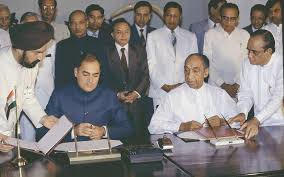
The latest list outlining the sources of migrants also tells us that 7 of 10 countries are from Asia, the region where Australia has its major trading partners.

China with 25508 is the second top source and Great Britain with 25273 is at the third spot.

India has many good universities with a large number of young people with the skills and English which Australia needs. These skills are in the fields of medicine, IT, teaching, nursing, Engineering, accounting, management and many others. These are all high value skills which are in great demand all over the world. Australia is now competing with other countries quite successfully.

I am quite pleased that increasing numbers of Indians are choosing Australia as the place to migrate to, despite exaggerated negative coverage of Australia in the Indian media in the recent past. This is the best certificate that Indian media was not factual in its reporting back then.

Dr Yadu Singh/Sydney/4th June, 2013

http://www.twitter.com/dryadusingh

www.facebook.com/dryadusingh

http://www.au.linkedin.com/in/dryadusingh

India House in Sydney: what is this about & why do we need it?

INDIA-House2

(See an important update at the end of this post)

The Indian Australian community in Australia comprises of about 400,000 people, out of which about 150,000 reside in New South Wales. Ours is a growing community and about half of our people have migrated to Australia during the last ten years.

Every community is unique and has its special characteristics and requirements.  In this sense, we are no different from the other multicultural communities in Australia.   Many of these requirements can be fulfilled by a Community Centre, which acts not only as the centre for all community/social interactions and mentoring/guiding services, but also for entertainment activities.  Private family occasions like weddings and other events can also take place there.  Any such centre should have sufficient space and facilities to cater to a range of activities.  This Centre should be able to self-sustain financially, and should be run professionally.

Despite being a major community, we do not have this  community Centre, which is in total contrast with other communities like Chinese, Vietnamese, Cambodian, Serbian, Croatian and others, many of which are smaller than ours, but do have such community premises.

India House has been talked about for more than 20 years but nothing obviously has happened. Talks and visions should have moved to something realistic and something fruitful by now, but it is yet to happen. We believe that it did not happen only because serious and sincere efforts were never made.
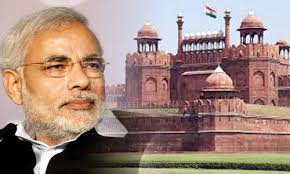
Projects of this nature require huge capital to make it happen.  We strongly believe that finances can be raised if there is a group of dedicated & committed people in our community who have integrity, vision, determination, perseverance, willingness and capacity to work on the plan for 3-5 years. The fund raising components must have multiple components, and it should include fairs, charity drives, direct contributions from the community, and also sponsorships from governments and businesses.
Our initial spadework informs us that there is sufficient goodwill for this huge venture in our community. We recognise that the biggest hurdle in this huge task is the distrust community members have towards community groups/leaders because they have not been transparent, accountable and result oriented, and in fact, some have used their groups for financial benefits. To make it worse, some have become branches of political parties. It is a common knowledge that finances generated from events, small and large, have often been mismanaged and possibly misused. The fund sourcing process therefore must remain ethical, transparent and must be supervised by at least two reputed finance professionals. This fund-raising must have the charity status and tax concessions.

We wish to take this project earnestly and start the process by donating the entire amount saved after expenses from the INDAUS FAIR on Sunday, 11 August 2013, which will take place at Rosehill Gardens, Rosehill Race Course, Rosehill, NSW. We will outline our detailed plan and the process of fund raising soon.

Our plan is to have a nodal group of 10 people who will do the initial work, using the expertise in law, planning, project work, finance, Real Estate, accounting and marketing among others.
This will be followed by a meeting with community representatives/leaders and members of media with the purpose of brain storming, exchanging ideas, revising and fine tuning the project. Media is so essential for this project and this project will be an “inclusive” work as far as practicable.

The Project will be super headed by a management committee, Board of Trustees and Advisory Council, and will have membership with defined benefits of such membership. The guiding principle will and must always be transparency, accountability and proper governance with an added motto of “service with integrity”.

More info from dryadusingh@gmail.com, www.yadusingh.wordpress.com  and www.indaus.org.au

Dr Yadu Singh/Sydney/2nd May 2013

President, Indian Australian Association of NSW Inc

————————————- UPDATE: 31st Aug, 2014 https://yadusingh.wordpress.com/2014/08/31/india-house-in-sydney-update/ ————————————-

Nalini Needs You. Can you help her please?

NaliniNeedsYou


Can you help? There is a better chance to help if you are from Kerala background but any Indian can help!


Dr Nalini Ambady, a professor at Stanford University, was recently diagnosed with a recurrence of leukemia, which she first battled in 2004. Now, she has only eight weeks left to live and urgently needs a bone marrow transplant from a genetically matched donor.

Originally from Kerala, Ambady became the first Indian American female professor in the Psychology Department at Harvard University, Tufts University, and Stanford University, according to a press release. Her research has been covered in Malcolm Galdwell’s book, “Blink.” More details are available on www.NaliniNeedsYou.com 

People of South Asian descent have a lower likelihood of finding a bone marrow match, and in Ambady’s case, doctors have estimated that chance at one in 20,000. 

HOW YOU CAN HELP? 

Since every willing donor may not be a perfect match for Nalini, we need as many willing donors as possible in a short time.

If you are willing to help and in the age group of 18-45 years please ring RED CROSS on  131495  and register with Australian Bone Marrow Donor Registry and donate.

ABMDR donor info is here  for your information. http://www.abmdr.org.au/

——————————————————————————————————————————–

Dr Yadu Singh/Sydney/26th April, 2013

http://www.twitter.com/dryadusingh

www.facebook.com/dryadusingh

Our team raised $22215 for recent Qld Floods victims!

Qld-floods-charity-3

Qld-floods-charity2

OUR TEAM RAISED $22,215.00 FOR QUEENSLAND FLOODS VICTIMS!


Press Release:

Sydney, 3nd April, 2013.

 Indian Australian Association of NSW Inc [INDAUS Inc] members teamed with others in the Hills Shire and organised a hugely successful Charity fund raising event for Bundaberg Floods Victims, at Mother India Restaurant, Dural, raising $22,215.00 on Sunday, 24th March, 2013. 

Earlier on 29th January, our group was having dinner at Mother India when the idea was born to give something back to the community. It comprised of Dr Yadu Singh [INDAUS Inc President], Gareth McCray [Broadcaster & INDAUS Inc member], Ross Colossimo [CEO of The Australian Brewery & Bella Vista Hotel, Sanjeev Sharma [Mother India Owner & INDAUS Inc member], Rajiv Chaudhri [CEO of Hitek Australia & INDAUS Inc member], Poonam Verma [Jewellery Designer from India], and Kanika Chaudhri [Rajiv’s daughter]. 

This discussion came to focus on the myriad of disasters that had hit Australia since January. We got round to realising that the Regional city of Bundaberg had been worst hit. It was suggested and agreed that we contact the Hills Shire Mayor, Dr Michelle Byrne, and see if she would agree to front a committee to raise some funds to help the people of Bundaberg. We did that and she agreed. A committee was constituted and potential sponsors were decided to run a special Charity Dinner at Mother India. 

The steering committee consisted of the above people and had the following join us later:-

Dr Michelle Byrne, the Hills Shire Mayor, A/Prof Jim Taggart, Joseph Ishak from Skad Australia, Clr Jeff Lowe, John Ebbott, Ms Sonya Phillips [Former Hills Shire Mayor], Journalist Bev Jordan and David O’Neill, the General Manager of the Castle Hill RSL.  

Meeting on a weekly basis, our team planned the event which included day time markets followed by buffet lunch and a lavish dinner with entertainment, auctions and raffles. Entertainment was provided by renowned singer, Angie Dean and a local Bollywood dance group, organised by Mother India. 

At $75 per person, the team did not take long to fill the restaurant with 120 people. They enjoyed a three course sumptuous dinner with Beer and wine donated by generous donors, The Australian Brewery, Australian Hotel Association & Castle Hill RSL. 

Master of Ceremonies for the event was media personality, Gareth McCray and auctioneer was A/Professor Jim Taggart who both brought the electrifying energy and enthusiasm to the event, thus helping in the collection of funds. 

Salvation Army Officer from Bundaberg, Mr Peter Evans was flown down to Sydney to witness the event. His flights and accommodation were sponsored, organised by the team, at no cost to him. 

The items for auction included a Cricket Bat signed by national teams of Australia and UK [bid successfully by INDAUS Inc Vice President, Stanley D’Cruz for $2000], Jewellery worth $3500 from House of Fraser, a necklace donated by Poonam Verma and many others. 

It was an absolute privilege working with each of these people in the team, who all knew fully well why this fund raising was important for the People of Bundaberg. 

Families and businesses in Bundaberg that had only just started getting on top of things since the previous flood had to watch again as their lives were upended and swept away by the Burnett River that raged with a ferocity that had never been seen before. 

The floodwaters did recede as quickly as they rose but nothing could prepare the residents for what they found when they crossed back across the Burnett River – some houses had sunk into the ground, others were covered in mud so deep, bed lined in the trees roads turned up. The river turned Bundaberg into a war zone. However the spirit of Faith, Hope and Love grew out of this disaster. 

A Faith that is based upon the knowledge that we can always rely on each other to help when the need is there. 

A Love of the friends, family and people from across the nation, such as here in The Hills Shire, who have come to help those in great need. 

This is what makes the many national multicultural groups that make up Australia so special. We believe that thing we call “mateship” is something we should be so proud of, and which we can show whenever our fellow Australians are in need of. 

That is why we came together on Sunday March 24 to join in that spirit of Faith, Hope and Love and help the people of Bundaberg. 

In addition to INDAUS Inc members taking a key role in the project, Indian Australians worked shoulder to shoulder with Hills Shire community and raised this amount for people in Queensland who need it so desperately. 

We, in INDAUS Inc, were proud to be the key members of the committee, responsible for execution of the project and delivery of the outcome in a substantial way. It was a unique experience for us in INDAUS Inc. 

INDAUS Inc is indeed proud to be part of doing something for our fellow Australians.

—————————————————————————————————————-

With contribution from Gareth McCray and released by Dr Yadu Singh

Dr Yadu Singh/Sydney/4th April, 2013
http://www.twitter.com/dryadusingh
http://www.facebook.com/dryadusingh

Indian Australian groups contributed to Clean Up Australia Day on Sunday, 3rd March, 2013!

clean up4-13

Clean up1-13

clean up2-13

clean up3-13


Sydney, 31st March, 2013

Like last year, we took part in Clean Up Australia Day activities this year too.

On Sunday, 3rd March, 2013, friends from 3 organisations-Indian Australian Association of NSW Inc [INDAUS Inc], Basava Samithi of Australia [BSOA]-Sydney Chapter and Samarpan Inc [A group of people who have family members with disabilities] joined up for the clean up activities at GARRISON POINT, MURRUMBEENA RESERVE, OFF HENRY LAWSON DRIVE, GEORGES HALL, NSW-2198.

It started at 8 am and went on until 10.30 am.

After collecting several bags of rubbish, the clean up party had a tea/coffee session and general discussion, followed by certificates and pics. We discussed how important it is for all of us from all sort of backgrounds to get involved in Australian events/activities which will help Australia and Australians. Australia is after all our home!

People who took part in it included myself [Dr Yadu Singh], Chidanand Puttarevanna, Stanley D’Cruz, Gaurav Nirwal, Rajni Chandran, Uday Shah, Jaywanth Vaidya, Parul Shah, Hemanth Raju, Paramesh Halaradhya, Vishwas Suresh, Dayanand Mogale, Vishwanath Halyal, Prajwal Pradhan, Vijay Kumar and many others.

From the Clean Up Australia website:

“Australians have more than demonstrated their passion and responsibility for cleaning up their local environment. Over 550,300 volunteers have donned their gloves and picked up a bag to remove rubbish from around 7341 sites across the nation.

Early figures predict they will have removed around 16,150 tonnes of rubbish, just the beginning of what is shaping up to be a tremendous effort yet again.

Since the national event started in 1990 Australians have donated more than 26,100,600 million hours towards caring for the environment through Clean Up Australia Day, by removing an estimated 288,650 tonnes of rubbish across the country.”

Clean Up Australia Day is truly a national event, in which everyone participates.

Indian and other multicultural groups have been increasingly participating in these activities.

Australia is a great & clean country and it is everyone’s job to keep it that way.

We did our part and are proud of it.

Dr Yadu Singh

http://www.twitter.com/dryadusingh

www.facebook.com/dryadusingh


Parramasala, The Australian Festival of South Asian arts, is a milestone in multicultural NSW!

Parramasala1

Parramasala2

Parramasala4


Parramasala, the Australian Festival of South Asian Arts, was initiated by Premier Kristina Keneally, then Premier of NSW, in 2010. It was held in 2011 and 2012 too. I and my friends have enjoyed it every year. Thousands of people from all backgrounds have enjoyed it too.

There are some question marks over whether it will continue in 2013 and beyond .

The budget of the festival is approx $1.5 millions, out of which approx $300,000 is contributed by Parramatta Council.

I attended a meeting, called by Parramatta Mayor recently. There was a discussion regarding the direction Parramasala should be taking from now on.

There was a discussion regarding whether one segment of Parramasala should happen in the neighbouring Harris Park suburb where there are many businesses from Indian/South Asian community.

There was a discussion whether “Curry & Spice festival”, focused on Harris Park should be included in the Parramasala.

There was a discussion regarding what Parramatta Council should do to get Harris Park included in Parramasala event. There was also a discussion regarding what Parramatta Council should do if Parramasala does not include Harris Park in the event.

After this meeting, we, the members of the community and businesses from Harris Park, had some further discussions among ourselves. I had some further discussions with many people on this.

This is what people think/feel about Parramasala and related events:

1. Parramasala is a significant event for NSW and South Asian communities.

2. Parramasala should continue to happen in 2013 and beyond.

3. Parramatta Council should continue to be a partner in Parramasala, contribute its share of money and should have a significant role in organising the event.

4. It will be nice if Harris Park event-Curry & Spice festival- is a part of Parramasala.

5. Parramasala should still continue to be held, even if Harris Park event-Curry & Spice festival- is not a part of Parramasala.

6. If Harris Park event-Curry & Spice festival- is not a part of Parramasala, it should still be organised and it should happen separately. Money aspect for Harris Park event should be worked on separately and should not be mixed or confused with anything to do with Parramasala. Contribution in advertisement and other related costs should be based on some fair formula. Contribution share based on number of seats in the restaurants is one such formula. Non-food businesses need to be involved in the festival and their contribution will need to be reasonable and fair.

7. Harris Park event- Curry & Spice festival- should be organised with participation from local businesses, community reps and Parramatta Council, as it is not only about local businesses.

Parramasala Board should have only those people who have vision, ability and capacity to organise an event of this nature. This is important to help this event grow , make the event more popular and have bigger participation of not only South Asian communities, but also general community. This has not happened and this needs to be reviewed why it has not happened.

Nomination of  people in Boards of events of this nature should be guided by quality and ability, in addition to vision of such people, not who the Govt leaders like even if such members do not have the required quality and ability.

Parramasala Board should be reviewed and reconstituted. Details of the festival:www.parramasala.com

Dr Yadu Singh/Sydney/15th March, 2013
http://www.twitter.com/dryadusingh
http://www.facebook.com/dryadusingh
au.linkedin.com/in/dryadusingh

What we need in Western Sydney?

Western sydney


I missed an important interview with Sunrise of Chanel 7 today because a usual 15 minutes’ drive took about 70 minutes.

Familiar story which happens far too frequently!

It is well known that transport is a big issue for people in Western and North Western Sydney.

Living and working in Western Sydney and interacting with people-professionally or socially, have given ample insight into what is needed in this part of Sydney where 2 million ie 1 out of 11 Australians live, and where majority of Sydneysiders live too.

As I see it, and from my perspective, these are the major issues;

I am listing them here without giving any consideration to the relative importance of these issues.

1. Crimes: Shootings have been in the news. There are gangs which are doing what gangs do. I am aware of many students who have been bashed up without any fault of theirs. One of them had a severe head injury and will probably never be able to work. There are people who get assaulted while getting out of train stations. People are scared about becoming victims of the shootings or assaults. Police are doing what they have to do or can do. Whatever has to be done by the Govt must be done to give Police resources to deal with the criminals. If more CCTV and more cops on the patrol will do the job, I am all for it. If anti-gang task force comprising of officials from various agencies will do the job, that is sweet too. We want safe streets where we can do things we want to do without worrying about the next drive by shooting, assault or knife attack. Let all good ideas come from all directions to help control crimes because we want real actions, not spins.

2. Transport: People in Western Sydney complain continuously about poor transport facilities in the region. They have to waste hours after hours on the roads which are full of cars, moving ever so slowly. We need better public transport with an efficient networking of the transport facilities. NSW Transport master plan has come out and a debate on it is ongoing. People have commented that it is Sydney CBD-focused. Comments have been made that 70% of Sydney people live in the West but 70% of jobs in Sydney are in area away from the West, thus forcing people to travel to Sydney CBD. We need more jobs in Western Sydney.

3. Jobs & employment: Unemployment rates are much higher in Western Sydney. Some say, it is double of the national standard. This is not good because it has a linkage with quality of life, general & mental health and so many more parameters. We need initiatives and incentives which will facilitate creation of jobs in various sectors right here in the West.

5. Proper utilisation of human resources: Western Sydney is very multicultural in nature with >40% of people with some connection with overseas ancestries. Western Sydney is generally the first place where new migrants choose to live. There are obvious reasons for this to happen. This phenomenon gives some boost to the economy, particularly housing and retail sectors, but more can happen, if dealt with smartly. What I have seen and heard is that their training and skills obtained overseas are not properly utilized. This happens mostly on the pretext of lack of “local” experience, leading to rejections of their applications for jobs. I believe that this should be addressed by offering incentives to the employers to employ suitable new migrants who have skills/training for the job, with provision of more active supervision and assistance for bridging courses/training to get them up to speed, if necessary. A smart country like Australia must utilise migrants who it accepted as residents fully and appropriately, making them a part of the economy.  

6. Industry & Infrastructure: More industries and infrastructure projects in the region will obviously create more jobs and rejuvenate Western Sydney. To encourage these projects and industries, and to kick start the economic growth of Western Sydney, Govts of all levels should offer incentives to the businesses to set their bases in the West.

7. Health services: The waiting lists for health services are bigger with longer waiting times in the West. Even emergency services take longer to be delivered compared to the East. Funding for the services must be such that they are equitable, sufficient and appropriate, not only for acute services but also for preventive services ie health education, and community care.

8. Airport: Independent studies have told us that Sydney will need second airport soon. Current airport will not cope with further load for long. If second airport is not coming forth, it will affect the economic growth of NSW. Multiple sites have been mentioned but they all get bogged down in politics. Politicians start worrying about votes. It is about time that Govts and politicians focus on economy, not just votes. If Sydney’s second airport has to be created, it has to be in Sydney basin, not Canberra. It will cost money [Approx. $10 billions] but then every mega project which is essential for our economy will need investment. An airport in Western Sydney is expected to give a major boost to the economy in the West, creating an environment for infrastructure projects and employment opportunities equivalent of approx. 40000 jobs,

9. WSROC & other stake holders: Wester Sydney Regional Organisation of Councils is a perfect group, comprising of Councils of Western Sydney. They know what is required in the region. Their views will be of significant importance. They along with key leaders from businesses, public policy and communities should be used as the key stakeholders for debates, analysis and sounding boards.

10. Cost of living: It is an important issue all over Australia but more so in Western Sydney. Rising prices of essential commodities like food, rising cost of electricity, high rents, cost of education, child care, high cost of petrol and so many items which are needed for day to day living are all adding to the pressure. Carbon tax has been an issue although not as bad as was predicted and there are some support available to compensate struggling families. No one can deny that there are people and families who/which are really struggling. Everything must be done to ease the pressure on them.

Two million people of Western Sydney need comprehensive policies/plans for the economic growth of the region. These policies must be outlined now and must be properly costed with source of funding outlined.

People in Western Sydney are smart people and they can see through the slogans and spins.

 We need decent, honest and meaningful plans/policies for the long term, not just for the election in Sept 2013.

A word of caution for both major parties: We want substance, not spins!

Dr Yadu Singh/Sydney/4th March, 2013

dryadusingh@gmail.com,

http://www.twitter.com/dryadusingh

www.facebook.com/dryadusingh

au.linkedin.com/in/dryadusingh/

Doing something for our fellow Australians!

MAYORAL CHARITY DINNER-Flyer


We have all heard about the devastation and damage which recent floods in Queensland caused to the communities there. This has been heart-touching.

Some of us from Hills Shire have come around and decided to do something about it to help rebuild lives. Gareth Mccray, Rajiv Chaudhri, Sanjeev Sharma, Adj/Prof Jim Taggart, Clr Jeff Lowe and myself in addition to Mayor Byrne and many others have been meeting on a weekly basis to organise a fund raising event for them. We have the full support from our able and compassionate Mayor from Hills Shire, Michelle Byrne, in addition to the support from Castle Hill RSL, local businesses and local newspapers.

The Hills Shire Mayor’s Care fund, under the leadership of Mayor, Michelle Byrne, is organising an event which starts in the day time with markets, buffet lunch followed by a gala charity dinner with entertainment, raffle draw and auctions of various articles. These items include a Cricket bat signed by Australian national team, a cricket bat signed by Ricky Ponting, jewellery items and so many more. It is simply amazing to see the generosity from Australians for a tragedy like floods in Qld.

Further details: http://tinyurl.com/cah8wue

Flyer: fb.me/2vjuvyhwb

We are more than 70% sold out and only few seats are left.

We would love one & all to join us either by visiting the markets/buffet lunch in the day time and/or joining us for the gala dinner.

Venue: Mother India, 1237 Old Northern Rd,  Middle Dural NSW 2158
(02) 9651 6555

Sunday, 24th March, 2013
Cost: $75/per person

I have already had positive response from heaps of people and of course, am looking for the support from more.

After all, this is a dinner for a noble cause!

To book a seat for the dinner, please contact me or any of the committee members.

It is about time that we do think about our fellow Australians and do something for them.

After all, Australia is our home and we all are Australians!


Dr Yadu Singh/Sydney/1st March, 2013 

dryadusingh@gmail.com, 0413 375 669

http://www.facebook.com/dryadusingh

www.twitter.com/dryadusingh


Health Seminar for the community:Eat to live and then, live to eat!

HealthSeminar-community.JEPGINDAUS-LOGO

Details for the next INDAUS Inc activity:
———————————————————————————-
“Eat to live and then, Live to eat”
-Health seminar for the community!
-Granville Town Hall, 10 Carlton Street, Granville, NSW
-Saturday, 23rd Feb, 2.30PM to 4.30PM
-Free admission.
-RSVP recommended! See the Flyer for details!
——————————————————————————————————-
Diet, nutrition, preventive care and primary medical care.
Talk and Q+A by Dietitian and doctors.

Dr Yadu Singh/Sydney/10th Feb, 2013
dyadusingh@gmail.com
http://www.twitter.com/dryadusingh
http://www.facebook.com/dryadusingh
http://www.indaus.org.au
http://www.facebook.com/indaus.nsw

Multiculturalism is in our Heart & Soul: INDAUS Inc celebrates Australia Day & Indian Republic Day with class & style!

Multiculturalism is in our Heart & Soul: INDAUS Inc celebrates Australia Day & Indian Republic Day with class & style!

ADIRD-23-CGADIRD24-CRCADIRD21-YSADIRD22-David-ClarkeADIRD11-Islanders-groupADIRD6-FlamencoADIRD19-Geoff-LeeADIRD12-SinhasADIRD13-ReddysADIRD14-CRCADIRD15-Michelle-ByrneADIRD16-FergusonADIRD16-Zangari-Grove-DattaADIRD17-Philip-RuddockADIRD18-John-Alexander<img src="https://yadusingh.org/wp-content/uploads/2013/02/adird7-cg2.jpg?w=300" alt="ADIRD7-CG" width="300" height="198" class="alignnone size-medium wp-image-3119" /Aus-IND-Flag>Sydney, 27th Jan, 2013

The Indian Australian Association of NSW Inc. [INDAUS Inc.] celebrated Australia Day and Indian Republic Day on Sunday 27 January 2013 with a style and a class of its own. A large gathering of 400+ people filled the Ryde Civic Hall to capacity.

Political and government dignitaries included federal parliament members Hon. Laurie Ferguson (Werriwa) representing the Federal Government, Hon. John Alexander (Bennelong) representing the Hon. Tony Abbott, the leader of the Federal Opposition and Hon. Philip Ruddock (Berowra).

Geoff Lee, Member for Parramatta, represented Premier of NSW, Hon Barry O’Farrell. Hon. Greg Smith, Attorney General & Minister for Justice and Hon. David Clarke, Parliamentary Secretary were present there too. The Minister for Communities and Citizenship, Hon. Victor Dominello, was represented by Matt Kean, Member for Hornsby and Guy Zangari, Member for Fairfield, represented Leader of NSW Opposition, Hon John Robertson. Other MPs and dignitaries included Kevin Conolly, Member for Riverstone, Dominic Perrottet, Member for Baulkham Hills, CRC Chair and CEO, Hon Stephan Kerkyasharian, Indian Consul General, Arun Kumar Goel, Mayor John Chedid from Parramatta, Mayor Ivan Petch from Ryde, Mayor Ross Grover from Holroyd, Mayor Michelle Byrne from Baulkham Hills, Councilor Karlo Siljeg, representing Blacktown Mayor and Councilor Raj Datta from Strathfield Council.

Guests were entertained to a welcoming Shennai instrumental music, which was played during the arrival of the guests.

Pics are here: http://www.desi.com.au/Australia_and_Indian_Republic_Day_Celebrations_by_INDAUS_Inc.html

The proceedings started with a short introduction by the event coordinator Mr. Abhilash Narendran in which he highlighted the importance of the Australia Day and the Indian Republic Day. He then introduced the president of the Indian Australian Association of NSW, Dr Yadu Singh, who also played the role of the MC. He officially welcomed all the attendees. He said it was indeed gratifying to see a large cross section of the Indian and Australian community attend this event.

The national anthems of Australia and India were presented followed by common Australia folklore Waltzing Matilda by Legendary Slim Dusty that was well received by the audience.

Several dignitaries delivered a series of brief official speeches. The list included Hon. Greg Smith, Hon. Laurie Ferguson, John Alexander, Geoff Lee, Matt Kean, Guy Zangari, Stephan Kerkyasharian and Arun Kumar Goel. Almost all the speakers dwelt on the similarities of Australia and India in multiple ways. They all wished for the improvement in bilateral relations between the two countries and wished India in its march towards progressive development in society, culture and industry. They all praised the good work the team led by Dr Yadu Singh have been doing with and before INDAUS formation.

In his brief address, INDAUS Inc. President, Dr. Yadu Singh informed that the Indian community in Australia is of a significant size, constituting 2% of Australian population, and is keen to play its role. A brief mention was made about what INDAUS team has been doing. He outlined that INDAUS Inc. is going to stay out of the annoying race to “give awards”, which is so prevalent with every other association in the community. He outlined the resolve of INDAUS Inc. to bring “India House” project to fruition, while working with all groups, associations and community in a smarter and efficient way.

A multicultural mix of entertainment was the highlight of the event. At the commencement, Ruchi Sanghi’s Group performed Kathak dances, followed by The Flamenco dancers providing a gutsy and excellent show in which a team of two women and one man entertained the gathering with a series of Flamenco dances. The main highlight of the evening was of course the Islanders’ dances. A group of five drummers and eight dancers from the Cook Islands mesmerized the audience by a series of superbly crafted intensive dances. They were so good that attendees could not refuse the request to participate in some of these cultural dances to the audience’s delight.

This event was supported by several media and business groups. Cricket NSW donated NSW Blues Team cricket bat, which was auctioned. Business groups donated several raffle prizes for the occasion. Details will be posted in INDAUS Inc. website soon.

A souvenir was released to commemorate this event. Generous support in the shape of sponsorships by many business organizations was acknowledged.

Mr. Anil Sharma, INDAUS Inc. Treasurer, proposed a vote of thanks in which he thanked and appreciated all those involved in making this celebration possible in a short time frame.

Renowned and popular caterer, Ajay Raj from Maya da Dhaba, as usual, dished out a superb Indian meal with excellent entrée dishes.

Overall the Australia Day & Indian Republic Day celebrations organized by the Indian Australian Association of NSW Inc. were splendidly successful and rewarding for the organizers and the audience. We received several excellent comments from the attendees for a well-organized great Indian community function.

The special points, separating INDAUS Inc. from others and proving again that it is an association with difference, included their Multicultural entertainment, large numbers comprising predominantly of younger people [>75%], huge political presence and staying away from “Giving award” phenomenon which is so prevalent among other associations.

The executive committee of INDAUS Inc. is very grateful to the Indian community, businesses, media and others at large for their strong support and commitment to the organization. They will like members of the community to join them to help deliver projects for the community.

Press Release issued by Stanley D’Cruz, Vice President, Indian Australian Association of NSW Inc

—————————————————————————————————————————–
Dr Yadu Singh/3rd Feb, 2013
http://www.facebook.com/dryadusingh
http://www.twitter.com/dryadusingh
http://www.indaus.org.au
http://www.facebook.com/indaus.nsw

26th January 2013: Happy Australia Day and Happy Indian Republic Day!

26th January 2013: Happy Australia Day and Happy Indian Republic Day!

Happy Australia Day and Happy Indian Republic Day!

26th January is a great day for Australians and Indians! For Indian Australians, 26th January is doubly special! We are the only ones who get the opportunity to celebrate two national days this day today!

I will be going to join in the Flag hoisting at the official residence of Consul General of India in Sydney, Mr Arun Goel, followed by taking part in the citizenship ceremony, presided by Lord Mayor of Parramatta, John Chedid. Later in the evening, I will be joining in the NSW Premier’s Australia Day reception. Later in the evening and even during the day, I will be keeping in touch with celebrations including Republic Day Parade in New Delhi.

We ourselves from Indian Australian Association of NSW Inc [INDAUS Inc] will be hosting an Australia Day and Indian Republic Day  celebration tomorrow, Sunday, 27th Jan, 6-10.30 PM, at Ryde Civic Hall, Ryde, NSW with 400+ people including politicians, media and multicultural entertainment, and sumptuous food.

Our focus today and in our INDAUS Inc celebration on 27th January will be on fun, food, networking, multicultural entertainment and celebration of our two nation days.

Once again, Happy Australia Day and Happy Indian Republic Day!! Happy Indian Republic Day

Dr Yadu Singh/Sydney/26th January, 2013

http://www.twitter.com/dryadusingh

www.facebook.com/dryadusingh

India Diary: On the roads in Bundelkhand!

I am currently in India, visiting my extended family in Bundelkhand, Uttar Pradesh [UP].

Bundelkhand is the region between UP and Madhya Pradesh [MP] in the southern part of UP. Prominent places in this area include Jhansi, Khajuraho, Banda, Mahoba, Kalinjar, Chitrakoot, Panna, Tikamgarh, Chhatarpur, Satna and of course, Maihar.

http://en.wikipedia.org/wiki/Bundelkhand

It is such a fun and pleasure to be with my mother, brothers, nephews, nieces and relatives.

Many things have changed here, and they have changed in the right direction.

Internet is fast and cheap. At 800 Rupees [$15] a month, you can get unlimited broadband internet access at home!

Mobile phone rates are dirt cheap. Connectivity and coverage are great. Almost everyone I know has a mobile phone!

Flash and flashier cars on the road these days!

Roads are better, but still, a lot of work is required.

The biggest bummer is the electricity supply. There is no electricity between 10AM to 4PM, forcing people to use inverters and generators!

Poverty is all too pervasive, with lack of industry everywhere except a few. It is basically a feudal society with farming as the backbone.

I travelled to Maihar, Madhya Pradesh to visit the famous temple of Goddess Sharda right on the top of the mountain. My nephews and nieces have been insisting on this visit for years.

We could have taken the train to Maihar but we chose the car for the convenience and control.

http://en.wikipedia.org/wiki/Maihar

Sharada Temple Maihar

Mahindra and Mahindra’s Scorpio Four Wheel Drive on 30th Dec, 2012 was comfortable and right for the journey. 220 Km distance each way was no problem. We enjoyed songs from latest Bollywood movies. Children knew which song was from which movie. Amazing!

Banda to Maihar distance should have been about 160 Km but our driver took us via an alternate route due to bad  road condition on the regular pathway.

Arriving at Maihar at about 1PM, we had two choices for going to the temple. Either we go via the Gondola or negotiate about 1000 steps. We chose the former, for both efforts and time. There was a big crowd for Gondola too, but I have the feeling that my brothers were able to impress the Police and security that we deserved some sort of special treatment, hence a special entry to Gondola platform. I wonder whether my background as a Sydney medico worked here or was it money to grease the palms of people who were managing the Gondola!

On the top of the mountain, and at the temple, there was another crowd but this time we stayed in the crowd, taking about 1 hour before entering the temple itself.

We prayed, offered flowers and other things including Coco nuts before exiting the temple. We certainly prayed for health, peace and wellbeing of our family and friends.

It was cold but pleasant. We were full of devotion, enjoying devotional songs.

After being there for about 1 hour, we set out on our drive back to our home.

The roads in Bundelkhand from Maihar [MP] to Satna [MP] to Panna [MP] to Ajay Garh [MP] to Kartal [UP] to Naraini [UP] to Banda was fine except about 3 km stretch where work on the road was in progress.

I was pleased that I was able to visit this famous and historical temple which counts Alha, the brave Bundelkhand warrior, as its devotee.

http://en.wikipedia.org/wiki/Alha

Dr Yadu Singh/Bundelkhand, India/2nd Jan, 2013

Shiamak Sydney’s Summer Funk was a roaring success!

Shiamak-Summer-Funk-10Shiamak-Summer-Funk-8Shiamak-Summer-Funk-7Shiamak-Summer-Funk-5Shiamak-Summer-Funk-3Shiamak-Summer-Funk-2Shiamak-Summer-Funk-1Shiamak-Summer-Funk-4Sydney, NSW

30th Nov, 2012

I was supposed to see Skyfall, the latest Bond movie, in Parramatta on Friday, 30th Nov, 2012. We had 2 complimentary tickets. At the same time, we had the invitation to attend Shiamak Sydney’s Summer Funk at C3 conference Centre, Silverwater.

Knowing the reputation of Shiamak Australia Group, we chose the latter. Having witnessed and enjoyed the high level of performances, we are glad we decided what we decided. We can see Skyfall any other day.

The performances were thrilling.  While instructors were expected to perform marvellously, which they did, I was specially amazed however that their students performed so spectacularly, only after a 4 weeks training.

Vihang Nikalje, Darshan Pawar, Kush Gupta, Radhika Singh, Karishma Singh, Mystie and others were simply wonderful.

Bollywood dances were performed with finesse, class and grace.

It is no surprise that they did so because some of them have actually performed in Bollywood movies like “Bunty and Bubbly” and “Taare Zamin Par” after having trained by the legendary choreographer, Shiamak Davar himself.

You might also know that Karishma and Kush were in SBS Bollywood Star series.

This was their third performance in Sydney. The First was in Indian Independence Day celebration by Indian Australian Association of NSW [INDAUS Inc] at Parravilla, Parramatta, on 15th Aug, 2012. People were thrilled and mesmerised with what they saw. They still talk about it with nostalgia.

The second was on 28th Nov, 2012 when they rocked the Westin Hotel’s ball room which was full of 500+ Govt officials, Diplomats, business leaders and community leaders during Community Relations Commission’s [CRC] National Multicultural Marketing Award night. CRC Chair, The Hon, Stepan Kerkyasharian had seen their performances on 15th Aug, 2012 and was so impressed with it that he requested us to get Shiamak group for his function.

Summer Funk was their third, after training Sydneysiders over 4-5 weeks.

Shiamak Sydney honoured me and thanked our group for the support we have provided. I was given the honour to give away the certificates to the students/performers.

Shiamak Sydney has truly arrived in Sydney and has managed to rock Sydneysiders with their class and performances.

We look forward to their future activities right here in Sydney, the best city in Australia.

Thank you Shiamak Sydney for the honour given to us and more importantly, for entertaining Sydneysiders!

Dr Yadu Singh/3rd Dec, 2012

http://www.twitter.com/dryadusingh

http://www.facebook.com/dryadusingh

www.dryadusingh.tumblr.com

The best place to be born in is Switzerland. Australia is the next best!

The Economist Intelligence Unit [a sister concern of the The Economist] has published its research, outlining the relative positions of various countries in regards to the best place to be born in.

They used 11 criteria, some of which were subjective but many were objective.

Switzerland is the best place to be born in. Australia is the next best place with only 0.1 point behind Switzerland. Scandinavian counties follow Australia in the list.

India is 66th but Sri Lanka is ahead of India. Pakistan and Bangladesh are further down in the list.

Here is the list in 2012.

                                                                                                                                                                                                             .

More details are here: http://www.economist.com/news/21566430-where-be-born-2013-lottery-life?fsrc=scn/tw/te/tr/thelotteryoflife

Australia is a great country with relatively less crime and higher quality of life. Medicare system, guaranteeing good medical treatment for all Australians, rule of law and relatively clean governance all contribute to this country being a great place to live, work and bring the family up.

It is the responsibility of all Australians to do everything to keep Australia stay as a great place!

Dr Yadu Singh/Sydney/29th Nov, 2012

http://www.twitter.com/dryadusingh

www.facebook.com/dryadusingh

Wishing you a happy Diwali!

13th Nov, 2012,

Sydney, Australia

May this Diwali bring you and your family all the joy, success, health and wealth!

May there be Peace in the whole world!

————————————————————————————————————————————————————————————————–

On This Diwali Lets pray to Almighty God for :

ॐ असतो मा सद्गमय ।
तमसो मा ज्योतिर्गमय ।
मृत्योर्मा अमृतं गमय ।
ॐ शान्तिः शान्तिः शान्तिः ॥
Om Asato Maa Sad-Gamaya |
Tamaso Maa Jyotir-Gamaya |
Mrtyor-Maa Amrtam Gamaya |
Om Shaantih Shaantih Shaantih ||

Meaning:
1: Om, Lead us from Unreality (of Transitory Existence) to the Reality (of Self),
2: Lead us from the Darkness (of Ignorance) to the Light (of Spiritual Knowledge),
3: Lead us from the Fear of Death to the Knowledge of Immortality.
4: Om Peace, Peace, Peace.

 Brihadaranyaka, Upanishad 1.3.28

————————————————————————————————————————————————————————————————–

Happy Diwali! Happy new year!!

From Dr Yadu Singh & family

————————————————————————————————————————————————————————————————–

www.twitter.com/dryadusingh

http://www.facebook.com/dryadusingh

au.linkedin.com/in/dryadusingh

Community Health Education Series: Sleep Apnoea!

INDAUS Inc [www.indaus.org.au] is organising a Community Health Education Seminar on

 SLEEP APNOEA

At Ermington Community Centre, 10 River Road, Ermington, NSW

On Saturday, 24th Nov, 2012, 2-4PM

Admission is FREE.

Sleep Apnoea is an important and significant problem in the community. Some reports suggest it is more common among Indians. Its classical symptoms are snoring, day time sleepiness and lack of energy. It is implicated in traffic accidents, poor quality of life, lack of concentration and even cardio-vascular diseases. Obesity is significantly associated with Sleep Apnoea. Its diagnosis requires careful evaluation of symptoms followed by SLEEP Study. These days, Sleep study can be done at home, rather than needing to stay in the hospital for an overnight study. Its treatment requires life style changes, weight loss and C-PAP machine.

http://www.lungfoundation.com.au/lung-information/educationa-material/brochures-fact-sheets/91-obstructive-sleep-apnoea

Dr David Mikhail, a Respiratory and a Sleep Medicine Specialist will present information to the community during this seminar.

I will be moderating the presentation.

There will be plenty of opportunities for Q &A.

Join us for the seminar. Please let us know by sending an email to prindaus@gmail.com   if you are attending.

Dr Yadu Singh/Sydney/8th Nov, 2012

http://www.twitter.com/dryadusingh

http://www.facebook.com/dryadusingh

au.linkedin.com/in/dryadusingh

www.indaus.org.au

Rajiv Gandhi Bust in UTS, Sydney!

I was privileged to take part in the ceremony this morning when the BUST of India’s former PM, Mr Rajiv Gandhi, was inaugurated in University of Technology, Sydney. The BUST was donated by Indian Council of Cultural Relations, [ICCR], Govt of India, New Delhi.

The gathering included Mr Arun Goel, Consul General of India in Sydney, Prof Ross Milbourne, VC of UTS, Prof William Purcell, Deputy VC of UTS, Neville Roach, Dr Daniel Chandran from UTS, myself and a few dozen more distinguished people.

Rajiv Gandhi was a popular PM of India, at least in the beginning of his rule. He had a lot of goodwill on his side when he took over as PM of India, after Mrs Indira Gandhi’s assassination by her security guards. He remains the youngest PM of India and his victory in 1984 election gave him the biggest majority in Indian Parliament.

He lost some of that goodwill when he passed a constitutional amendment to negate the verdict from Supreme Court in Shah Bano case. His name was dragged into Bofors scam too.

His decision to intervene in Sri Lankan civil war was also controversial. Indian Peace-keeping force suffered unnecessary loss of lives because the whole strategy was not well thought in the advance.

Unfortunately, the matters from IPKF disaster ware largely responsible for the killing of Rajiv Gandhi by a LTTE’s suicide bomber, which forced India to harden its stand against LTTE. LTTE later realized that killing of Rajiv Gandhi was their biggest blunder, from which they never recovered.

On the plus side, he brought Sam Pitroda back to India to start the telecommunication revolution, including Public Call offices [PCOs], thus making telephone facilities available even in remote area of India.

He acted to reduce the control of “licence Raj” which was giving too much power to bureaucracy, thus stifling the economy.

He also initiated the process of improvement in USA-India relations.

His doctrine for nuclear disarmament and his efforts against Apartheid were his other noteworthy things.

After his assassination, Congress Party formed the Govt with PV Narsimha Rao as the PM.

There is an increasing presence of Indian philosophy and thought in Australian Universities either in the form of BUSTs or Chairs. Mahatma Gandhi’s Bust is in UNSW where people assemble on Gandhi’s birthday, 2nd October and Rabindranath Tagore Bust is in Macquarie University in Sydney. University of Melbourne hosts Australia India Institute, which is chaired by Prof Amitabh Mattoo.

Yadu Singh/Sydney/18th October,2012

http://www.twitter.com/dryadusingh

www.facebook.com/dryadusingh

Sachin Tendulkar’s Order of Australia: a brilliant piece of soft diplomacy!

English: Sachin Tendulkar at Adelaide Oval

English: Sachin Tendulkar at Adelaide Oval (Photo credit: Wikipedia)

I am happy to know that Australian PM, Julia Gillard, has announced an AM [Member of the Order of Australia] for Sachin Tendulkar, the only Cricketer who has scored 100+ centuries.

I also know that Indians in India and Australia are happy with this award. There should be no surprises there!

Sachin deserves it for the services to International Cricket, although there have been some comments in Australia against this award. Rob Oakeshott MP made his views known yesterday. He was in favour of Order of Australia reserved only for Australians and expressed that these awards should not be used for soft diplomacy.

Brian Lara, West Indian Cricketer received an Order of Australia in 2009 and Clive Lloyd received it earlier. Not only this, Indian Attorney General, Soli Sorabji, too received it in 2006. Many more international people have received such awards in the past. The sole criteria has been that they have helped relations between their countries and Australia.


Order of Australia: They are the top awards in Australia.

  • Knight or Dame of the Order of Australia (AK or AD – Civil division only – Closed to new appointments in 1986);
  • Companion of the Order of Australia (AC);
  • Officer of the Order of Australia (AO);
  • Member of the Order of Australia (AM); and
  • Medal of the Order of Australia (OAM).

Sachin has been given an AM.

In case of Sachin, critics in Australia have mentioned that he has not done any thing of substance for Australia India relations and his role in “Monkeygate” scandal in 2008 was not that great. Initially, Sachin said that he did not hear what Harbhajan Singh said to Andrew Symonds but later on he said that Harbhajan had used some other word in Hindi, instead of dreaded/racist “Monkey” word for Symonds.

It is hard to know what happened but smart thing will be to put that saga behind us and move on.

I don’t think Sachin spoke one or another way either when Indian students’ issue was a hot item in 2009.

Having said that, Sachin is a gentleman and a great cricketer. His achievements in cricketing field  are unmatched. Cricket fans love him all over the world including Australia.

The most important outcome from this award will be the image make over Australia will get in Indian minds, after it was distorted in 2009 due to saturation coverage of attacks on students. Even though most of the coverage, especially the racism bit, was exaggerated and hyped up, it did nevertheless cause a serious harm to Australia’s image in India and damaged Australian education business from India and other countries.

Order of Australia to Sachin is likely to reverse the “Feel bad” for Australia in India.

This, I believe, is a brilliant piece of diplomacy by Australian PM, Julia Gillard.

This may also be smart politics domestically too in regards to Indian Australians, knowing the numerical strength of the community in Australia. There are approx 400,000 Indian Australians [approx 2% of total population] with  some constituencies having more than 10% voters from our community.

While there would be some who will be swayed for supporting ALP because of this, I doubt it will be a significant factor because most of us, just like general population, decide who to vote for, based on policies and agenda of the political parties.

Coming to the real issues, I am hoping that PM Gillard and Indian leadership will deal with the real issues of Trade, Investment, International Education, security in the region and Uranium sale in a pragmatic fashion and have a win win outcome for both countries.

Yadu Singh/Sydney/17th October,2012

http://www.twitter.com/dryadusingh

www.facebook.com/dryadusingh

INDAUS Inc welcomes Mr Oscar Fernandes, MP and General Secretary of Indian National Congress in Sydney, and demands Visa on Arrival in India for Australian Citizens!

This is from INDAUS Inc Press release.

————————————————————————————————————————————

INDAUS Inc  welcomes Mr Oscar Fernandes, MP and General Secretary of Indian National Congress in Sydney, and demands Visa on Arrival in India for Australian Citizens!

INDAUS Inc honoured visiting AICC General Secretary and Member of Parliament, Mr Oscar Fernades, on 17th September 2012 at Chutney Indian Restaurant in Harris Park, NSW. The sumptuous and highly interactive dinner was attended by almost fifty prominent Sydney siders, representing various segments of Indian community living in Sydney.

Dr. Yadu Singh, president INDAUS Inc, made the welcome speech and walked the guests through the agenda for the evening. Dr. Singh, Anagan Babu and the INDAUS Inc team then introduced each and every guest to Oscar Fernades and thus bestowed them the privilege to shake hands and have a brief chat with the highly influential visiting Indian politician. Abhilash Narendran, INDAUS Inc’s Executive Committee member, formally introduced Oscar Fernades and gave a snapshot about Fernades’ public life and his achievements.Oscar Fernades’ down to earth nature was highly appreciable and it was clearly visible in his dealings with all who attended the dinner.

Dr Yadu Singh informed Mr Fernandes that there are about 400,000 people of Indian heritage in Australia. This is approx. 2% of the total Australian population and we have an increasing importance in several constituencies during elections. This number is increasing daily as India is the top source of migrants for Australia. He also assured Mr Fernandes that Australia is not a racist country and that Indians are not suffering racist or adverse treatment in this country, despite the false impression created by a segment of Indian media. Dr Singh also raised few significant issues, that affect Indian Australians, with the visiting politician.

DUAL CITIZENSHIP:

Dr. Singh brought up the demand for genuine dual citizenships for Overseas Citizens of India, to Oscar Fernades’ notice. He reiterated that Indians living overseas love India more than anyone else and are loyal to their motherland, India. There should be no valid concern in giving approved [following a thorough vetting by Ministries of Home Affairs and External Affairs] Overseas Citizens of India full political rights. Congress leader agreed to discuss this matter with Mr Vayalar Ravi, Hon Minister of Overseas Indian Affairs.

VISA ON ARRIVAL FOR AUSTRALIAN CITIZENS:

Dr Singh put forward the suggestion of providing ‘On Arrival’ Visa status to Australian Citizens, so that Australian citizens including Indian Australians who don’t have OCI cards will not be required to apply for Indian visa, if and when they travel to India. This should hopefully help tourists’ flow to India. Mr Fernades has promised to raise our demand with Ministry of External Affairs so that the ministry will explore diplomatic options to provide the new Visa option for Australian Citizens.

VISIT TO AUSTRALIA BY INDIAN PM:

Dr Singh reminded that there has not been any visit to Australia by any Indian Prime Minister for 26 years. Late Sri Rajiv Gandhi was the last PM who visited here. With 4 Australian Prime Ministers visiting India during this period and PM Julia Gillard visiting India in November, Indian PM’s visit to Australia is long overdue. With Australian Uranium sale to India sorted, there is no real obstacle against such visit. Australian community including Indian Australians are waiting for the Prime Ministerial level visit from India soon. Oscar Fernandes responded that there would be reciprocal visit from Indian side soon.

While addressing the gathering, Mr Fernades emphasized on the relevance of Mahatma Gandhi in the current and coming era. He also mentioned that the Indian family values, lifestyle and their emphasis on saving something for rainy days played a big role in providing India, a strong immunity from the after effects of GFC and the recent Euro zone crisis. He felt the overwhelming impression that Indians are doing well in Australia.

Oscar Fernades was honoured with an INDAUS Plaque, which was jointly handed over to him by Stanley D’Cruz, Anagan Babu and Dr.Yadu Singh, along with Sanjay Patel, a prominent Sydney businessman.

Released by Anagan Babu, Secretary, dated 21st September, 2012 www.indaus.org.au, www.facebook.com/indaus.nsw

————————————————————————————————————————————————————————————————–

Yadu Singh/Sydney/24th Sept, 2012

http://www.twitter.com/dryadusingh

www.facebook.com/dryadusingh

INDAUS Inc’s “Felicitation & honouring” evening for visiting prominent Indian writers was appreciated and enjoyed by all!

Indian Australian Association of NSW Inc [INDAUS Inc]

organised a reception to honour visiting prominent Indian writers on Wednesday, 5th Sept, 2012

at Chutney Restaurant, Harris Park, NSW.

INDAUS Inc’s “Felicitation & honouring” evening at Chutney Restaurant, Harris Park was enjoyed by all. Along with the visitors, Sydney’s prominent people attended the evening event. Dr Shailja Chandra, Mr Abbas Alvi, Mr Harmohan Walia, Manju Mittal, Dr Parwin Faiz, Dr Manmit Madan, Raymond Selvaraj [SBS Tamil Radio] were there along with 65 people in total, representing various segments of Indian community in Sydney.

President of INDAUS Inc, Dr Yadu Singh, conducted the evening with the help of Abhilash Narendran, Anagan Babu and Chidanand.

 A welcome message to the writers was read in many languages-English [Dr Yadu Singh], Hindi [Gaurav Nirwal], Telugu [Upendra Gadey], Kannada [Veena], Punjabi [Harmohan Walia], Tamil [Anagan Babu], Urdu [Abbas Alvi], Bengali [Mridula Chakravorty] and Malyalam [Abhilash Narendran]. This was followed by honouring of individual writers, with a presentation of a Plaque and a brief speech by the writers. Dr Shailja Chandra and Abbas Alvi recited their poetry.

Dr Singh informed the visitors that Indians are doing fine in Australia, despite the reports in Indian media that we are not. He gave a few examples of how the societies in Australia and India operate as a community and politically.

Anand Arora sang some beautiful songs which were enjoyed by all. He even sang some songs which were requested by the visitors. He enthralled everyone with his melodious songs.

A vote of thanks was given by Anagan Babu, scretary of INDAUS Inc.

INDAUS Inc Press release is here: INDAUS+-PressRelease-3-writers-event

The party finished at 11.30PM. The visitors were able to feel what we feel about Australia and India. They enjoyed themselves tremendously.

  Sydney’s Indian community was fortunate to have an opportunity to meet and interact with prominent writers from India who were visiting Sydney to take part in Australia-India Literatures International Forum, organised by University of Western Sydney and NSW Library.

Details:

http://www.sl.nsw.gov.au/events/series/australia_india_forum.html

Pics: https://www.facebook.com/#!/media/set/?set=a.515832245096938.130933.496959000317596&type=1 

All except two were present in the reception.

Here is  the brief info about 10 writers, 1 publisher and 1 literary consultant, who visited Sydney.

Gujarati: Prabodh Parikh is a poet, short fiction writer and visual artist. His book of poems, Kaunsman (Between Parentheses/In Brackets) published in 1993, represents thirty years of work in Gujarati literature, and won the Gujarati Sahitya Akademi Award and the G F Saraf Award for Best Gujarati Book. Other work include Mitro, Karan Vinana Loko, Priya Bhayani Saheb, and Kauns Bahar, a book of essays on philosophy and poetry. His work has been translated into Bengali, English, Hindi, Marathi and Punjabi.

Hindi: Uday Prakash is one of contemporary Hindi’s most important, original and audacious voices. He is an eminent scholar, prolific poet, essayist, journalist, translator and short story writer. Peelee Chhatri Wali Ladki (2001, The Girl with the Yellow Umbrella) is his best-known and longest continuous story. Other works include Ek Bhasha Hua Karti Hai (2009), Cheeni Baba (2008), Mohan Das (2006), Raat Mein Harmonium (1998), Abootar Kabootar (1984), Suno Karigara (1980), among others. His work has been translated into 10 languages, and in 2011, the University of Western Australia Press translated and published The Walls of Delhi. He is the recipient of the 2010 Sahitya Akademi Award and 2009 SAARC Literary Award, among numerous other honours.

Kannada: Girish Karnad rose as a prominent playwright in the 1960s and marked the coming of age of Modern Indian playwriting in Kannada. He is a recipient of the Jnanpith Award. He uses history, mythology and the fold theatre forms to address contemporary issues. Most of his plays, Yayati, Tughlaq, Hayavadana, Agni Mattu Male, Taledanda have been translated into English and several Indian languages. He has been conferred with the Padma Shri and the Padma Bhushan Awards by the Government of India. His famous play, Nagamandala, had its world premiere at the Guthrie Theatre in Minneapois while he was a Fulbright Playwright-in-Residence at the University of Chicago in 1987-88. He is a screenwriter, actor and director. He could not attend due to a private engagement.

Khasi: Kynpham Sing Nongkynrih writes poems and short fiction in Khasi and English. He is the author of Around the Hearth: Khasi Legends , A Mid-Ager’s Tale, Time’s Barter: Haiku and Senryu and The Yearning of Seeds. He has co-edited Dancing Earth: An Anthology of Poetry from North East India. His awards include the first Veer Shankar Shah-Raghunath Shah National Award for Literature (2008) and the first North-East Poetry Award (2004). His latest book, The Great Unconventional Elegiac Tradition: A Study of Gray, Arnold, Rilke, the Welsh Hiraeth and the Poetry of the Khasi National Bard, Soso Tham, raises immediate questions about a tradition of lamentation and its place in the North-East, as also about aesthetics within a nationalist tradition. His work has been published in Wasafiri. He could not attend due to an illness.

Malayalam: N S Madhavan is a leading writer of contemporary Malayalam literature. In a long career spanning major writer’s blocks, Madhavan has produced numerous novels, short stories, plays and football columns. His contribution to the short story form is considered unique and noteworthy. They include Chulaimedile Savangal (Corpses of Chulaimed), Higuita (judged best in 100 years of the Malayalam short story), Thiruth (Blue Pencil), Paryaya Kathakal (Stories about Names) and Nilavili (The Cry). His latest novel, Lanthan Batheriyile Luthiniyakal (Litanies of Dutch Battery 2003) was translated by Rajesh Rajmohan in 2011 and awarded the Hindu Literary Prize.

Marathi: Sharankumar Limbale is a dalit activist, writer, editor and critic. His recent autobiography, Akkarmashi (The Outcaste) reveals what it is like to grow up as an impoverished outcaste in modern India. His novel, Hindu (translated by Arun Prabha Mukherjee, Samya 2010) explores the contradictions within individuals and the plight of those who suffer injustice because of gender, physical disabilities as well as reasons other than caste. Towards and Aesthetic of Dalit Literature: History, Controversies and Considerations is his provocative and thoughtful account of the debates among dalit writers on how dalit literatures should be read, and is the first critical work by a dalit writer to appear in English.

North-East: Mamang Dai is a journalist, author and poet from the North East. Her works include River Poems, Arunachal Pradesh: The Hidden Land and Legends of Pensam. She won the 2003 Verrier Elwin Award from the State Government of Arunachal Pradesh and the 2011 Padma Shri from the Government of India.

Tamil: C S Lakshmi is a Tamil feminist writer and independent researcher in women’s studies. She writes under the pseudonym Ambai. In the 1990s, she worked on two research projects, Illustrated Social History of Women in Tamil Nadu funded by the Ford Foundation and An Idiom of Silence: An Oral History and Pictorial Study sponsored by the Homi J Bhabha Foundation. She is the founding Director of SPARROW (Sound and Picture Archives for Research on Women) and a member of the University of Michigan’s Global Feminisms Project. Her Tamil books include Nandimalai Charalilae (1962), Andhi Malai (1967), Sirakal muriyum (1976), Veetin mulaiyil oru camiyalarai (1988), Kaatil Oru Maan (2000) and Varrum eriyin meengal (2007).

Telegu: Gogu Shyamala is a Dalit feminist and Telangana activist who writes captivating short stories about life in rural Andhra Pradesh. She regularly publishes in journals such as Bhumika, Prasthanam, Pratighatana, Mana Telangana, Praja Kala Mandali and Nigha. Her latest collection is Father May be an Elephant and Mother Only a Small Basket, But… (Navayana). She represented Anveshi and Dalit Women’s Forum in the World Conference against Racism held in Durban,2001. She is a member of the Anveshi Executive Committee. Shyamala is  working on a project titled ‘Dalit Women’s Biographies’ (movement perspective of Dalit feminism) which aims to write biographies of Dalit women mainstream political leaders. This project is part of the Dalits and Minorities Initiative.

Urdu: Mahmood Farooqui: is a Delhi-based historian, writer and performer. After graduating from the Universities of Oxford and Cambridge as a Rhodes scholar from India, he started his own theatre group called dastak. Over the last five years, he has been working to revive a lost form of story-telling in Urdu called dastangoi. His first book, Besieged: Voices from Delhi 1857 was published by Penguin in 2010. http://dastangoi.blogspot.com.au/

Mr Farooqui was the script C0-writer and Co-director for Aamir Khan’s movie “Peepli Live”!

From the Publishing Side:

R Sivapriya is the Translation Editor with Penguin Books India, the most prominent literary publishing house in the Indian subcontinent.

Mita Kapur is the CEO of Siyahi, a Literary Consultancy, that liaises between writers and multilingual presses. She is also an Organising Member of the Jaipur Writer’s Festival. She could not attend due to an illness.

Some explanations:

1. The Jnanpith Award is the highest literary honour conferred in India.

2. Padma Shri and Padma Bhushan are the highest civilian awards granted by the Government of India, for lifelong achievements.

3. The Sahitya Akademi is the Literature Academy of India and the Sahitya Akademi Awards are the most respected and prestigious literature awards in the country.

4. All of the writers mentioned below have their works available in English translation from reputable Indian publishing houses, some international too.

5. Dalit refers to the tribal, indigenous and aboriginal writers of India.

[With input on writers from Dr Mridula Chakravorty, UWS and others for this Blog]

Dr Yadu Singh/Sydney/7th Sept, 2012

http://www.twitter.com/dryadusingh

http://www.facebook.com/dradusingh

http://www.indaus.org.au

www.facebook.com/indaus.nsw

INDAUS Inc is organising a reception in the honour of top visiting Indian writers in Sydney on 5th Sept, 2012!

INDAUS Inc is organising a reception in the honour of top visiting Indian writers in Sydney on 5th Sept, 2012!

Sydney’s Indian community is fortunate to have an opportunity to meet and interact with prominent writers from India who are visiting Sydney to take part in Australia-India Literatures International Forum, organised by University of Western Sydney and NSW Library.

Details:

http://www.sl.nsw.gov.au/events/series/australia_india_forum.html

 Indian Australian Association of NSW Inc [INDAUS Inc]

Website:  www.indaus.org.au

Facebook: www.facebook.com/indaus.nsw]

has organised a reception to honour them on Wednesday, 5th Sept, 2012

7 PM

at Chutney Restaurant, Harris Park, NSW.

All except one [Girish Karnad] will be present in the reception.

Here is  the brief info about 10 writers, 1 publisher and 1 literary consultant, who are visiting Sydney.

Gujarati: Prabodh Parikh is a poet, short fiction writer and visual artist. His book of poems, Kaunsman (Between Parentheses/In Brackets) published in 1993, represents thirty years of work in Gujarati literature, and won the Gujarati Sahitya Akademi Award and the G F Saraf Award for Best Gujarati Book. Other work include Mitro, Karan Vinana Loko, Priya Bhayani Saheb, and Kauns Bahar, a book of essays on philosophy and poetry. His work has been translated into Bengali, English, Hindi, Marathi and Punjabi.

 Hindi: Uday Prakash is one of contemporary Hindi’s most important, original and audacious voices. He is an eminent scholar, prolific poet, essayist, journalist, translator and short story writer. Peelee Chhatri Wali Ladki (2001, The Girl with the Yellow Umbrella) is his best-known and longest continuous story. Other works include Ek Bhasha Hua Karti Hai (2009), Cheeni Baba (2008), Mohan Das (2006), Raat Mein Harmonium (1998), Abootar Kabootar (1984), Suno Karigara (1980), among others. His work has been translated into 10 languages, and in 2011, the University of Western Australia Press translated and published The Walls of Delhi. He is the recipient of the 2010 Sahitya Akademi Award and 2009 SAARC Literary Award, among numerous other honours.

Kannada: Girish Karnad rose as a prominent playwright in the 1960s and marked the coming of age of Modern Indian playwriting in Kannada. He is a recipient of the Jnanpith Award. He uses history, mythology and the fold theatre forms to address contemporary issues. Most of his plays, Yayati, Tughlaq, Hayavadana, Agni Mattu Male, Taledanda have been translated into English and several Indian languages. He has been conferred with the Padma Shri and the Padma Bhushan Awards by the Government of India. His famous play, Nagamandala, had its world premiere at the Guthrie Theatre in Minneapois while he was a Fulbright Playwright-in-Residence at the University of Chicago in 1987-88. He is a screenwriter, actor and director.

Khasi: Kynpham Sing Nongkynrih writes poems and short fiction in Khasi and English. He is the author of Around the Hearth: Khasi Legends , A Mid-Ager’s Tale, Time’s Barter: Haiku and Senryu and The Yearning of Seeds. He has co-edited Dancing Earth: An Anthology of Poetry from North East India. His awards include the first Veer Shankar Shah-Raghunath Shah National Award for Literature (2008) and the first North-East Poetry Award (2004). His latest book, The Great Unconventional Elegiac Tradition: A Study of Gray, Arnold, Rilke, the Welsh Hiraeth and the Poetry of the Khasi National Bard, Soso Tham, raises immediate questions about a tradition of lamentation and its place in the North-East, as also about aesthetics within a nationalist tradition. His work has been published in Wasafiri.

Malayalam: N S Madhavan is a leading writer of contemporary Malayalam literature. In a long career spanning major writer’s blocks, Madhavan has produced numerous novels, short stories, plays and football columns. His contribution to the short story form is considered unique and noteworthy. They include Chulaimedile Savangal (Corpses of Chulaimed), Higuita (judged best in 100 years of the Malayalam short story), Thiruth (Blue Pencil), Paryaya Kathakal (Stories about Names) and Nilavili (The Cry). His latest novel, Lanthan Batheriyile Luthiniyakal (Litanies of Dutch Battery 2003) was translated by Rajesh Rajmohan in 2011 and awarded the Hindu Literary Prize.

Marathi: Sharankumar Limbale is a dalit activist, writer, editor and critic. His recent autobiography, Akkarmashi (The Outcaste) reveals what it is like to grow up as an impoverished outcaste in modern India. His novel, Hindu (translated by Arun Prabha Mukherjee, Samya 2010) explores the contradictions within individuals and the plight of those who suffer injustice because of gender, physical disabilities as well as reasons other than caste. Towards and Aesthetic of Dalit Literature: History, Controversies and Considerations is his provocative and thoughtful account of the debates among dalit writers on how dalit literatures should be read, and is the first critical work by a dalit writer to appear in English.

North-East: Mamang Dai is a journalist, author and poet from the North East. Her works include River Poems, Arunachal Pradesh: The Hidden Land and Legends of Pensam. She won the 2003 Verrier Elwin Award from the State Government of Arunachal Pradesh and the 2011 Padma Shri from the Government of India.

Tamil: C S Lakshmi is a Tamil feminist writer and independent researcher in women’s studies. She writes under the pseudonym Ambai. In the 1990s, she worked on two research projects, Illustrated Social History of Women in Tamil Nadu funded by the Ford Foundation and An Idiom of Silence: An Oral History and Pictorial Study sponsored by the Homi J Bhabha Foundation. She is the founding Director of SPARROW (Sound and Picture Archives for Research on Women) and a member of the University of Michigan’s Global Feminisms Project. Her Tamil books include Nandimalai Charalilae (1962), Andhi Malai (1967), Sirakal muriyum (1976), Veetin mulaiyil oru camiyalarai (1988), Kaatil Oru Maan (2000) and Varrum eriyin meengal (2007).

Telegu: Gogu Shyamala is a Dalit feminist and Telangana activist who writes captivating short stories about life in rural Andhra Pradesh. She regularly publishes in journals such as Bhumika, Prasthanam, Pratighatana, Mana Telangana, Praja Kala Mandali and Nigha. Her latest collection is Father May be an Elephant and Mother Only a Small Basket, But… (Navayana). She represented Anveshi and Dalit Women’s Forum in the World Conference against Racism held in Durban,2001. She is a member of the Anveshi Executive Committee. Shyamala is  working on a project titled ‘Dalit Women’s Biographies’ (movement perspective of Dalit feminism) which aims to write biographies of Dalit women mainstream political leaders. This project is part of the Dalits and Minorities Initiative.

Urdu: Mahmood Farooqui: is a Delhi-based historian, writer and performer. After graduating from the Universities of Oxford and Cambridge as a Rhodes scholar from India, he started his own theatre group called dastak. Over the last five years, he has been working to revive a lost form of story-telling in Urdu called dastangoi. His first book, Besieged: Voices from Delhi 1857 was published by Penguin in 2010. http://dastangoi.blogspot.com.au/

He was the script C0-writer and Co-director for Aamir Khan’s movie “Peepli Live”!

 From the Publishing Side:

 R Sivapriya is the Translation Editor with Penguin Books India, the most prominent literary publishing house in the Indian subcontinent.

Mita Kapuris the CEO of Siyahi, a Literary Consultancy, that liaises between writers and multilingual presses. She is also an Organising Member of the Jaipur Writer’s Festival.

Some explanations:

1. The Jnanpith Award is the highest literary honour conferred in India.

2. Padma Shri and Padma Bhushan are the highest civilian awards granted by the Government of India, for lifelong achievements.

3. The Sahitya Akademi is the Literature Academy of India and the Sahitya Akademi Awards are the most respected and prestigious literature awards in the country.

4. All of the writers mentioned below have their works available in English translation from reputable Indian publishing houses, some international too.

5. Dalit refers to the tribal, indigenous and aboriginal writers of India.

[With input from Dr Mridula Chakravorty, UWS]

Dr Yadu Singh/Sydney/3rd Sept, 2012

http://www.twitter.com/dryadusingh

http://www.facebook.com/dradusingh

http://www.indaus.org.au

www.facebook.com/indaus.nsw

What was this racist contractor smoking?

http://timesofindia.indiatimes.com/world/rest-of-world/No-Indians-or-Asians-job-advertisement-triggers-outrage-in-Australia/articleshow/15885678.cms

A contractor, working for Coles, had posted a job ad in Gum Tree online site for cleaners in a shopping centre in Hobart, Tasmania. In this ad, Indians and Asians were asked to not apply.

That is disgusting, racist and illegal.

Anti-discrimination laws prohibit such behaviour.

Rightly, the Anti-discrimination commissioner took a notice of it and has decided to investigate it. The ad has now been pulled out.

I believe that people who have the idea of racial supremacy or look down upon other races are idiots and sick.

It is important that this contractor and Gum Tree are punished for this illegal behaviour. Coles too must deal with this contractor sternly.

Such practices and people have no place in multicultural Australia. Australia has long moved on from the days of dreaded “White Australia Policy” but some losers are stuck to the past.

This is idiotic in a country where close to half of the population were either born overseas or have at least one parent born overseas.

Thankfully, these things are uncommon but even one example is “Not on and not acceptable”!

Dr Yadu Singh/Sydney/28th Aug, 2012

http://www.twitter.com/dryadusingh

www.facebook.com/dryadusingh

Indian Independence Day celebration in Sydney, right on Independence Day, 15th Aug, 2012!

Indian Independence Day celebration in Sydney, right on Independence Day, 15th Aug, 2012!

Indian Australian Association of NSW [IndAus Inc]

www.indaus.org.au

is organising an exclusive Indian Independence Day celebration, right on Independence day

 Wednesday, 15th August, 2012

7pm-11.30 PM

At Parravilla, Parramatta, NSW.

INVITATION only event with NO Ticket sale!

Top Dance group, Shiamak Davar group, performing!

Catering by the TOP Indian Restaurant in Sydney, Maya Da Dhaba, Surry Hills, NSW!

Supported by many prominent businesses and people!

Some seats [invitations] will be given away for those who visit www.indaus.org.au and express their interest to attend or visit INDAUS Inc facebook site and “like” it.

Dr Yadu Singh

www.indaus.org.au

www.twitter.com/dryadusingh

www.facebook.com/dryadusingh

Celebrating Indian Independence Day in Sydney on the Independence Day ie 15th August, 2012!

Celebrating Indian Independence Day in Sydney on the Independence Day ie 15th August, 2012!

India celebrates its Independence Day on 15th August every year. It does not matter whether it is a weekday or weekend. 15th August is the day of celebration all over India and for all Indians, irrespective of where they live. It shouldn’t be different for us in Australia either.

http://en.wikipedia.org/wiki/Independence_Day_(India)

We are proud Australians, but we are also proud of our Indian heritage. People from our community have done very well in Australia. It makes us proud to see so many successful businessmen/women, lawyers, doctors, Bankers, teachers, Movie makers, CEOs, CFOs, accountants, builders, Entertainers, Cultural performers, Artists, IT professionals, Realtors, restaurateurs and entrepreneurs from our community doing so well in this great country. Three cheers for their success!

I was thrilled to read the latest Census report, telling us that there are  approx. 400,000 people of Indian heritage in Australia. India is the number one source of migrants to Australia now. We are doing fine in many respects. The only thing we have not been that good is about our presence in politics. This will change soon. I was pleased to see so many among us contesting coming Council elections in September 2012. This is a good sign.

We have  a significant clout but we are not marketing, exhibiting and utilizing it appropriately due to our bickering and differences. This needs to change.

Just to illustrate a point, I was invited to the Israel’s Independence Day celebration at a 5 Star Hotel in the city a few weeks ago. I was highly impressed with the crowd. NSW Premier, Barry O’Farrell, about 10 ministers, Leader of Opposition [John Robertson], members of State shadow ministry, Top leaders from Federal Govt and Federal shadow ministry, along with Editors of national newspapers, media leaders and ethnic community leaders were present. Close to 40 MPs were there. Many Consul Generals, High commissioners and Ambassadors too were there. It was indeed a hugely impressive gathering.

Can we match it or do something similar? Yes, we can, if we work together.

We have started the process from this year. I hope great people of Indian heritage share our passion and join us in this. We ourselves have done some significant networking in the community. While some very important businesses and entities are on board for this event of ours and are supporting us wholeheartedly, we need support from others who are equally important. We are indeed thrilled with the support from Maya Da Dhaba, Sharma’s Kitchen, SHIAMAK DAVAR Group from Melbourne, Patel Brothers Group, Parravilla, Murli Bhojwani, Best & Less Travel, Go Kool, Tuli Jewellers, FIAV [Federation of Indian Association of Victoria] and many more, and we are likely to have many more on board soon. We also need to hear from you about our great achievers [and sometimes, silent achievers], who must be invited for an event like this. It is not just “my” function. It is indeed “our” function as a community.

Changing the usual style and going for a classy style, befitting the status of our community in Australia, this event [Indian Independence Day Celebration] is happening in the evening of 15th Aug, 2012. There is no ticket for it as it is an “INVITATION ONLY” event.

“Invitations” will be mailed out soon.

More details about us at www.indaus.org.au.

It is beyond doubt that there is a need for an effective and smart networking of our people for so many reasons.  We need to start recognising “positives” among our people and not focus too much on the “negatives” as long as “positives” clearly outnumber “negatives”. We need this networking and understanding also for enhancing the reputation of our community. This is a no brainer.

Let the petty politics be buried and minor differences ignored. Let us move forward!

Let us come together and put up a wonderful celebration of Indian Independence Day right on Independence Day, ie 15th August!

Stay tuned!

Dr Yadu Singh/Sydney/26th July, 2012

www.twitter.com/dryadusingh

www.facebook.com/dryadusingh

Recommendations to take Australia India relations to a new height! Australia India Institute [AII] does a fantastic job!

Australia India Institute [AII], based at University of Melbourne and led by Amitabh Mattooo, has released its report, The Australia-India Institute – Beyond the Lost Decade. recommending steps, which, if implemented by both Govts, will take Australia India relations to a new height.

Here is the link for Report: http://www.aii.unimelb.edu.au/wp-content/uploads/2012/07/Beyond-the-Lost-Decadeweb.pdf

Here are the recommendations from this report. See the Link above for the detailed report.

The Australian government should, in partnership with the States, education and corporate sectors and civil society institutions:

• Undertake as an act of goodwill to extend the visas of Indian students who were in Australia on February 8, 2010, and whose pathways towards permanent residency in Australia were affected by changes to immigration regulations in that year. Such extensions or issuance of alternative categories of visa should be granted for at least 12 months from December 31, 2012.

• Extend the post-study work entitlement currently enjoyed by international students at universities to all TAFE institutes and reputable private colleges offering vocational training.

• Initiate the training of adequate numbers of school teachers in the Hindi language in preparation for its introduction into the Australian Curriculum as soon as practicable. State and Federal education ministers should agree to specify areas of the curriculum in which Indian content must be taught, including Indian history, geography and culture. Re-establish language training for Australian diplomats posted to India.

• Expand the study of contemporary India at Australian universities by providing initial funding for twenty B-level university teaching/research positions for the next five years, after which the universities fund the positions.

• Seek talks with India on granting visa-on-arrival travel for Australians and developing a special category visa for young Australians wishing to work in India. Initiate talks on new visa categories that cut red tape for visits by leadership figures such as university vice-chancellors and deans, Supreme Court judges, holders of national awards such as the Padma Bhushan and Order of Australia.

• Encourage the nomination of more foreign nationals, including Indians, for the Order of Australia awards, and more vigorously publicise foreign recipients by announcing them on the same day as national award winners each year.

• Benchmark and fund scholarships for Australian university students to study in Asian nations to a maximum of one per 100 international students studying in Australia in any given year.

• Double the Department of Foreign Affairs and Trade’s paltry public diplomacy budget of $5 million, with the additional funds earmarked to raising awareness in India of exemplary initiatives such as the Australia-India Strategic Research Fund.

• Modernise Australia’s approach to international broadcasting, with Australia Network (TV) and Radio Australia taking on a larger role as content providers to Asian broadcasters. Australia Network to retain close links with DFAT but funding and editorial responsibility should rest with the Australian Broadcasting Corporation.

• Establish an Australia-India senior editors’ dialogue modelled on the Australia-Indonesia editors’ dialogue, with initial funding for four meetings, in New Delhi,

Sydney, Mumbai and Melbourne over a six-year period.

• Introduce an Australian education rating system for States that provide education services to international students, encouraging them to prevent and/or speedily

address problems that can damage Australia’s brand as an education provider by prioritising student safety, proper orientation, police liaison support, and the active

involvement of local ethnic communities as contact points for international students, including Indians.

• Invite representatives of regiments of Indian troops who fought at Gallipoli to be Australia’s guests at the 100th anniversary commemorations of the campaign in

2015, and invite expressions of interest from documentary film makers interested in producing feature films and documentaries about the shared experiences of Indian and Australian soldiers at Gallipoli.

• Establish a permanent naval attaché position in the Australian High Commission in New Delhi, in addition to the existing defence adviser position, which can continue to rotate between Army, Navy and Air Force personnel. Begin negotiations for joint training exercises between Indian and Australian Special Forces, as currently exist between India and the United States.

• Fund the Australia India Institute to develop an online ‘one-stop shop’ website providing reliable information on all aspects of trade, diplomatic, educational, people-to-people cultural relations.

• Increase support and funding of major travelling exhibitions on art, history, heritage and sport to and from Australia and India, including the Bowral-based International Cricket Hall of Fame’s effort to mount offshore exhibitions in India.

• Expand the growing range of Australia-India annual lectures, such as the Gandhi Oration and Crawford Lectures to all academic disciplines and civil society sectors, and name one such lecture in honour of the late esteemed India expert A.L. Basham.

• Encourage Australian political parties to pursue formal dialogues and party-to-party relationships between the main political parties in each country; increase interactions between Australian and Indian State and Federal parliamentarians via delegations, conferences and staff exchanges.

• Fund the Australian Institute of Criminology to undertake ongoing research into racism and crime, with an initial reference to inquire into the high profile incidents that impacted on relations with Indian in 2009-10.

•Fcilitate the entry of Australian Technical and Further Education Institutions to provide training in India and other countries on a not-for-profit basis.

• Offer India the use of Australian expertise in developing distance education and the virtual classroom.

• Create a web-based advertising campaign showcasing Indian students’ opinions on Australia as a place to study, live and work.

• Encourage Australian media organisations to revive regular staff exchanges with Indian media organisations.

• Enlist Tourism Australia to develop an India wedding package that will encourage Indian honeymooners to take their holidays here, and couples of any

background to wed in grand Indian style at selected locations across Australia, including the Outback.

The Taskforce also recommends that…

The Indian government should:

* Propose institutionalised regular Prime Ministerial visits between New Delhi and Canberra. Establish a young political leaders program between India and Australia.

* Establish a naval attaché position at the Indian high commission in Canberra and open an Indian consulate in Brisbane in recognition of India’s economic interests in Queensland.

* Expedite the proposed restructuring of the territorial divisions of the MEA and split the 26-nation Southern Division, hiving off part of its mandate to a newly constituted Indo-Pacific or Australasia Division that could include Australia, New Zealand and the Pacific Islands.

* Explore potential for shared humanitarian assistance and technical capacity-building programs in third countries. Australia has an expansive humanitarian assistance and technical partnership program with several countries through AusAID. India’s new Development Partnership Administration (DPA) Division in the MEA seeks a similar institutional profile. They can combine and contribute financial, material or human resources for specific projects, perhaps for programs in less-developed states of the Commonwealth.

• Encourage the setting up of separate, track 2/track 1.5 taskforces and dialogues on Australia’s role in Indian energy and food security.

• Consider a policy of visa-on-arrival for citizens of Australia, which is currently available to citizens of New Zealand, among others.

• Encourage business associations such as the Confederation of Indian Industry and the Federation of Indian Chambers of Commerce and Industry and their member corporations to interact with their counterparts in Australia, and institute short-term work and exchange programs for young Australian and Indian professionals.

• Accepting that democracy is a common and cherished principle shared by both countries, encourage a track 2/track 1.5 taskforce dialogue on democratic capacity

building, to explore possibilities of providing institutional and technical cooperation, including human resource training, to newly emerging democracies in, for example, the Arab world.

• Encourage the Press Trust of India and Doordarshan to establish a stronger presence in Australia, with a more robust network of stringers or fully fledged correspondents.

I believe that both Governments should review them and implement the recommendations to improve the relations between Australia and India. Federal Govt should do the necessary things including approving the Uranium decision in the Cabinet.

Yadu Singh/Sydney/17th July 2012.

www.twitter.com/dryadusingh

www.facebook.com/dryadusingh

Gold Coast City’s Goodwill ambassador to India:My views in Gold Coast Bulletin!

Gold Coast Mayor, Tom Tate, has chosen Aiysha Saagar as a Goodwill ambassador to India. Aiysha has a few topless pics which she posted in her website. This has created a controversy. Aiysha is of Indian heritage. She is hoping to be a Bollywood actor and lives in Mumbai as well as Gold Coast. The Gold Coast Bulletin published a column named, FaceOff, which covered it. I was asked to give my views. Here is the link. Faceoff-opinion-GCBulletin What do you think?

Faceoff-opinion-GCBulletin

Yadu Singh/Sydney/3rd July, 2012

www.twitter.com/dryadusingh

www.facebook.com/dryadusingh

Census 2011:My comments in Australian Financial Review story!


Yadu Singh

www.twitter.com/dryadusingh

www.facebook.com/dryadusingh


Australian Financial Review

21st June, 2012

India tops migrant mix

By PIP FREEBAIRN

First they were British and Irish, then Greeks, Italian and Vietnamese, but now the fastest growing wave of migrants to Australia are Indians.

The 2011 census showed yesterday that the number of Indian migrants in Australia has doubled since five years earlier with around 150,000 new migrants arriving here.

The proportion of Australian residents born in India rose from0.7 per cent in 2006 to 1.4 per cent in 2011 as their number increased from 147,106 to 295,362.

Their growing contingent joins longer-standing migrants such as Yadu Singh, the president of Indian Australian Association of NSW. He came to Australia in 1991 to train as a cardiologist and enjoys the quality of life. He denies that Australia is perceived as racist and dangerous.

“Despite all the nonsense, Australia is a welcoming country and Indians know that. It was the Indian media that overreacted to the events a few years ago.

“Indian migrants know while there are a few [racists], the rules and regulation of this country are not in anyway racist.”

Dr Singh is referring to a series of incidents in Melbourne in which robberies and assaults on trains and in public places were perceived as being racially motivated.

Most Indians live in NSW, followed by Victoria, and most are located in capital cities. Melbourne had the highest proportion of Indian-born residents, at 2.7 per cent. But a regional bonus in the points test for permanent migration status means some Indian migrants are now branching out to Newcastle, Wollongong, and Bathurst.

Indian-born Australians are most likely to speak English at home, followed by Hindi and Punjabi, a language spoken in Northern India and regions of Pakistan.

The census reveals that the number of Punjabi speakers grew the fastest of any language in Australia – by 207 per cent between 2006 and 2011.

The growth of Hinduism has also matched the growth of Indian migration. While only 1.3 per cent of residents identify as Hindus, its numbers of adherents have almost doubled from 148,000 in 2006 to 275,534 in 2011.

Census director Andrew Henderson said the growth of Indian migration meant the Indian-born had overtaken Italian-born as those migrants moved into their second generation. “It is fundamentally shifting the cultural mix in Australia,” he said.

Australia and India share a number of cultural touchstones, not least widespread English usage in both nations and a legacy of common colonial histories. Cricket also binds the two nations, with Test matches that involve India in Sydney and Melbourne attracting large vocal crowds in support of the visiting team.

Indian permanent migration to Australia hit a monthly peak of almost 1800 in early 2008, before dipping to 680 in 2010 but has recovered to 1350 arrivals a month in early 2012.

Many Indians come to Australia not just for economic opportunity but to take advantage of the education system. Dr Singh said Indians who came to Australia tended to be young and highly educated and were often seeking further training in accounting, medical degrees, or nursing.

Indian-born Australians tend to be younger than the median age of the total population, 36 compared to 47.

Hass Dellal, the head of Australian Multicultural Foundation,which advises government, said the new wave of migration indicated that Australia was engaging more in the region.

“But we are not taking advantage of the opportunities it brings, economically or culturally. We need things such as languages in schools so that we can make the most of the advantages of our multicultural society.”

Australian Census 2011:what it says about India & Indians in Australia!

Australian Census 2011:what it says about India & Indians in Australia!

I was waiting for the latest Census 2011 data. This is out today. It has some very interesting information.

  • There are a total of 21,507,717 people in Australia.
  • 26% people were born overseas and 20% had one parent born overseas.
  • Top 10 counties by birth of migrants include India at 4th spot [295400 people]. UK, NZ, China are higher.
  • People of Asian background by birth have moved up in proportion of people born overseas [33% in 2011 Vs 24% in 2001].
  • Before 2007, UK was the top source of migrants but India is the top source of migrants in 2007-11. India now contributes 13.1% of migrants [2007-11] compared to 12% from UK. Most of the top 10 countries from where migrants are arriving from are Asian countries.
  • 47% of all Indians in Australia are Indians who have arrived in recent years [2007-11]. Corresponding numbers for Chinese is 35.
  • 200,000 Indians have arrived in Australia between 2001-11. Corresponding numbers are 176,200 and 127,700 for Chinese and New Zealanders respectively.
  • 98 males for 100 females in Australia but numbers skewed adversely for Nepalese [144 Males for 100 females], Afghanistani people [143 males for 100 females] and Pakistani people [143 males for 100 females].
  • 390900 [2%] people have identified their ancestry as Indian ancestry, compared to 866000 [4%] for Chinese ancestry. This number may be an underestimate as some second and third generation people of Indian ancestry may have identified themselves as from “Australian ancestry”.
  • Among those who identified as of Indian ancestry, 61% were born in India, 20% in Australia and 19% in other countries.
  • Among those who identified their ancestry as Indian, only 12.9% had one more ancestry, compared to much higher proportions from other groups. This means that marriages outside Indian segment is much less common. One explanation is that Indian community is a newer community in Australia. It is likely to change in years/decades.
  • Indian ancestry numbers may be an underestimate as a section of Indian community ran a campaign before Census to identify themselves as “Punjabi” ancestry, not Indian ancestry.
  • 61% people follow Christianity in 2011 compared to 68% in 2001 and 96% in 1911.
  • Non-Christian faiths have grown from 4.9% [900,000 people] to 7.2% [1.5 millions] between 2001 to 2011.
  • Buddhism is the commonest non-Christian religion [2.5%], followed by Islam [2.2%] and Hinduism [1.3%].
  • Hinduism had the fastest growth. It grew 189% between 2001 to 2011. 275000 people identify themselves as Hindu now. 275000 Hindus from a total of 391000 people with Indian heritage means Hindus constitute 70% of total number of Australians of Indian ancestry.
  • Growth of Islam and Buddhism have been 69% [476,300 people] and 48% [529000 people] in the last decade.
  • “No religion” category grew too from 15% to 22% between 2001 to 2011.
  • Over half [56%] people born overseas are Christian.
  • Hindi is one of the Top 10 language, other than English, spoken by people at home. 104900 people [0.5%] speak Hindi at Homes. Mandarin, Arabic, Cantonese and Vietnamese are spoken by more Australians. Hindi is the only Indian language among the top 10 languages in Australia. Punjabi language is spoken by Punjabi sub-segment of Indian community significantly but I am not completely clear about the comparison between Hindi and Punjabi languages. There is some confusion about it. It is however safe to say that Hindi is the only Indian language in the Top 10 languages in Australia. I will study this data more carefully and will seek clarifications.
  • Among those who speak Hindi, 80.2% speak English very well.

My take is that increasing numbers of  young and highly trained Indians are choosing to migrate to Australia. This is despite a negative campaign against Australia, which was run by a segment of Indian media in recent years. It proves that Australia is a fantastic place to live, work and settle. Indians have rejected Indian media’s campaign to create a false characterisation of Australia as a racist nation.

One could argue that India is losing so many well-trained young people but I doubt it is a relevant factor anymore. There is unemployment and under-employment in India, which is made much worse by perpetual, if not permanent, reservation system which reserves 50% jobs/training positions and even promotion opportunities to people who have been historically discriminated.  India’s so-called loss is Australia’s gain. Australia should continue to attract and accept skilled migrants from all over the world.

Indian Australian community has grown significantly in recent years and will continue to grow in coming years. There is an urgent need to network this community [particularly newer migrants] for mentoring/guidance in regards to settlement issues and integration in the Australian community, and also pastoral care, when needed.

Indian community associations and leaders need to analyse how they can provide guidance to newer migrants, when such guidance and mentoring become necessary.

One does not need to be an Einstein to predict that Indian Australian community will achieve increasing importance in Australian politics. They will constitute significant proportions in many constituencies. I predict, and in fact hope, that some “good” people from amongst us will enter Australian Parliaments and Local Councils within next 5 years.

Dr Yadu Singh/Sydney/21st June, 2012

www.twitter.com/dryadusingh

www.facebook.com/dryadusingh

USA brewer forced to rename “Kali Ma” beer!

USA brewer forced to rename “Kali Ma” beer!

I am sick and tired of people who use our religious symbols and pictures of our deities for commercial purposes, often inappropriately. Previously, Goddess Laxmi’s picture was used on a Bikini in Australia, which was withdrawn after protests. Someone used a picture of Goddess Kali in a night club in USA and even, Lord Ganesha was used for a sexual technique by a comedian in USA. Recently, Lord Ganesha was used in a satire in Australia, against which we ran a campaign. A Radio host in Sydney abused River Ganges for which we forced him to apologise last year.

If this was not enough, a brewery named, Burnside Brewery in Oregon, Portland, USA, used Goddess Kali in the promotion of its beer, calling it “Kali Ma” beer. The beer container even had the picture of Goddess Kali with 4 arms and severed heads of 3 men! It’s promotion used words like “Come worship the Black one, Kali, the ultimate reality of Brahma, this Tuesday”!

They have stopped this, only after, people protested against it vociferously. They will rename it shortly. They claimed to not know about the sentiments of the followers of  Hinduism. How dumb were they? Did they expect that Hindus will “love” them for abusing our religion?

Goddess Kali, also called Ma Kali [Mother Kali] is a much revered deity of Hinduism and is worshipped by Hindus through India and overseas. I too worship “Ma Kali”.

http://en.wikipedia.org/wiki/Kali

Someone rightly asked whether any of such people would ever use the symbols/prophets of other religions in this manner.

On a separate but still relevant note, I also believe that India must ban the use of religious symbols, names or pictures of deities in any marketing material in India, where it is a common practice to use such symbols in anything from “Guthka” to Taxis!

Hindus are peace loving and tolerant people, but this does not mean they will tolerate such blatant and disrespectful use of pictures and symbols of deities of Hinduism.

Yadu Singh/Sydney/17th May, 2012

www.twitter.com/dryadusingh

www.facebook.com/dryadusingh

Visa on Arrival in India for many countries including NZ, but not for Australia!

Visa on Arrival in India for many countries including NZ, but not for Australia!

See the update on Tourist Visa on arrival (TVoA), enabled by Electronic Travel Authorisation (ETA) post of 28th Nov, 2014. 

—————————————————————————————————————————-

Ministry of External Affairs [MEA], Govt of India has decided to offer Visa on Arrival in India for citizens of 3 more countries-France, Russia and Germany. It already had a policy like this for 11 countries-New Zealand, Finland, Luxembourg, Japan, Indonesia, Cambodia, Laos, Singapore, Vietnam, The Philippines and Myanmar.

It is a good step as it should hopefully make it easier for tourists to go to India. India wants to double the tourist numbers in next 2-3 yrs. There is much work in progress on infrastructure involving tourism as well. India has so many attractions for people to visit it. It is not called “Incredible India” for no reason!

A lot of work has been done in Indian airports and facilities have improved significantly. Indian diaspora will keep visiting India for family and business reasons.

What is missing from the list is the names of countries like USA, Canada, UK, Scandinavia and Australia. India considers the risk of inimical actions by visitors from any country before that country is included in the Visa on Arrival list.  It is a well-known fact that there are people in USA, Canada and UK, who have been involved, and are still involved in anti-India activities. US citizen, David Headley was in the news only recently.  They will obviously be not welcome in India.

Australia is, I think, not in that category. There have been increasing numbers of Australians visiting India. It should be encouraged. While people of Indian heritage in Australia can apply for OCI [Overseas Citizen of India] cards which entitle them to travel to India without Visa for many years, but not every PIO [person of Indian Origin] has yet gone for an OCI card. My understanding is that a significant proportion of Indians do not have OCI cards. Visa on Arrival, if allowed for Australian citizens, will help such people, and of course non-Indian Australians.

If NZ can be in this list, I would have thought Australia can easily be in that list too.

India has clarified that they are not looking for reciprocal Visa on arrival facilities for Indian citizens in any country before including such country for Visa on arrival facility.

Australia qualifies for inclusion in the list also because both countries have good relations, which have become even better, after Australia’s ruling party decided to sell Uranium to India in Dec 2011.

My suggestion to Indian diplomats in Australia-High Commissioner of India and Consul Generals, is to lobby with MEA to include Australia for the Visa on Arrival facility. I also think that leaders from Indian Australian community should also lobby with Indian diplomats and Indian Govt to include Australia in this list.

Yadu Singh/Sydney/11th May, 2011

www.twitter.com/dryadusingh

www.facebook.com/dryadusingh

Networking the community: Twitter or Facebook?

Image representing Twitter as depicted in Crun...

Image via CrunchBase

Image representing LinkedIn as depicted in Cru...

Image via CrunchBase

Networking the community: Twitter or Facebook?

**Dr Yadu Singh/Sydney, 11th May, 2012

Social networking is very hip these days. Facebook [FB], Twitter, LinkedIn, Blogs, YouTube, Tagg, Digg and many more are increasingly popular in the world. According to EBizmba.com [an industry source], Facebook, Twitter and LinkedIn have 750 million, 250 million and 110 million estimated unique monthly visitors respectively presently. They are obviously very

Image representing Facebook as depicted in Cru...

Image via CrunchBase

popular in Australia too.

Prime Minister, Julia Gillard, Tony Abbott, Former PM Kevin Rudd, Malcolm Turnbull, and Premier Barry O’Farrell are all into it. Indian PM, Man Mohan Singh, Shashi Tharoor, Ministry of External Affairs [Govt of India] are heavily into Twitter. Celebrities like Deepak Chopra, Oprah Winfrey and even Dalai Lama are in it. It would not be wrong to say that almost anyone who is anybody in the world has Twitter and Facebook presence.

I am a keen and regular user of social media for some time for my community interactions. When Kyle Sandilands of 2DayFM made nasty comments against India and River Ganges, a Twitter “follower” sent me a link of the sound bites of his comments on my Twitter account. When Dept of Immigration & Citizenship [DIAC] had put an erroneous map of India [excluding Jammu & Kashmir and Arunachal Pradesh] in its website, someone sent me a link via Twitter. We ran a multi-pronged campaign, which included Twitter and Blog, on these matters, which were picked by other media, leading to successful result. Similarly, it was on my Twitter account that I received a response from Ministry of External Affairs [MEA], Govt of India, about who is our new Consul General of India in Sydney a few weeks ago, after I asked MEA about it via their Twitter account! The list of examples does not end here.

Many events and functions all over the world, including events from Indian Australian community, have a presence in the social media, and are indeed heavily promoted via social media.

With more than 150000 people of Indian heritage in NSW alone and more than 350000 Indian Australians all over the country, there would be obvious benefits in having a better and effective networking among us.  Radio programmes, most of which operate on a weekly basis, have some reach but they do not reach everyone because of time and language factors. Monika Geet Mala [Voice of India, Sydney, 8 hours], and SBS Radio programmes on Saturday and Sunday mornings generally do a good but still a limited job for obvious reasons. 24/7 subscription-based Radio programmes have their own limitations.  Similarly, Indian ethnic newspapers in English like Indian Link, The Indian, Indus Age, Indian Down Under and Navtarang do a good job too, but their reach is again limited. This reach can improve however with improved content, fewer advertisements [difficult proposition] and better periodicity. Newspapers in regional languages-Punjab Times, Gujarat Times and Tamil Osai, also do a good job for their exclusive audience. Despite this, it is known that ethnic Indian newspapers, even collectively, do not reach a big proportion of Indian Australian community. More needs to be done, and indeed, can be done, using social media, which can easily complement the conventional media.

People often say that Radio programmes and newspapers are the favourite of more established and older group of Indians but younger and newer Indians are not that much into them. They are definitely more into Social media. My anecdotal experience suggests that Facebook is their preferred tool currently. Facebook however has many limitations, including privacy settings, which prevent it from becoming a real tool for mass communication. Creating a page in Facebook or “liking” a site there may overcome it to some extent, but this is yet to happen in a big scale.  To have someone as a “friend” in Facebook, a request needs to be sent and then accepted by the recipient of that request. Twitter, on the other hand, has no such limitation. Anyone can “follow” anyone and join the network of that person. Twitter has now become a common, and possibly a favoured, way for politicians, journalists and celebrities to “broadcast” what they want to say to the world. People can also reach out to such people whenever needed, and that too without any hassle. Twitter, unlike Facebook, does not restrict the number of “followers” a Twitter account can have. Many believe that Twitter and Facebook, indeed, have become parts of mainstream media.

My view is that we should get more into social media. This should provide a better and more effective networking among us, even if we leave aside the fun component of being in the social media.  With increasing numbers in the younger segment of Indian Australian community, this is actually a necessity.

I will like to see most, if not all, of Indian Australians in Twitter and Facebook, communicating and networking effectively and smartly.

If a non-geek like me can join social media and use it effectively, anyone can do the same. It is not difficult at all to be on Twitter and/or Facebook or any other social medium.

Have you got a “Face” on FB and tweeted on Twitter yet?

**Dr Yadu Singh is a Sydney based Cardiologist who uses Social media-Twitter [www.twitter.com/dryadusingh], Facebook [www.facebook.com/dryadusingh] and Blog [www.yadusingh.wordpress.com] regularly and effectively.

Ashton Kutcher Video, portraying “Raj” from Bollywood is funny, but not offensive!

Ashton Kutcher at Time 100 Gala

Ashton Kutcher at Time 100 Gala (Photo credit: Wikipedia)

Ashton Kutcher’s funny video portraying “Raj” from Bollywood: http://youtu.be/DLdobzj_9_I Not sure what is the fuss about?

Above is my tweet on Ashton Kutcher’s funny video. It is quite hilarious, indeed. Do watch it.

There is quite a bit of fuss which some people have created about a video, in which Hollywood actor, Ashton Kutcher, portrayed “Raj” from Bollywood, with brown make-up, Sherwani , moustache, and accent. I thought he did try to look authetic as an “Indian”. It was all very funny.

I did not see anything offensive in it and not sure why people should take offence to it. Ashton was not abusing India, Indians, Indian beliefs, Indian culture or Indian religious practices.

Come on people, lighten up and learn to enjoy the funny side of life!

Yadu Singh/Sydney/04th May, 2012

www.twitter.com/dryadusingh

www.facebook.com/dryadusingh


Rising above our differences and politics is a smart move for our community!

Rising above our differences and politics is a smart move for our community!

March 31, 2012

Indian Australian community is getting bigger in Australia. Some estimates suggest that there are about 150,000 people in NSW alone and the total population of Indian Australians will be over 350,000 in Australia. We will know the true picture only once Census data is made public.

It goes without saying that there would be more issues when we have more people. People and even Govt authorities have commented about the huge number of our associations, and also “leaders”, although it is also logical, but not mandatory, that there would be more associations, when there are more people.

We have multitude of events and functions, which is all fine. We do have a lot of fun. We are a fun loving community. Nothing wrong in it either.

More associations itself is not the issue in itself but unnecessary competition, differences for sake of differences, and hostility in certain cases is certainly a problem and is not desirable.

If it was not enough already, we have started an unhealthy trend at looking at and classifying people depending on their political persuasion. It has created its own problems. It is amusing to see Liberal and Labor politicians interacting and exchanging pleasantries with one another quite easily but people from our own community consider people from different political persuasion as enemies. This is childish, undesirable and unhelpful.

We need to, and in fact, can do better.

Indians generally do OK wherever they migrate to but they can do a lot better, as a community, if things are done in a bit better way. This is certainly true for political representation from our community in Australian political system. We need to keep the examples of USA, UK and Canada in our minds.

There can’t be any dispute that we need to be more organised. We need to be more united. We need to be more supportive to one another.

We need to start thinking on the lines of “what do we need as a community? What does our community need? and how can we get those results?”

We need to form a think Tank or an advocacy or a Lobby group, involving and including people who are capable, have the strength of character and a capacity to think, to advance our community agenda.

Since someone has to start this process, I am taking this initiative. I have already had some initial discussions with some such people.

I suggest that people with;

  • Leadership experience-present or near past
  • Vision
  • Capacity to think
  • Capacity to communicate effectively
  • Capacity to put community interests first
  • Understanding of moral and ethical behaviour
  • Understanding of conflict of interest
  • Flexibility to understand others’ point of view and adjust their own

meet, discuss and chalk out the strategy to advance the interests of our community.

To decide who to include in this group, I must emphasize that it does not matter what political thought process they have, or which linguistic, religious or regional background [from India] they come from. Their outlook must however be Indian-encompassing diverse backgrounds.

I am sending this musing to a smallish group of people in the beginning but the numbers may increase or decrease as we go along this path.

Somewhere along the way, some key Indian media people will also be involved in this process.

Let a new beginning succeed in this venture!

It certainly needs the blessing and support from us all.

I have no doubt that rising above our differences and politics is a smart move for our community and there are clearly lot more commonalities among us, in contrast to differences!

Let us work on our “positives”, rather than just focusing on our “negatives”!

Dr Yadu Singh/Sydney/31st March, 2012

www.yadusingh.wordpress.com

www.twtter.com/dryadusingh

www.facebook.com/dryadusingh

Our Community work

Our Community work

5 June, 2020

I am an active part of my community and take part in its activities, either as an individual or as the leader of the team, in a meaningful way.


1. Community work in General:

  • leadership roles in Indian community Medical Associations and community organisations,
  • helping students in my district in India by visiting and giving scholarships etc.

2. My work as the coordinator of the Indian Consul General’s committee on students’ issues: Indian Consul General’s Community Committee on Students’ Issues, Sydney, NSW was formed at the Indian Consulate on 6th April 2009. It did intensive work and completed its task in a very efficient manner. After accomplishing its mandated task, it dissolved itself at the end of June 2009. The committee had Mr Harmohan [Harry] Walia, Mr Vish Viswanathan, Mrs Shubha Kumar, Mr Stanley D’Cruz and  I was its coordinator. This committee had done following activities;

  • met students numerous times.
  • organized a students’ forum on 16th May at Strathfield.
  • co-organized a students’ forum with UIA in Strathfield on 6th June.
  • arranged help to a woman student who was a victim of domestic violence.
  • arranged help to 2 women students who were stalked by another Indian co-worker.
  • arranged meetings with minister of education, NSW and her senior advisers and students from an aviation school.
  • arranged a meeting with the president, NSW upper House [Mr Peter Primrose] and Ms Helen Westwood MLA and Flying school students.
  • arranged a meeting with a community minded lawyer and aviation school students.
  • met the visiting mother of a student of an aviation school. This lady’s husband had died only 4 weeks ago due to the serious stress involved in losing the money with the school in Sydney.
  • arranged and participated in TV coverage of students’ issues on Channel 7, 9, 10, SBS TV, ABC TV, and Bloomberg.
  • participated in the coverage of students’ issues on ABC radio, SBS radio, SBS Hindi radio, 2UE, JJJ, Indian Link radio, Radio UMANG, 2GB radio and SBS Kannada Radio.
  • arranged talk-backs on students’ issues on SBS radio and Radio UMANG [98.5MHZ, Fridays, 8-9 PM]. Radio Umang has ceased functioning now.
  • participated in coverage of students’ issues on SMH, The Australian, Daily Telegraph, other newspapers and AAP.
  • participated in the coverage of students’ issues on Indian newspapers in Australia [Indian Link, Indus Age, The Indian, The Indian Sub-Continent Times and Indian Down Under].
  • participated in the coverage of students’ issues on TimesNow, NDTV, CNN/IBN, Headlines Today, AajTak and other Indian TV Channels.
  • participated in the coverage of students’ issues on main Indian newspapers like Times of India and PTI.
  • assisted some top-grade Australian media programs like Four Corners from ABC, with wide audience in getting students’ issues covered.
  • arranged funds for the accommodation for the relatives Mr Rajesh Kumar [the petrol bomb victim from Harris Park] at the request from Indian Consulate.
  • met and networked with Commander Robert Redfern, Parramatta Local area Command of NSW Police several times for students’ issues.
  • counseled students to stop further processions after the ones in Harris Park streets.
  • participated in the community leaders’ meeting with chairman, Community Relations Commission [CRC] at CRC HQ.
  • participated in a CRC organized meeting with Indian students at Parramatta RSL.
  • participated in the community leaders’ meeting with the Premier, Mr Nathan Rees.
  • met Indian Consul General and Consul in regards to these matters several times.
  • discussed and formulated the strategy to solve the problems of our students.
  • submitted this strategy to the Consul General of India and NSW task force and other relevant authorities.
  • provided leadership in the matters relating to Indian students.
  • gave our after hours and week-ends for students’ work and provided pastoral care to the needy students.
  • provided/facilitated medical help to the needy students/their family members.
  • met the visiting Indian journalists at the Consulate.
  • raised our voice forcefully against the exploitation of Indian students by some Indian employers.
  • appealed to the Indian newspapers and Radio programs to ask questions from every leader [on students’ issues] about their involvement in any activity which created a conflict of interest in those matters.

3. My community work beyond/outside the Consul General’s committee on students:

  • helped the refund of more than $12000 to a student of a Flying school.
  • arranged free legal assistance to the students from this Flying school from  solicitors/legal firms in Sydney and Canberra.
  • facilitated a good outcome between parties involving VETAB, Flying school and students. I was the mentor/support person of these students of the Flying school.
  • held several meetings involving VETAB Director and other authorities, the Flying school representatives and students in my office and VETAB offices.
  • worked and organized refunds/savings of $300000 [including waiving of about $50000 of the legal fees in regards to a legal proceedings in the Supreme Court where students had lost their case and costs were awarded against them] for the Flying school students from ESOS scheme with the help of VETAB, DEEWR and federal education dept. I was the key and the only Indian person in this work for these students. I did this as I felt it was my duty to help students from my community who were robbed of their money and were feeling powerless in Australian system.
  • helped payment of $2400 to a student which was originally denied by his employer in Western Sydney.
  • donated $500 to an Indian students’ students association.
  • arranged sponsorship of $1000 for foods, meeting hall and public liability insurance for a students’ association.
  • mentoring students for their careers and future in OZ.
  • donated $500 to Australia Hindi Indian Association’s [AHIA] seniors.
  • donated $500 to Fiji floods relief fund via International congress of Fiji Indians and organized $2000 donations from other doctors.
  • donated $500 to Sanatan Arya Pratinidhi Samaj, Shane Park, Sydney.
  • donated approx. $5000 for various needy/deserving causes involving victims of earthquakes, accidental deaths, injuries and illnesses.
  • helped several students including assault victims for their work comp, treatment and issues involving their parents.
  • liaised with NSW Police higher authorities and ensured actions in regards to the assaults of 2 Indians in Blacktown, Sydney.
  • advised/mentored several others in regards to the steps they needed to take when they were assaulted.
  • took leadership role on Indian Australian community matters in the media-Indian and Australia media [Chanel 9, SBS, NDTV, Indian ethnic newspapers].
  • helped Radio National in making a documentary on students [see details in this BLOG elsewhere].
  • helping community members from India and South Asia with a concessional fees structure. [a service worth more than $50000/year]. People from other communities, if they can’t afford specialist medical practitioner’s fees are also included.
  • tried to clean the community leadership and making them accountable.
  • exposed commission taking by some leaders of an Indian community association in Sydney.
  • took a leadership role against unfair portrayal of Australia as a Racist nation by Indian media with interviews and debates.
  • took part in “Is Australia a Racist nation” debate with David Penberthy [Ex Editor, Daily Telegraph] in Sunrise programme of Ch 7 in 2009.
  • mentoring medical doctors from India in regards to their training and registration issues.
  • helped a House Surgeon who was facing exclusion from the medical work due to her unfair treatment in a Sydney hospital and then worked actively with this young doctor and her supervisors including Hospital administrators to get her into the internship at a different hospital, thus leading to a successful outcome.
  • worked as a catalyst in resolving the issues between Indian consul General, Sydney and some Indian businessmen with a successful outcome in 2010.
  • took an active and a leading role in resolving the issues between Indus Age [after a controversial ad] and the community in 2010.
  • formed a community committee, Friends of International Students,  www.fairgo4internationalstudents.org. against Visa Capping Bill in May 2010 and lobbied with the Govt ministers and Media against this Bill which was very harmful to the students. Worked actively for this committee, visiting community gatherings, temples and Gurdwaras to collect signatures against this Bill. We also met the Immigration minister, Mr Chris Evans, asking him to not proceed with this Bill.
  • spoke as the leading doctor in the Health Summit, organized by GOPIO, Sydney, educating/informing people on Health matters on 4th Dec, 2010.
  • helped a family locate their son [International student] http://www.smh.com.au/nsw/a-dumped-bike-a-glimpse-on-sydney-stations-cctv-what-happened-to-indian-student-abhijeet-20101006-166rs.html.
  • raised $7100 for Qld Flood relief on 28th Jan, 2011.
  • took up the matter involving HINDI in the Australian national draft curriculum-Languages and wrote to ACARA, in addition to supporting Australian Hindi Committee.
  • Organized India Day Fair, 7th Aug, 2011, at Parramatta Park, Parramatta.
  • Organized Australia Day and Indian Republic Day celebrations in 2010, 2011 and 2012, 2013, 2014 and 2015.
  • Took part in “Clean Up Australia Day” events in Liverpool and Toongabbie many times.

4. Health Education Seminars for the Community:

  • First such Seminar with GOPIO in Dec, 2010.
  • Second such seminar in Dec, 2011.
  • Third such Seminar with GOPIO, 28th April, 2012.
  • Multiple Radio interviews and talk backs [Darpan Radio, SBS Hindi Radio, Dhanak Radio, Navtarang Radio, SBS Punjabi Radio] on Health matters.
  • Anchored Radio UMANG Health Show.

5.  Sri Mandir Temple matter:

  • took up the issue of attacks on Sri Mandir temple, Auburn and brought it to the national media.
  • attended meetings with Police, along with temple committee members.

6. Australian Uranium to India Issue:

  • raised the issue of Australian Uranium sale to India during the Australia India Day celebration on 24th Jan, 2010 where several ministers, MPs, MLAs, MLC, and media people were present.
  • wrote an Opinion Piece on this issue in the prestigious Journal of Mining & Investment Australia.
  • wrote in Foreign Policy Research Centre [FPRC] Journal twice-one on India-Australia relations and 2nd on India’s Look East Policy, advocating sale of Australian Uranium to India.
  • raised Uranium issue during Australia Day/Indian Republic Day event, in Jan, 201o and 2011, in presence of senior Australian politicians.
  • raised Uranium issue in India Day Fair, Parramatta on 7th Aug, 2011, in presence of senior Australian politicians, including Ministers.

7. Incorrect Map of India in DIAC [Dept of Immigration and Citizenship], Australia website:

  • campaigned effectively for removal of an incorrect map of India [which had excluded Arunachal Pradesh and Jammu & Kashmir] in DIAC website and succeeded.

8. Kyle Sandilands & 2DayFM issue:

  • campaigned against insulting comments from Kyle Sandilands, 2DayFM and forced them to offer an apology for his comments against India and River Ganges.

9. Lord Ganesh Vs Third Reich play and Goddess Lakshmi picture on a Bikini matters:

  • campaigned along with others on these matters and made our concerns known assertively, via Blog, calls, Facebook and interview with The Age newspaper.

10. Community Relations Commission [CRC] Working Group on International students 2009-10:

  • participated as an active member of the working party with CRC on students including inputs for Z information card.

11. Diwali in NSW Parliament and CRC Deepavali Committee 2011-12:

  • successfully campaigned/lobbied with NSW to host Diwali celebration in NSW Parliament
  • Worked as a member of this committee to assist NSW Govt to host Deepavali in NSW Parliament-the only such Indian event.

12. Ministerial Consultative Committee for Indian Australian Community in NSW 2011-12:

  • NSW Minister Victor Dominello appointed me as one of the members and worked as a member of this committee to deal with issues relevant to Indian Australian community in NSW.
  • Contributed as an active member of the sub-committes [of this MCC] on Community service, communication, Trade & Investment, Immigration, Youth and new migrants

13. Worked with a team in The Hills Shire & raised >$22000 for Qld floods Victims in March, 2013.

14. Organised INDAUS FAIR, Sunday, 11th Aug, 2013, at Rosehill Race Course

15. Indian Independence Day Celebration on 15th Aug, 2012 at Parravilla, Parramatta:  Free [no cost to guests] event with performances from Shaimak Davar group, Melbourne.

16. Organised a Meet and greet event for visiting prominent writers and Mr Oscar Fernandes MP [Indian National Congress General Secretary] in 2012.

17. Australia Day & Indian Republic Day celebration on 27th Jan, 2013, Ryde Civic Centre, Ryde, NSW.

18. Parramasala working group with Lord Mayor, Parramatta Council-advising about what should be done to make Parramasala more vibrant and popular.

19. Ran a campaign to remove pictures of Hinduism deities from the label on Beer bottles from Brookvale Union brewery

20. Interacted with relevant people and agencies on Ms Monika Chetty’s tragic death in Sydney, including interviews with SMH, ABC news, Radio National Background Briefing, Channel 9 A Current Affairs and ABC 7.30 Report programmes.

21. Interviewed for emigration from Australia by Newes.com.au and SBS Radio.

22. Interviewed for an article on Indians in Taxi industry in Australia, perceptions and realities.

23. Interviewed by Radio National ABC on Hinduism religious affairs.

24. Organised (as part of the team) the Farewell to Consul General, Mr Arun Goel, 18th March, 2014, Harris Park.

25. Took up the matter against Federal Government’s repeal proposal of Sec 18C of Racial Discrimination Act via Blog, Social media and Indian and Australian newspapers like Hills News, Blacktown Sun, Penrith Gazette.

26. Helped a senior member of the community to get his OCI issues sorted out from the Consulate without unnecessary expenses and trouble.

27. Helped an Indian Intern doctor (Dr A. K) in regards to her issues with a Sydney Hospital.

28. Took up the matter of  “upside down” display of India’s national flag during Master Chef Australia broadcast, and got it rectified by the concerned agencies.  

29. Took the matter of Manjit Singh in regards to his issues for Passport and PCC with Indian Consulate General offices, Perth, Nov 2014, and achieved the successful outcome.

30. Took a leading role in Breast Cancer screening seminar with various agencies, Ermington Community Centre, Ermington, NSW, on Sunday, 16th Nov, 2014.

31. Took up the matter of inappropriate label, depicting Hinduism deities, on a Beer bottle, Jan 2015. See Sydney Morning Herald newspaper article (http://www.smh.com.au/nsw/new-controversy-brews-over-offensive-ginger-beer-brand-using-hindu-imagery-20150110-12kv0j.html)

32. Australia Day & Indian Republic Day celebration, Parravilla, Parramatta on 25th January, 2015

33. Included as one of 20 Goldmine leaders of Western Sydney by Daily Telegraph (http://www.dailytelegraph.com.au/newslocal/competitions/fair-go-for-the-west-meet-the-goldmine-leaders/story-fngy6zqs-1226881501042?nk=58ed0c98bf8a436c82ec636e42b57043)

34. Co-organised a Health talk with AHIA on Prostate Cancer for the community, Pennant Hills Community Centre, Saturday, 11th April, 2015

35. Took up the matters with Parramatta Park Trust, Parramatta Council and other relevant authorities for a security review and addressing those concerns. Published in newspapers.

36. Took up the matter involving stereotypical comment from a Chanel 9 anchor in regards to Indians and 7-Eleven shops.

37. Organised INDIA DAY, a mega celebration of India’s Independence Day,  Saturday, 15th August, 2015, Parade ground, Old King’s School, Parramatta, NSW.

38. Took up the matter involving gun shots firing at a business owned by an Indian Australian in Harris Park on 11th April, 2015.

39. Raised $23000 for “Help Nepal” campaign to help victims of devastating Earthquake in Nepal. https://yadusingh.wordpress.com/2015/05/28/proud-pleased-to-have-raised-23000-for-nepal-earthquake-victims/

40. spoke as an invited keynote speaker at University of Western Sydney event, Parravilla, Parramatta on 24th Nov, 2014.

41. Worked and arranged the rectification of incorrect Indian Map in a Western Union-Australia Post advertisement. https://yadusingh.wordpress.com/2015/04/15/western-union-proves-it-is-a-great-business-and-cares-for-the-feedback-from-people-and-customers/

42.  Took up the matter with authorities when Billu’s Eatery was fired with gun shots in Aug, 2015.

43. Organized a Vigil for Prabha Arun Kumar on 7/3/16 at Parramatta Park, where she was murdered a year ago.

44. Organized a Meet and Greet event for a visiting ministerial delegation from Uttar Pradesh, India and the new Consul General of India, His Excellency Mr B. Vanlalvawna and his wife, Dr Rosy Vanlalvawna at Madison Function Centre, Dural, NSW on 1/4/16.

45. Organised INDIA DAY Fair to celebrate Indian Independence Day in Parramatta, NSW on Sunday, 14th August, 2016. More than 10,000 people attended the event.

46. Meet and greet the Hon Craig Laundy MP, Assistant Minister for Multicultural Affairs, Commonwealth of Australia, Harris Park, 13 May, 2016.

47. Took part in a discussion with Scott Matheson, South Asia Manager for Department of Immigration and Border Protection (DIBP) at DIBP offices in Parramatta on 18th May, 2016.

48. Organised a tea and interaction between Indian Australian community and visiting Indian journalists, in collaboration with Department of Foreign Affairs and Trade (DFAT), Harris Park, NSW, Saturday, 17 September, 2016

49. Organised Shadhanjali (Tribute) event for martyrs of Uri Terror attack, Dezire Function Centre, Blacktown, NSW, Sunday, 25th September, 2016

50. Participated in a Roundtable discussion, organised by Department of Immigration and Border Protection, Holiday Inn, Parramatta, Thursday, 27 October, 2016.

51. Campaigned for Hindi classes at the weekends at Consulate General of India, Sydney, and achieved a successful outcome.

52. Took up the visa matters for Mr MK and Mr DV with Indian Consulate in Sydney, and achieved a successful outcome.

53. Organised a tribute/Vigil for Manmeet Sharma “Alisher” at The Robyn Thomas Reserve, Parramatta, 2 November, 2016.

54. Attended a charity fund-raising Badminton tournament (for Westmead Children’s Hospital), organised by Basava Samithi, Glenfield, NSW, 23 October, 2016.

55. Attended a charity fund-raising Cricket tournament (for Westmead Children’s Hospital), organised by Basava Samithi, Glenfield, NSW, 6 November, 2016.

56. Organised Australia Day & Indian Republic Day celebration on Wednesday, 25 January, 2016.

57. Radio National profiled FIAN President, Dr Yadu Singh recently. https://www.facebook.com/radionational/videos/10154646233077378/

58. Acting as a key leader and working with multicultural community leaders for Keep NSW Safe  campaign to get section 20d of Anti-Discrimination Act of NSW amended.

59. Invited to present my views for 18c of Racial Discrimination Act in front of the Parliamentary Joint Committee on Human Rights, I February, 2017 at NSW Parliament.

60. Federation of Indian Associations of NSW was one of the finalists for the Australia Day awards by the City of Parramatta Council on 26 January, 2017.

61. Invited as a guest to the welcome event for Prime Minister of Israel, His Excellency Benjamin Netanyahu, Central Synagogue, Bondi Junction, Sydney, 22 February, 2017. Prime Minister of Australia, Malcolm Turnbull, former Prime Ministers (John Howard and Tony Abbott), NSW Premier Gladys Berejiklian and many Ministers and MPs from both sides of politics were in attendance in this event.

62. Invited as a guest, representing Indian community, by AFL for a pre-match reception and the match between GWS Giants and Gold Coast SUNS teams at Spotless Stadium, Olympic Park, NSW, 1 April, 2016.

63. Invited as a representative of Indian community, for the welcome Reception for new NSW Minister for Multiculturalism, Ray Williams MP, NSW Parliament, 22 March, 2017.

64. Invited to participate in Israel’s 69th Independence Day celebration, Shangri-La Hotel, Sydney, 2nd May, 2017

65. Organising 350th Birth anniversary of Guru Gobind Singh ji and Vaisakhi at NSW Parliament, 31st May, 2017.

66. Organised Wreath Laying Ceremony, working with Australian Indian Historical Society (AIHS), at the Australian War Memorial in Canberra for Pte Sarn Singh Johal and Pte Nain Singh Sailani at their 100th death anniversary, 10 June, 2017.  They fought alongside Australian soldiers in WW1 and were killed in Europe on 10th June and 1 June 1917 respectively.

67. Organising INDIA DAY 2017 to celebrate Indian Independence Day, Saturday, 12 August, 2017, Parramatta Park, Parramatta.

68. Was interviewed by ABC 7.30 on Census data for Indian community on 27 June, 2017. https://www.youtube.com/watch?v=4v1Dp5ebINk&sns=em

69. Invited as the guest of the NSW Government to attend Premier of NSW’s Multicultural Media Award, Sydney Olympic Park, 30 August, 2017.

70. Q and A with Assistant Minister for Immigration and Border Protection, Alex Hawke MP, on 20th September, 2017, Madison Function Centre, Dural NSW

71. Appointed Community Ambassador for 2018 Gold Coast Commonwealth Games on 20 September, 2017.

72. Invited to meet Australian High Commissioner to India, Ms Harinder Sidhu, along with a few more community members, in Parramatta on 11 October, 2017.

73. Co-organised Dementia Forum at the Consulate General of India, Sydney on Friday, 27 October, 2017.

74. Christmas Drinks and Dinner for multi-faith Community leaders, Madison Function Centre, Dural, NSW, Tuesday, 12 December, 2017.

75. Co-organised Baisakhi and Sikh New year celebration at Ryde Civic Hall, Sunday, 8 April, 2018.

76. INDIA DAY 2018 FAIR, Saturday, 11 August, 2018, Parramatta Park, Parramatta (In progress).

77. Community Education Seminar Series: Diabetes Mellitus, Sunday, May 20, 2018, 2.15-4pm, Wentworthville Community Centre, Wentworthville, NSW

78. Community Education Seminar Series: Dementia, Sunday, 17 June, 2018, Epping Leisure Centre, Epping, NSW (Working with Hornsby Indian Seniors Group and Dementia Support Group for Indian Australians).

79. Community Education Seminar Series: Health & Wellbeing, The Lake Neighbourhood Centre, The Ponds NSW 2769 (Organised by Punjabi League of Australia)

80. Diwali Fair, Holroyd Gardens, Merrylands, NSW 2160, 28 October, 2018

81. FIAN participated in Cumberland Council’s Diwali celebration, Station Street, Wentworthville, NSW on Saturday, 17 November, 2018.

82. Community Education Seminar Series: Law & You, Sunday, 18 November, 2018, Holroyd Function Centre, Merrylands NSW 2160

83. Invited to the Australia Day Lunch, hosted by the Premier of NSW and NSW Australia Day Council in Internation Conventional Center, Darling Harbour, Sydney, Friday, 18 January 2019.

85. Invited to the Australia Day Reception, hosted by the Premier of NSW in Old Governor’s House, Parramatta, NSW, Saturday, 26 January 2019. 

86. Invited to attend Parramasala Media launch on Friday, 15 February 2019 at Parramatta River Foreshore, Parramatta.

87. Organised a condolence meeting, in the memory of 44 CRPF Jawans in Kashmir, killed by Jaishe-e_mohammed terror group, at Dezire Function Centre, Blacktown NSW on Sunday, 17 February 2019.

88. Invited to, and attended, a Candlelight vigil organised by Indian Diaspora Council of Australia and International Fiji Girmit Association in the memory of 44 CRPF Jawans killed by Jaish-e-Mohammed terror group in India,  in Liverpool NSW on 20 February 2019.

89. Invited to attend International Mother Language Day by Cumberland Council at Auburn Library on Thursday, 21 February 2019.

90. invited to, and attended, the Harmony Dinner, hosted by Premier of NSW at Rosehill Gardens, Rosehill NSW on Thursday, 28 February 2019.

91. Invited to a community leaders’ meeting with NSW Multicultural minister, Ray Williams MP, for an announcement of $400K funding of NSW Rigby League for sports’ promotion in multicultural communities at NSWRL HQ in Olympic Park Sydney on Tuesday, 5 March 2019. 

92. Met the Immigration minister in Sydney on 7 March 2019 in regards to changes in visa matters. Previously,  I submitted a report to Immigration Minister re issues our temples are facing while recruiting priests for the religious work. Pleased to know that suitable changes have been made. 

93. Invited to a community leaders’ meeting with Multicultural minister, Ray Williams MP, for an announcement of $900K funding of festivals and events of the Indian Australian community in Parravilla Function Lounge on Saturday, 9 March 2019.

94. Organised Holi 2019: Festival of colours in Prince Alfred Square Park, Parramatta, NSW on Sunday, 10 March 2019.

95. Invited to the VIP reception for Parramasala at the Prince Alfred Square Park on Friday, 15 March 2019.

96. Attended Girmit Day and spoke at Ram Krishna Temple on 17/5/19.

97. Took part in a debate with Manbir Kohli on PM Modi’s victory in Indian election on Voice of India-Monika Geet Mala Radio on Sunday, 23/5/19.

98. Attended “Spreading a culture of peace”, organised by IPYG and spoke at the event in Centenary Square, Parramatta on 25/5/19.

99. Attended the welcome reception for new Multicultural Minister John Sidoti in NSW Parliament on 28/5/19. Premier of NSW was the chief guest.

100. Attend Chand Raat Eid festival, as their guest,  in Rosehill Gardens, Rosehill, NSW on 4/6/19.

101. Attended Australia Telugu Samith’s “Telugus have Talent”evening on 9/6/19.

102. Attended a meeting with Indian seniors in Epping and organised attendance of Ms Li from Transport NSW to explain facilities for seniors on Sunday, 16/6/19.

103. Attended “An evening with Indra Nooyi”, former CEO of PepsiCo in ICC, Sydney on 18/6/19.

104. Took a stand on 19/6/19 for Hitender Kumar, a former employee of Consulate General of India in Sydney. Interviewed by SBS Punjabi and other news media.

105. Attended International Yoga Day in the Ponds, NSW on Sunday, 23/6/19. Organised by Art of Living group in Sydney.

106. Organised “Collaboration and dialogue” meeting for Indian Australian community associations/groups, involving 55 people, Wednesday, 3/7/19, Madison Function Centre, Dural, NSW.

107. FIAN team and I met the Hon John Sidoti MP, Minister for Sports, Multiculturalism, Seniors and Veterans in his office on Thursday, 4/7/19.

108. Delivered a lecture on “Heart Health” for the community at Parramatta West Public School, Parramatta on Sunday, 7 July 2019

109. Organised INDIA DAY Fair, 11 August, 2019, Parramatta Park.

110. Organised many health seminars for the community in 2019.

111. Attended Premier’s Australia Day Reception, 26 Jan, 2020.

112. Organised support for Indian international students, March-June 2020

113. Organised support for stranded Indians in Australia, March-June 2020.

114. Lobbied with federal and state Governments for the support to international students, March-May 2020.

115. Took part in videoconferences with High Commission of India, Canberra, April to June 2020.

116. Took part in media campaigns to educate people for the prevention from COVID-19, Feb-June 2020.

117. Made many educational videos for COVID-19 prevention, Feb-June 2020.

Networking

fianinc1@gmail.com

www.twitter.com/dryadusingh

http://www.Facebook.com/dryadusingh

http://www.Facebook.com/DoctorYaduSingh

LinkedIn http://au.linkedin.com/pub/yadu-singh/52/581/864

Dr Yadu Singh/Sydney/5 June 2020

Several Australian and Asian Universities, but none from India, in top 50 world ranking!

http://www.timeshighereducation.co.uk/world-university-rankings/2011-2012/351-400.html

The latest ranking from The Times Higher Education World University ranking in 2012 places Harvard University at number 1, MIT at number 2, Cambridge at number 3 and Stanford at 4.

Melbourne University, Australian National University [ANU] and University of Sydney are in the top 50. Many more are further down in the list.

The University of Sydney, established in 1850,...

Image via Wikipedia

Indian Institute of Technology [IIT], Mumbai alone is in the top 400, while many universities from Asia-Japan, China, Singapore, Taiwan and South Korea have been graded highly-many in top 100.

University of Tokyo is at 8, Kyoto University at 20, National University of Singapore at 23, Tsinghua University [China] at 30, Peking University at 38 and University of Hong Kong at 39 in the list are noteworthy for everyone. It is definitely a matter of pride for people of these countries.

No university from India is in the top 100.

Times Higher Education ranking is one of the reputed and recognised ranking systems of the world Universities.

India has many universities but they generally do not score highly in these lists. I do not know fully why this is so, but something needs to be done by Govt authorities. All facilities, proper auditing and good administration including high level of teaching must be ensured to make these universities provide quality education and be competitive in the world ranking. Collaboration with foreign universities should be allowed and foreign Universities should be encouraged to set up their branches in India.

India sends quite a large number of students [only China beats India in this] to overseas universities. By providing quality education in India-based universities which also have prestige attached to them, India can save a huge amount of foreign reserve too.

I know that many bills have either been passed or in the process of being passed in Indian Parliament to achieve this desired outcome. Indian policy makers have a massive job in their hands to ensure top class education to millions of India’s students.

Yadu Singh/Sydney/16th March, 2012

www.twitter.com/dryadusingh

www.facebook.com/dryadusingh

Why Akhilesh Yadav should be Chief Minister of Uttar Pradesh?

English: The Flag of Samajwadi Party, India wi...

Image via Wikipedia

Sydney, 7th March, 2012

The biggest state [by population] in India, Uttar Pradesh [UP] had just completed the election for the Legislative Assembly. Samajwadi Party [SP] has won the majority of seats in the assembly [224 out of 403]. Previous Govt led by Chief minister, Mayawati was defeated squarely.

I know UP and UP politics well.

SP campaign in the state was led by Akhilesh Yadav [who was SP’s state President], who is currently a second term member of National Parliament, Lok Sabha, in New Delhi. Akhilesh has been educated in Sainik school and had engineering training from University of Sydney. He is in his late thirties.

With his style of politics, down to earth nature, effective networking, and intelligence, he managed to create a wave of support for his party, which led to this victory.

In contrast to Gujarat, Maharashtra, Andhra Pradesh, Karnataka, Punjab and many other states, Uttar Pradesh lags behind in development. Law and Order has also been a problem. Bureaucracy, as usual, is not that responsive to the needs of people. Political leadership has not been focussed on the core job-development. UP sends the largest number of federal MPs to the national Parliament and used to have the honour of having one of its MPs as the Prime Minister until early 1990s.

Prior to this incoming SP Govt, Bahujan Samaj Party [BSP] was ruling the state, after winning a majority of seats in the assembly in 2007. Before that SP was in Govt with the support of other parties. For a while, SP and BSP alternated in the Govt. With the clear majority this time too, hopefully the rule of minority Govts which needed support of other parties, thus creating some instability, has ended.

Now, the Govt can concentrate on development agenda. Roads and transport, quality health services, quality educational facilities, job opportunities, welfare assistance for the needy people, transparent and efficient governance, and Policing and human right issues need full attention. Many of these are possible only if there is more investment and industries in the state. Only then, there will be sufficient money to develop the state.

UP Govt must be able to reach out to all people and understand the needs and aspirations of all people. It must deliver what its people need and deserve. Everything must be streamlined.

UP Govt should order fast and professional reviews to understand causes for the poor state of development and to seek ways to remedy the shortcomings. UP has to figure out why it is not as developed or rich a Gujarat and other states.

UP has the potential to be  one of the most developed states, if not the number one state in the country, provided genuine and sincere efforts are made in this direction. Obviously, statues and other wastage of public money must never be allowed again. Populism must be balanced with real development work.

Uttar Pradesh leaders need to think out of box and can’t continue following same old style of governance. It is about time that UP Govt leaders start focussing on people lot more than they have done so far.

UP state MLAs must not be allowed to think themselves to be above law, and must conduct themselves as “public servants”, not as “Public masters”.

I have high regards for Neta Ji [Mr Mulayam Singh Yadav] who has been Chief Minister many times, and is an experienced, capable and a veteran leader. His experience and ability will of course be very handy.

I do believe however that it would be more effective if someone with new thought, outlook, energy, vision, ability to connect with today’s people and “can do” attitude is at the helm of the Govt, under the overall guidance of Neta Ji.

UP needs fast development, which needs fast, smart and out of box thinking to encourage investment in UP from within India and outside India.

To achieve this, UP needs a new style of leadership and Governance.

Akhilesh Yadav will be a perfect candidate who will be able to deliver these outcomes.

I am aware that elected MLAs will want to have Neta Ji to be the CM, which is perfectly understandable. If that is the case, it would also be reasonable to have a new ministry named “Minister for Development” with umbrella power over other ministries to pilot the development in UP. Akhilesh will obviously be the right choice for this position.

I wish and hope that UP turns the corner in all aspects of governance and development!

I do wish and hope that UP becomes number ONE state in India in all respects!

People of UP need it and of course, deserve it, no less!

Dr Yadu Singh

www.twitter.co/dryadusingh

www.facebook.com/dryadusingh

www.yadusingh.wordpress.com

Multiculturalism in Australia: what it means to me

Multiculturalism in Australia: what it means to me

Australia is a great place where one can meet people from all backgrounds, cultures and religions. They can enjoy food from diverse backgrounds-Indian, Chinese, Italian, Sri Lankan, Thai and many more, including, of course, Australian.

People can and do enjoy festivals from diverse backgrounds. I myself have participated in events and festivals from Chinese, Philippines, Pakistani, Arabic and of course Indian backgrounds. I enjoyed Chinese Opera and a performance by Shen Yun cultural group immensely. I remember the “Nagar Kirtan” by Sikh community with fondness and enjoyed walking with the crowd from Circular Quay to Martin Place in Sydney. I also remember with fondness my participation in various Hindu religious festivals in either various temples and even in Darling Harbour. These events were organised without any disturbance or incidents.

Increasing number of people from diverse backgrounds take part in national activities. Only yesterday [4th March, 2012], I took part in “Clean Up Australia Day” activities with my friends from Basava and Tamil backgrounds, led by Basava Samithi [an Indian group] and Australian Tamil Association [another Indian group] respectively.

People can see movies and functions from various cultural backgrounds in the national TV. SBS TV helps us share diverse cultures and celebrations in so many ways.

It is such a fun living in Australia. Australia is a success story of multiculturalism.

I am therefore a strong proponent of multiculturalism in Australia. It benefits not only people from diverse backgrounds, but also Australia as a nation.

Australia is truly a multicultural nation. One in four Australian was born overseas and 44% of 22 million [9.68 million] Australians were either born overseas or one of their parents was born overseas. We speak 260 languages and identify with 270 ancestries. This is an amazing statistics!

With well more than 100000 people coming to Australia through migration programme every year, this will continue to benefit Australia for a long time. With growing numbers of aging population, migration programme is crucial for Australian economy as it provides skilled people which Australia needs for its economy and service sector

Multiculturalism has been in the news lately, specially after the certain events were reported from France and Europe generally. German Chancellor, Angela Merkel’s statement that multiculturalism has failed in Germany has been widely reported.

Despite this, I believe that multiculturalism in Australia is unique and  is the right policy. European examples are not applicable to Australia.

Its importance can be judged by this little example. Previously, Dept of Immigration used to be called Department of Immigration and Multicultural affairs [DIMA] which later became Department of Immigration, Multicultural and Indigenous affairs [DIMIA]. It was later changed to Department of Immigration and Citizenship [DIAC] a few years ago and “Multicultural Affairs” was dropped. While Chris Bowen is still the Minister for Immigration and Citizenship, I am pretty happy to note that the word “Multicultural Affairs” has been restored in so as Kate Lundy has the portfolio of Minister for Multicultural Affairs.

What does Multiculturalism mean?

It basically means;

1. Recognition and respect for cultural diversity of Australian people, within the overall framework of general Australian values.

2. Non-discriminatory Immigration policy which encourages people with the right mix of skills to migrate and then acquire citizenship with the pledge of loyalty to Australia and its people, uphold its laws and democracy and respect for our rights and liberties.

3. Non-discriminatory opportunities for everyone to achieve the best for themselves irrespective of race, gender, religion or other criterion.

It must be understood that Australian values will always be superior if there is any clash between the cultural practices, values and ideas and Australian values. Australian values of democracy, justice, equality, rule of law and tolerance will always remain supreme.

English will always be the national language with encouragement to learn it. Other languages including the languages which people identify as a part of their heritage will be encouraged but they will not be a substitute for English.

It is generally accepted that a full sense of belonging to any society or nation is achieved only if people are encouraged to participate, without any hindrance or discrimination. People who are encouraged to migrate can’t be treated as “guest workers”, with obstacle in their ways to prevent them from availing opportunities and participating meaningfully.

Despite some commentary in the media that some migrants want to change Australia, instead of adapting to the Australian values, I believe that it is generally an exaggerated account and and not true. An overwhelming majority of people, if not all, who come to Australia come here only because Australia is a better nation with better opportunities, and not to change Australia to suit their values or ideas.

Multiculturalism encourages participation which in turn promotes a sense of belonging. That, in turn, promotes a better citizenship, better society and of course, a better Nation, where “Take and Give” is accepted as a better and a noble notion, instead of “Take and Take”.

Everyone needs to contribute to the nation building to make Australia a better nation than it already is. That of course is only possible if their culture and heritage is valued, within the overall frame of Australian values, if opportunities are available without any discrimination, and if people are encouraged to achieve their best without any hindrance in doing so. Only then they will be able to contribute to the nation meaningfully.

Recognizing this, Australian Govt has constituted Australian Multicultural Council [AMC] with the mandate to advise the Govt for these matters, which, indeed, is a good step at the federal level.

At the state levels too, multiple steps have been taken to implement the policies in regards to multiculturalism. In NSW,  Minister Victor Dominello [Minister for Citizenship, Communities and Aboriginal Affairs] and Community Relations Commission [Chairman and CEO, Stepan Kerkyasharian] have the overall responsibilities for policies in these matters. By constituting Ministerial Consultative Committees [MCC] for various multicultural communities to advise NSW Govt, Premier Barry O’Farrell and Minister Victor Dominello have done a commendable job in this direction.

There is a role for everyone, not just political leaders and People of Australia Ambassadors [appointed by federal Govt under AMC], to make Australia a better place than it already is. Community leaders and religious leaders have a big role in helping new migrants settle-in in the new society and integrate well within the broader Australian value system.

We all are stake holders in promoting the narrative of not only “successful Australia” but also “successful multicultural Australia”!

Yadu Singh/Sydney/5th March, 2012

www.twitter.com/dryadusingh

www.facebook.com/dryadusingh

Participating in “Clean Up Australia Day” today was fun and a pleasure!

Clean Up Australia logo

pic.twitter.com/T7DsMNFg

pic.twitter.com/ZTPekVAP

I enjoyed participating in “Clean Up Australia Day” today. It was a fun too.

In the morning, I joined up with my friends from Basava Samithi of Australia [an Indian group] in Collimore Park, Liverpool, NSW, where we, as a team, collected a lot of things. It was a pleasure to see the Council Truck coming and picking up things which we had collected. Dayanand Mogale [President of Basava Samithi], Panchaksaraiah Palya [Secretary of Basava Samithi] and Chidanand Puttarevanna were the key people in this group.

In the afternoon, I met up with friends from Australia Tamil Association [another Indian group] to participate in the activity at Best Road Reserve, Seven Hills, NSW.

We collected rubbish, broken TV, cups, bags, shopping trolleys, clothes, damaged fans and many more things. I was pleasantly surprised to know that Clean Up Australia organisation and local Councils provided gloves, and collection bags for the volunteers. Qantas also supported these events by donating Tea shirts and even small grants.

The prediction about weather was that it would rain but it turned out to be a bright and sunny morning, which, unfortunately, left an unwanted side effect. I had sun burn on my face, for which I was teased by my children. This also disproved my theory [without any basis] that brown-skinned people do not suffer sun burn. From now on, I will be better prepared!

Based on what we found there, I was sad to see the abuse of our environment by people. Obviously, we need to look after our environment and this Planet. This is a job for everyone and every day, not just for Clean Up Australia Day.

Basava Samithi and Australia Tamil Association [ATA] volunteers turned the events into “fun” events. At ATA event, Thiru Arumugam [President of ATA] and Susai Benjamin were also present. I was requested to give away certificates to the volunteers, which was a real honour and a matter of great pleasure.

I am more convinced now than before that there is a need for all of us to look after the nature and this planet.

Dr Yadu Singh/Sydney/4th March, 2012

www.twitter.com/dryadusingh

www.facebook.com/dryadusingh

$100,000 [52 Lacs Rupees] reward for information on the killer [s] of Pardeep Kumar from Mildura, Victoria, Australia.

http://www.smh.com.au/nsw/what-happened-to-pardeep-100000-reward-on-offer-20120206-1r081.html

Pic from SMH.

This gruesome killing of Pardeep Kumar, 33 yrs old fruit-picker,  in Mildura, Victoria [Australia] has remained unsolved since 2009. Police believes that some people with information may be in India, apart from some who may be in Mildura and elsewhere in Australia..

Please spread the word and help Police track down the criminals and bring them to justice.

Dr Yadu Singh/Sydney/6th Feb, 2012

dryadusingh@gmail.com

www.twitter.com/dryadusingh

www.facebook.com/dryadusingh

Finally, Uranium trade with India has bipartisan support!

My article>>> Uranium-Bipartisan-article                                                                                                                             


Dr Yadu Singh/Sydney/8th Dec, 2011

www.Twitter.com/dryadusingh

www.facebook.com/dryadusingh

All except tobacco companies are happy with the passage of Tobacco Plain Packaging Bill 2011 in the Senate in Australia!

As a medical practitioner, I have keen interest in Public health and preventive medicine. I have been following the progress of Tobacco Plain Packaging Bill 2011 and Trade Marks Amendment (Tobacco Plain Packaging) Bill 2011, with keen interest. Both have now been passed in the Senate on 10/11/11, after having received approval in the House of Representatives in Aug 2011.

I was very happy that the Bills were finally passed. They will now return to the House of Representatives for the final tick.

Australian Medical association [AMA], of which I am a member, Australian GP Network [AGPN], Australian Council on Smoking and Health [ACOSH], Cancer Councils, Public Health Association of Australia [PHAA], Action on Smoking & Health [ASH] and many more including leading Professors  have all been strong supporters of these Bills, which have been considered as progressive piece of Legislation.

Except for some minor disagreements, all political parties were in support of Tobacco Plain Packaging Bill. NSW Govt led by Barry O’Farrell was also in support of this Bill, as was the Baillieu  Govt of Victoria.

This legislation is a world first. It is likely to reduce smoking, particularly among young people.

Approx 18% Australians smoke currently, compared to 23% a decade ago. 15000 Australians die from smoking related illnesses and a lot more get Heart attacks and strokes with serious impact on quality of life. The total cost per annum for related health care is $30 billion.

Big Tobacco companies like British American Tobacco, Philip Morris and Imperial Tobacco have threatened to challenge the legislation, once it becomes Law, in the High Court, but legal experts say that they have hardly any chance to succeed. The grounds on which the Big tobacco want to challenge this legislation is the breach of their trademarks and intellectual property rights, without compensation. 

From 1/12/12, Cigarettes packaging will be in drab Brown colour, which is apparently least attractive to people. The name of the brand and the maker will be allowed in a specified small size but Logo will not be allowed. Front of the package will have the explicit  health warning/message against smoking in 75% of the area and the back will have the same in 90% of the area.

Experts claim that cost of cigarettes and advertisements are two most important factors which attract people to cigarettes. The cost of cigarettes was increased last year and outdoor advertisement including sport linked advertisements have been banned too for some years. Seeing the name and Logo in flashy colours was the the last frontier of advertisement, experts have suggested.

World Health Organisation [WHO] has sided with Australia, while Big Tobacco ran an advertisement campaign earlier against this Bill. All sorts of objections were raised about the constitutionality of the Bill and that this Bill would violate WTO rules, but Govt stood its grounds, rejecting such claims. The Big Tobacco companies even went to the Court to get access to the legal opinion which Govt had received in support of the Bill. They did not succeed.

With Australia’s leading role in anti-tobacco campaign, more countries are likely to follow suit. NZ has already shown great enthusiasm in this.

With a close family member of mine succumbing to Tobacco-related cancer, I am against smoking & tobacco use, and am in total support for every anti-Tobacco campaign. There is all the justification for every action to prevent  Tobacco-related  illnesses and deaths.

Dr Yadu Singh/Sydney/11/11/11

dryadusingh@gmail.com

www.twitter.com/dryadusingh

www.facebook/dryadusingh

Finally, Amitabh Bachchan accepts the Honorary Doctorate from Queensland University of Technology!

Amitabh Bachchan

Image via Wikipedia

We remember very well that Bollywood super star, Amitabh Bachchan had declined to accept the Honorary Doctorate from Queensland University of Technology [QUT] in 2009, when students’ unrest was at its peak in Australia. At that time, a segment of Indian media was running a campaign, calling each and every incident involving Indian students a racist attack.

Living in Australia, we knew that “racism” was not the sole motive or the reason for those attacks. We tried to counter the vicious campaign by Indian media but had only limited success.

Hearing about the news that Amitabh Ji had declined to accept the Doctorate, we made an appeal to him to visit Australia, accept the Doctorate, and see for himself that Australia is not a bad country, unlike the image Indian media had created. That did not work either.

See my previous Blog: https://yadusingh.wordpress.com/2009/09/01/amitabh-bachchan-ji-we-need-your-assistance/

We are pleased that he has now accepted the Doctorate and is travelling to Brisbane to receive it on 20th October, 2011. He is currently in Sydney, shooting for the Hollywood film, The Great Gatsby [directed by Baz Luhrmann], which also has Leonardo Di Caprio, Tobey Maguire and Joel Egerton in the starring roles.

Amitabh Ji, congrats for the honour!

I did not think he was right to reject that honour then, but there was nothing anybody could do, due to madness in Indian media. He has obviously analysed everything now, and agreed to accept the honour. Happy to see this happen, and say “Der Ayad Durust Ayad”! [देर आयद दुरुस्त आयद <===> BETTER LATE THAN NEVER].

Amit Ji, please enjoy your stay in Australia, and enjoy this beautiful country!

I am certain that you would find Australia a great place, and Australians to be friendly people.

You have a great number of fans in Sydney, who would love to meet you, before you return to India. Hope, you will find time to meet them. 

Dr Yadu Singh/Sydney/18th October, 2011

dryadusingh@gmail.com

www.yadusingh.wordpress.com

www.facebook.com/dryadusingh

www.twitter.com/dryadusingh