Racial discrimination Act 1975, section 18C is in news, and is creating quite a bit of debate, discussion and disquiet in Australia.
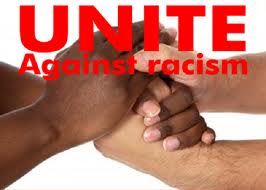
It has become quite intense ever since Federal Attorney General, Senator George Brandis, said in the Senate recently that “People do have a right to be bigots, you know,” and “People have the right to say things that other people would find insulting, offensive or bigoted.”
I find these statements troubling. I do not agree with them.
Let us see what exactly is section 18C and what is exempted from 18C (Section 18D).
RACIAL DISCRIMINATION ACT 1975 – SECT 18C:
Offensive behaviour because of race, colour or national or ethnic origin:
(1) It is unlawful for a person to do an act, otherwise than in private, if:
(a) the act is reasonably likely, in all the circumstances, to offend, insult, humiliate or intimidate another person or a group of people; and
(b) the act is done because of the race, colour or national or ethnic origin of the other person or of some or all of the people in the group.
(2) For the purposes of subsection (1), an act is taken not to be done in private if it:
(a) causes words, sounds, images or writing to be communicated to the public; or
(b) is done in a public place; or
(c) is done in the sight or hearing of people who are in a public place.
(3) In this section:
“Public place” includes any place to which the public have access as of right or by invitation, whether express or implied and whether or not a charge is made for admission to the place.
RACIAL DISCRIMINATION ACT 1975 – SECT 18D:
Exemptions: Section 18C does not render unlawful anything said or done reasonably and in good faith:
(a) in the performance, exhibition or distribution of an artistic work; or
(b) in the course of any statement, publication, discussion or debate made or held for any genuine academic, artistic or scientific purpose or any other genuine purpose in the public interest; or
(c) in making or publishing:
(i) a fair and accurate report of any event or matter of public interest; or
(ii) a fair comment on any event or matter of public interest if the comment is an expression of a genuine belief held by the person making the comment.
—————————————————————————————————-
In summary, Section 18C of the Act makes it unlawful for anyone to do an act that is reasonably likely to “offend, insult, humiliate or intimidate” anyone because of their race or ethnicity. Section 18D of the Act outlines exemptions with the purpose of protecting freedom of speech. Thus, artistic works, scientific debate and fair comment on matters of public interest are exempt from section 18C, provided they are reasonable and are in good faith.
———————————————————————————————————-
Background of Racial Discrimination Act:
International Covenant on Civil and Political Rights (ICCPR) and the International Convention on the Elimination of All Forms of Racial Discrimination (ICERD) are two very important international agreements for the human race. Australia is a signatory to them, and thus has obligations to implement protections against racial hatred.
Furthermore, National Inquiry into Racist Violence and the Royal Commission into Aboriginal Deaths in Custody established the linkage between racial hatred and vilification and emotional and psychological harm. It was also found that such abuse reinforces other forms of discrimination and exclusion. The enquiry found that even low-level behaviour of this type can create the environment for more severe acts of harassment, intimidation or violence by impliedly condoning such acts.
Taking all these into consideration, Australian Law Reform Commission published its 1992 report, Multiculturalism and the Law, which recommended the introduction of legislation to deal with racial hatred.
Sections 18C and 18D were therefore introduced in 1995 in response to recommendations of major inquiries, and for the right reasons.
Freedom of speech Vs freedom from racial vilification:
Freedom of speech is important in a free society, but it must also be emphasized that people have a right to have freedom from racial vilification too.
Freedom of speech can, and is, never an absolute right. Laws applying to defamation, advertising and national security do restrict the right of freedom of speech.
Australian courts have repeatedly held that for conduct to be covered by section 18C, the conduct must involve “profound and serious” effects, not “mere slights”. They have also found 18C to be an appropriate measure to implement Australia’s obligations to prohibit racial hatred under the ICCPR and ICERD.
Having said that, Andrew Bolt, a right wing Journalist, was found to have breached Section 18C in regards to Fair-skinned aborigines. It led to statements from Coalition leaders, promising before the 2013 Federal election to repeal section 18C of the Racial Discrimination Act ”in its current form”.
Senator Brandis has said recently that “Never again in Australia will we have a situation in which a person may be taken to court for expressing a political opinion.”
Senator Brandis told the Senate recently that “he would soon be bringing forward an amendment that would ensure The Andrew Bolt case would never be repeated.”
Here is the Exposure Draft from Attorney General, Senator George Brandis, which is open to comment from the Public until 30 April 2014 at s18cconsultation@ag.gov.au
———————————————————————————————–
Exposure Draft
(http://www.attorneygeneral.gov.au/Mediareleases/Pages/2014/First%20Quarter/25March2014-RacialDiscriminationAct.aspx)
Freedom of speech (Repeal of S. 18C) Bill 2014
The Racial Discrimination Act 1975 is amended as follows:
1. Section 18C is repealed.
2. Sections 18B, 18D and 18E are also repealed.
3. The following section is inserted:
1. “ It is unlawful for a person to do an act, otherwise than in private, if:
a. the act is reasonably likely:
i. to vilify another person or a group of persons; or
ii. to intimidate another person or a group of persons,
and
b. the act is done because of the race, colour or national or ethnic origin of that person or that group of persons.
2. For the purposes of this section:
a. vilify means to incite hatred against a person or a group of persons;
b. intimidate means to cause fear of physical harm:
1. to a person; or
2. to the property of a person; or
3. to the members of a group of persons.
4. Whether an act is reasonably likely to have the effect specified in sub-section (1)(a) is to be determined by the standards of an ordinary reasonable member of the Australian community, not by the standards of any particular group within the Australian community
5. This section does not apply to words, sounds, images or writing spoken, broadcast, published or otherwise communicated in the course of participating in the public discussion of any political, social, cultural, religious, artistic, academic or scientific matter.”
—————————————————————————————————-
You need to read the Exposure Draft (above) very carefully.
(http://www.attorneygeneral.gov.au/Mediareleases/Pages/2014/First%20Quarter/25March2014-RacialDiscriminationAct.aspx)
Three points are very disturbing.
1. This proposed legislation really would allow for almost any racist speech you can imagine. Any “public discussion of any political, social, cultural (or) religious, artistic, academic or scientific” matter will be exempt, irrespective of its seriousness and intentions. Basically, every racial abuse can be exempt under the proposed legislation. There is no limit here.
2. Whether something is “reasonably likely” to vilify is “to be determined by the standards of an ordinary reasonable member of the Australian community”, “not by the standards of any particular group within the Australian community.” That means that the vilification will not be judged by the standard of whatever racial minority is being vilified. Instead, the ordinary reasonable Australian, meaning thereby White Anglo-Saxon Australians, will decide whether the minority groups are racially vilified or not.
If we have to trust “Ordinary reasonable Australians” to decide what we should think or find racially vilifying, we may end up in serious troubles. You do not have to go too far. Just go to the comments column of any newspaper to have the taste of what some of the “Ordinary reasonable Australians” think about minorities. You will find that plenty of members of “ordinary reasonable Australians” are good at telling people from minority racial groups what they should and shouldn’t find racist, without having an idea of what is right or wrong in racial vilification sense.
3. There is more. This is in regards to the proposed offence of racial “intimidation”. To “intimidate” is “to cause fear of physical harm” according to the Exposure draft. Who decides whether a member of a minority racial group should have a “reasonably likely” chance of feeling “fear of physical harm?” Obviously, that too will be decided for them by someone else, not themselves. That is plainly unacceptable, grotesque and wrong.
Australia is a success story of multiculturalism, where almost half the population was either born overseas or has a parent who was born overseas.
This is in danger, if section 18C and 18D are tampered with, repealed or diluted.
With any change with 18C and 18D, the clear line between legitimate public debate and hate speech will be removed. “Anything goes’ will become the law.
We need the protection from Hate speech and racial vilification because not everyone is in a position of parity to speak back to those who denigrate them on racial grounds. Not everyone is Adam Goodes, Ben Barba and Ali Abbas, who can stand up for themselves, when racially attacked or vilified.
It is important that the average person had a way of holding others accountable for racial abuse and harassment.
I do not believe that the Federal Court’s ruling in the case involving Andrew Bolt in 2011 (which was never challenged by appeal) provides sufficient cause for dismantling part of our system and laws of racial tolerance and harmony.
We need to promote civility and tolerance, not bigotry, racism, racial abuse, racial vilification and racial intimidation. If Section 18C and 18D are repealed, tampered with or diluted, this is exactly what is going to happen.
I therefore, like a vast majority of people (as per a recent poll on this matter), do not want Section 18C repealed, tampered with or diluted!
I have had a discussion with many from various communities including Indian Australians, and know for sure that they too are opposed to the proposed repeal of Section 18C.
I have sent my submission to s18cconsultation@ag.gov.au. I urge you to do the same by 30th April 2014.
You could do so just by saying “I am opposed to the proposed repeal of Section 18C of Racial Discrimination Act”!
Dr Yadu Singh/Sydney/27th April, 2014
dryadusingh@gmail.com
http://www.twitter.com/dryadusingh
http://www.facebook.com/dryadusingh
au.linkedin.com/in/dryadusingh



 Yadu Singh's Blog