Expectations from Prime Minister Modi

Dr Yadu SinghSydney, 14th November, 2014

Expectations from the Modi Govt

Prime Minister of India, Narendra Modi, is visiting Australia between 15th and 18th Nov, 2014. After attending G20 summit in Brisbane on 15th and 16th November, he will start his state visit. Indian community is excited with this visit. This is the first visit by an Indian Prime Minister after PM Rajiv Gandhi visited Australia in 1986. PM Modi will interact with the community in Sydney and Melbourne, in addition to addressing a Joint session of Australian Parliament.

Prime Minister Modi’s image is that of a decisive and a “can do” leader. Indians, not just in India but around the world, are optimistic that things will change for the better and the Indian economy will grow rapidly.

When I wrote a post in June, 2014, I mentioned many things which people expected. Many of those things have either been delivered or getting delivered. Prime Ministerial visit to Australia is one of them. Nuclear trade deal has already been signed when Prime Minister Tony Abbott visited India in September. Australian citizens getting the facility of Visa on arrival in India is another one which is in the process of getting implemented. Serious work is in progress in regards to Black money, stashed in overseas Banks. Supreme Court’s activism is playing an important role in it. Investigations and prosecutions are likely to commence soon. Based on my interactions with many Indians in Australia, there are a few more things that people expect the new government to deliver.

Genuine dual citizenship: This has been discussed and debated for long. There is an almost universal demand that overseas Indians be given a right to hold genuine dual citizenship with voting and property rights, if the country of their citizenship has no issue with this and if there are no security issues with granting dual citizenship to any particular overseas Indian. If USA, UK, Australia and most of developed and democratic countries as well as some countries in the region see no issues in granting dual citizenship to their citizens, then people argue that there is no rational basis for India to deny dual citizenship to Indians. PM Modi has the political capital to deliver this long-standing demand. A petition and campaign for Dual citizenship is running on Change.org (http://tinyurl.com/kxtlosw) and Social media presently (http://tinyurl.com/m4b4luu).

Effective anti-corruption body: A group of 10-15 people from civil society including eminent jurists and overseas Indians (if possible) as well as politicians should be asked to review the Lokpal Act, passed by the Lok Sabha earlier, and suggest steps to rectify weaknesses to make it an effective corruption fighting body. Such body should have sufficient resources to discharge its functions. Unlike previous Govts, this whole process to fine-tune this should not take more than one year from the time NDA Govt took office.

The PM’s global Overseas Indians Advisory body: The PM should revamp his Global Advisory Body, constituted by the previous Govt. People in it should be those who have significant presence, influence and interactions among Indians in their countries. The practice of Indian diplomats recommending their sycophants to become members of this body should be done away with.

Country specific Overseas Indian Advisory body: Countries with significant overseas Indian populations (Australia is certainly one such country) should have an advisory body of not more than 10 people, which can be used for consultations and other advisory purposes, not only by the local GOI authorities/agencies, but also the relevant authorities/agencies in India. Its term should be for not more than 2 years.

Annual consultation between High Commission and Community: Previous High Commissioner of India in Australia, and current External Affairs Secretary, Smt Sujatha Singh, started a novel, and productive, mechanism to meet the community representatives in Canberra on a yearly basis. Representatives from all over Australia would assemble on a weekend to discuss and suggest things to Indian diplomats. Current High Commissioner, Biren Nanda, did not continue this practice. The communication from High Commission and community has been limited and confined to a small group of people, who are close to HCI. Previous practice of community consultation needs to be reactivated.

Annual dialogue between Indian and Australian leaders: Indian Australians will like to see formal and regular annual meetings between PMs, Foreign Affairs Ministers and Defence Ministers, with venues alternating between India and Australia.

Free Trade Agreement (FTA): The pace of the discussions and negotiations should be accelerated so that FTA can be concluded by the end of 2015. This will accelerate bilateral trade which has come down to about $15 billion from previous high of $21 billion. This is important as Australia already has FTAs with Japan, South Korea and China.

Bilateral and multi-lateral defence exercises between India and Australia: India and Australia should work actively to enhance their defence & strategic relations bilaterally and multilaterally in the pattern agreed prior to the 2007 Rudd Govt in Australia.

Hindi teachings in Australian Universities: To increase India’s soft power and increase the numbers of India-literate Australians, India should consider seriously funding such teaching courses in at least one University each in Sydney and Melbourne. Discussions should be had between relevant authorities to explore equal sharing of cost between Australia and India.

Facilitations of Australian Universities and TAFE to have campuses in India: Many Australian institutions are ranked quite highly in various world Universities ranking systems. Collaborations in this field should be actively facilitated and encouraged, following a pragmatic and win-win module. Indian regulations to facilitate this should be considered.

Recognition of TAFE diploma in India: Many Indian students come to Australia to train in TAFE institutes. Many then move on to Universities to complete degrees. In addition to the diplomas not being recognised to the extent that the students wanting to pursue this study in Australia do not even get the education loans, Association of Indian Universities (the peak body responsible for recognising foreign degrees) does not recognise even Bachelor degrees that may have resulted from a credit transfer after a diploma resulting in the degree component being lesser than 3 year duration. (Diploma to Degree). This is a unique feature of Australian Qualification framework and so should be understood by Educational authorities. Quite a good numbers of Indians in Australia have earned their degrees through this pathway. TAFE institutes are a unique institution and it will be beneficial for India to consider recognizing diplomas from TAFE.

Bilateral Internship positions for Australians and Indians: Institutes and Universities of repute in both countries should be encouraged to develop mechanisms to have short term (3-6 months) placements for students and researchers to enhance collaboration in science and research.

Indian media’s bureau/representatives in Australia: During 2009-10, Indian media reported issues involving Indian students in an exaggerated way, erroneously attributing racism in literally every incident. They did not interact with local long-term Indians. It was harder for media to have a grasp of the ground realities. It will be helpful if key media outlets consider basing their representatives in Australia to cover Oceania. With increasing trade related activities between Australia and India and with increased number of Indians here, there could be sufficient justification for such decisions. Indian Govt can encourage media houses to take up this matter. A good beginning could be of a posting a full time Press Trust of India (PTI) reporter in Australia.

Indian Consulate in Brisbane: Queensland is an important state for Indian investment. Indian business houses like the Adani group have an important and a significant presence in this state. It is important to have an Indian Consulate in Brisbane.

India House or Indian Cultural Centre in major capital cities: There are more than 500,000 people of Indian heritage in Australia, with a big concentration in Sydney and Melbourne. People believe that there should be Indian cultural centers in Australia, at least in Sydney and Melbourne. While some funding will be raised locally, a significant part of the funds should come from Indian Govt. Govt of India (GOI) Funds, if any, allocated for something of this nature to be established in the Indian Consulate premises in Sydney CBD should be reviewed and re-allocated for a center of this nature in areas like Parramatta or Blacktown, where the Indian community has a substantial presence. Sydney CBD is not a practical or appropriate site for an Indian Cultural Centre.

Overseas Indians’ property in India: Many overseas Indians are seeing that their properties are illegally occupied and face threats to their safety when they visit India. Court cases go on for extended periods of time. Indian Penal Code and relevant laws should be amended to tackle this menace.

Interactions between GOI agencies and Indian Australian community: It is often felt that GOI authorities in Australia do not interact with people sufficiently, thus leading to a communication gap. It is a common experience that there is a significant gap between what we expect and what is delivered. It is also felt that GOI officials often get embroiled in local community politics and play “favoritism” games depending on who they like or dislike. It is quite irrational and subjective. Steps should be implemented to improve the situation.

Minister for Overseas Indian Affairs visit to Australia: With approx. 500,000 people of Indian heritage in Australia, a biennial visit of Minister of Overseas Indian Affairs (The Hon Sushma Swaraj) or her deputy, The Hon Gen (Retd) V K Singh or External Affairs Secretary, should be included in the official GOI travel calendar. This will help facilitate interactions with the community and facilitate Overseas Indians’ investment in India.

Streamlined grievance redressal mechanism for Overseas Indians: Overseas Indian Affairs ministry has often not been very helpful and help has often not come in a timely fashion due to excessive bureaucratic influences. This should be reviewed and streamlined.

Exchanges between Academicians and civil Society leaders: We need regular bilateral exchange visits of academics, journalists, leaders and civil society leaders. This will help improve relations between the two countries. The scope and numbers should be increased.

In summary, it will be of mutual benefit to the community in Australia and India if the Indian government is proactive in considering the interests and welfare of the Indian community down under.


Dr Yadu Singh/Sydney/14th November, 2014

dryadusingh@gmail.com

http://www.twitter.com/dryadusingh

http://www.facebook.com/dryadusingh

au.linkedin.com/in/dryadusingh/
 

Press release on Dual Citizenship

Dr Yadu SinghSydney, Australia

14th November, 2014

Press Release

Indian community in Australia starts an online campaign to urge Indian Prime Minister, Sri Narendra Modi, to grant dual citizenship to overseas Indians.

Spokesperson for the campaign and President of Indian Australian Association of NSW Inc, Dr. Yadu Singh said “It’s time that Indian government grants NRIs dual citizenship”.

He further said “There are an estimated 25 million non-resident Indians (NRIs), people of Indian origin (PIOs) and overseas citizens of India (OCIs) spread across more than 200 countries. Cumulatively, they contributed about $70 billion in remittances to India in 2013-14”.

“The recent changes in the PIO and OCI cards announced by Prime Minister Narendra Modi are welcome, but they do not meet the long-term demand of dual citizenship by overseas Indians”.

“The overseas citizenship card (OCC) falls well short of genuine dual citizenship. Many of us overseas Indians have been demanding genuine dual citizenship, with full political and economic rights in India on par with the rights enjoyed by Indian citizens. Former attorney general Soli Sorabjee was right in stating in 2005: “If we want to involve the diaspora, then we can’t deny them the right to vote or the right to occupy important office.”

Overseas Indians, whether they hold Indian passports or have foreign passports, have an emotional bond with India. That holds true for a majority of people of Indian heritage. When major democratic and developed countries like USA, Canada, UK and Australia have no issue with dual citizenship, there can’t be a real justification for India to treat its own people unfavourably.

The promise of dual citizenship was made by former Prime Minister Atal Behari Vajpayee in 2003. Since then there have been statements from senior politicians about them favouring dual citizenship. But the matter has not progressed further. Statements are not enough. The following actions should be taken: 1. Granting Indian passports (dual citizenship) to overseas citizens of Indian heritage with full political and economic rights 2. Granting of convenient voting rights to such dual passport-holding overseas Indians as well as overseas Indians with Indian passports (NRIs), which can be exercised either at the consulate, high commission or embassy premises in their country of residence and through postal or online facilities.

India should consider taking a cue from Australia’s repeal of Section 17 of the Australian Citizenship Act 1948 that took effect from April 2002 permitting dual citizenship.

Dr Singh also said “It is important for second and subsequent generations of Indians, besides first generation, to stay emotionally and politically connected with India. Dual citizenship will make it more likely that this will happen”.

Prime Minister Modi has the political capital, strength in the Parliament and the goodwill for/from the overseas Indians, who supported him massively, to get the Parliament to grant dual citizenship to Overseas Indians.

The campaign has just started from Australia. It has created great excitement in Indian community. It is gaining momentum and it will get enthusiastic support from Indian diaspora all over the world, particularly United States of America, Canada, UK and Australia. It will continue to be run until India sees merits in granting dual citizenship.

Dr. Singh said “I will make an appeal to PM Modi personally if there is an opportunity to meet him”.

Appeal is run via Change.org (https://www.change.org/p/the-honorable-sri-narendra-modi-appeal-to-grant-dual-citizenship-to-overseas-indians and Social media (www.facebook.com/IndianDualCitizenship)

Further comment: Dr Yadu Singh, dryadusingh@gmail.com +61 413 375 669

Opinion piece on dual citizenship in The Economic Times

Dr Yadu SinghIt’s time Indian government granted NRIs dual citizenship

October 31, 2014, 4:16 am IST in ET Commentary | India | ET

There are an estimated 25 million non-resident Indians (NRIs), people of Indian origin (PIOs) and overseas citizens of India (OCIs) spread across more than 200 countries. Cumulatively, they contributed about $70 billion in remittances to India in 2013-14. The recent changes in the PIO and OCI cards announced by Prime Minister Narendra Modi are welcome.

But they do not meet the long-term demand of dual citizenship by overseas Indians. The overseas citizenship card (OCC) falls well short of genuine dual citizenship. Many of us overseas Indians have been demanding genuine dual citizenship, with full political and economic rights in India on par with the rights enjoyed by Indian citizens. Former attorney general Soli Sorabjee was right in stating in 2005: “If we want to involve the diaspora, then we can’t deny them the right to vote or the right to occupy important office.”

Overseas Indians, whether they hold Indian passports or have foreign passports, have an emotional bond with India. That holds true for a majority of people of Indian heritage. When major democratic and developed countries have no issue with dual citizenship, there can’t be a real justification for India to treat its own people unfavourably.

The promise of dual citizenship was made by former Prime Minister Atal Behari Vajpayee in 2003. Since then there have been statements from senior politicians about them favouring dual citizenship. But the matter has not progressed further. Statements are not enough. The following actions should be taken: 1. Granting Indian passports (dual citizenship) to overseas citizens of Indian heritage with full rights including voting and political rights. 2. Granting of convenient voting rights to such dual passport-holding overseas Indians as well as overseas Indians with Indian passports (NRIs), which can be exercised either at the consulate, high commission or embassy premises in their country of residence and through postal or online facilities.

India should consider taking a cue from Australia’s repeal of Section 17 of the Australian Citizenship Act 1948 that took effect from April 2002 permitting dual citizenship.

(The author is a resident of Sydney, Australia)

http://blogs.economictimes.indiatimes.com/et-commentary/its-time-indian-government-granted-nris-dual-citizenship/ http://epaperbeta.timesofindia.com/Article.aspx?eid=31816&articlexml=Give-Us-This-Day-Our-Dual-Citizenship-31102014015034# OPED_Oct31_CAP

————————————————————————————————————————————————————————————————————————————————————————————————————————————————————————

Dr Yadu Singh, Sydney, Australia/4th Nov, 2014

http://www.twitter.com/dryadusingh

http://www.facebook.com/dryadusingh

au.linkedin.com/in/dryadusingh/
Overseas Indian Card, replacing PIO and OCI cards, is good, but not enough. We need genuine dual citizenship

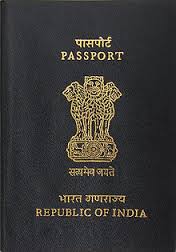
Indian passportIndian Govt is working on a Bill, which will be introduced in Lok Sabha (Lower House of Indian Parliament) soon, after having already been passed by Rajya Sabha (Upper House of Indian Parliament), to replace PIO and OCI cards with a single card, named “Overseas Indian Card”. imagehttp://economictimes.indiatimes.com/opinions/30048500.cms

NRI (Non-Resident Indian), PIO (Person of Indian Origin) and OCI Overseas Citizen of Indian) words do create some confusion for many people.

The Link below might help you understand what these names mean. http://mha1.nic.in/pdfs/oci-chart.pdf

I think, replacing PIO and OCI cards with “Overseas Indian Card” it is a good idea, provided,

1. Govt does not impose any cost to those with these cards while replacing current OCI/PIO cards with “Overseas Indian Card”,
2. the process to replace PIO/OCI cards with Overseas Indian Cards is simple, automatic and not cumbersome,
3. the new card is valid for life Long,
4. Fees for Overseas Indian Card is reasonable, not expensive.

I do not see any issue with the requirement that the sticker for the OCI/PIO card or their replacement “Overseas Indian Card” should be pasted in the current passport. If we have to renew our Passports, we will need to have the “Overseas Indian Card” sticker transferred to the new Passport. It should however not cost more than a reasonable amount ie $50-100.00.

While at it, we should not miss the real issue in regards to Overseas Indians-NRIs, PIOs and OCIs. This is about India’s reluctance to offer Overseas Indians a true “Dual Citizenship”.

Overseas Indians, whether they hold Indian Passports or have Overseas Passports, love India. They have an emotional bond with India. This is true for a great majority of people with Indian heritage.

If India is really serious in looking after Overseas Indians, and wishes to tap into this network for variety of purposes, it should consider;

a. Giving Indian passports (Dual citizenship) to overseas Citizens of Indian heritage with full rights including political rights,
b. giving convenient voting rights to such dual passport holders as well as Indian passport holders (NRIs), which can be exercised either at the Consulate, High Commission or Embassy premises in their country of residence or through postal or Online facilities. Postal Voting rights, after all, are allowed for India’s diplomatic staff, serving outside India.

Nobody can argue against India’ right to reject applications for Indian Passports to Overseas citizens of Indian heritage if they have security issues or are associated with terrorist/separatist anti-India groups, if a thorough security investigation finds evidence of such background.

In regards to NRIs (Indians living overseas but holding Indian passports), I am aware that Bhartiya Janata Party (BJP) is in favour of granting convenient voting rights to them via postal, online or voting at the Consulate/Embassies/High Commissions, and has already submitted a memorandum to Election Commission of India in January 2014. https://ofbjp.org/sites/default/files/Memorandum%20to%20CEC%20VS%20Sampath%20on%20NRIs%20Voting%20Issue%20English.pdf

Currently, NRIs must register their names in the voter lists at their place of residence in India, before they left India, and be physically present there to vote, which is practically very inconvenient, and financially prohibitive.

Indian constitution allows NRIs to vote in theory, but Govt has not done anything to make it convenient for >10 million (>1 crore) NRIs, despite its lofty claims!

Dr Yadu Singh/Sydney/12th Feb, 2014
http://www.facebook.com/dryadusingh
wwww.twitter.com/dryadusingh

NRIs get the voting rights in India.


There is a good news for Non-Resident Indians [NRIs]. Prime Minister, Hon Mr Man Mohan Singh and Minister of Overseas Indian Affairs, Mr Vayalar Ravi, have announced on 24th Nov, 2010 that NRIs will  get the voting rights in India. It does not matter how long they have been away from India. They are now able to have their names in the voter list. The only catch is that they will have to be in India on the day of voting. Election Commission of India has been asked to make necessary changes in its rules and regulations.

I think it is a right step. There are more than 11 Million NRIs all over the world. Not all will be interested to be in India to enjoy their voting rights but it will certainly help those who want to do that. Previously, NRIs must have lived in India for al least 6 months before their names could go in the voter lists. No such need any more.

I think the Indian Gov should have gone a bit further here. They should have made provisions for NRIs to be able to vote irrespective of whether they were in India or not on the day of voting. They could have gone to the nearby Indian consulates/Embassies/High Commissions to vote or even better, they could have sent  postal votes.

While this is all good, India needs to move forward a lot more in regards to dual citizenship. Several western countries have already done this. Australia, NZ, UK and USA already have it. To say that it has security implications for India is not a valid argument. There are lot more enemies of India inside India. One example is “that” IAS officer who was selling secrets while working in the Ministry of Home affairs. Another example was “that” officer in RAW who was doing anti-India activities and later fled to USA when he was about  to be arrested. Yet another example is that wretched woman in Indian High Commission in Islamabad who was working for Pakistan.

I believe, just like the vast majority of People of Indian Origin [PIOs] all over the world, that India should allow dual citizenship. People will need to quit their non-Indian citizenships before taking up any constitutional position in India. This is the way Australia manages this issue.

A smart and progressive thinking is required from the Indian Government. India should strengthen the emotional and political linkage with PIOs who are a great asset for their motherland. This, it can do, by granting dual citizenships as long as security and character issues have been cleared for such PIOs.

http://wiki.answers.com/Q/What_is_the_difference_between_the_PIO_and_NRI
http://www.mha.nic.in/pdfs/oci-chart.pdf

Yadu Singh/Sydney/25th Nov, 2010

www.twitter.com/dryadusingh

www.facebook.com/dryadusingh

“OCI card holders should not need a Visa for India”:Says Dr Sujit Pandit and I agree.

Prof Sujit Pandit has sent me an email, suggesting that Indians living overseas should demand a rule change in India. This is about the OCI cards. An OCI card holder should not need to have a separate Visa for India.

Here is his email. The word USA should be substituted with Australia, NZ, UK or relevant countries.

Let us send this demand to our High Commissions, Consulates, Minister Mr SM Krishna [MEA], Minister Mr Shashi Tharoor [MEA] and Minister Mr Vayalar Ravi [NRI affairs].

Dr Yadu Singh/Sydney/21st Sept 2009

————————————————————————————————————————————————-

Dr Pandit’s email……

Sujit Pandit to me 

Our goal is to make travel to India less stressful and a matter of joy. The current OCI (Overseas Citizen of India)/PIO (Person of Indian Origin)  rules are irrational and confusing that often cause hardship to the travelers.

The bureaucrats and politicians do not like to change any rules unless there is overwhelming pressure from the public.  So, if you would like to change the ambiguous OCI/PIO rules please write to the Indian ambassador to the USA, the Consular General of India, the Prime Minister of India, the Minister of External affairs, The Home Minister and other civil servants and politicians in India.   You may also write to the various Indian media and the Indian action, social and political groups.  Please ask your friends to do the same.
If you want to write only a short paragraph then write the following or something like this:

‘When an individual has a US Passport and an OCI card, production of a Visa should not be insisted upon, because the evidence of a valid visa is implicit in the OCI card, which may be deemed to be a certification higher than the Visa itself.’
If you want to send a more elaborate explanation then send them my story:
 From:
Sujit Pandit M.D.
2680 Lowell Road
Ann Arbor MI 48103

OCI Card: Professor Sujit K Pandit has some suggestions……..

I wrote to Prof Pandit today and he emailed the following matter.

His email goes like……..
Thank you for doing a useful service to the community.

I would like you to read my update too:

Updated Sept 17, 2009

OCI RULES CAN BE CHANGED

Following my e-mail message (a copy is attached below) about my aggravation at the Kolkata airport over the OCI card, I have received about 300 responses. I am absolutely overwhelmed and thankful to all those who have written.  I had no idea how deeply the Indians all over the world feel about this issue.  Most people were thankful to me for sharing my story so they can learn from my bad experience.  The majority, about 90% of the responders was outraged at the lack of common sense and common courtesy of the immigration officials at the Kolkata airport. More than a dozen people have narrated their own horror stories, very similar and even worse than mine at airports in India when they arrived with an OCI card only, these are really heart wrenching stories involving small children and the whole family members undergoing incredible hardships.  Others were alerted at the last moment by the airlines officials at the departing airport in the USA about the need to carry the visa sticker that may be in their old passport.  Some were surprised that I had the problem because they have gone to India with just the OCI card and they were allowed to enter India without having to show their visa.  Some assumed that the problem may be at the Kolkata airport and probably the corruption is rampant there. They suggested that the officers there might be looking for a bribe. Many were still confused about the rules of the OCI and have asked me for advice.  Many others narrated the appalling treatment they have received at the various Indian consular offices.

About 10% of the responders said I got what I deserved at the Kolkata airport for not reading rules of the OCI card and for not following the rules strictly.  They thought the officers were just doing their duties.

Some especially from England and Canada told me that they have PIO (Person of Indian Origin) cards and had never had to show their visa at the Indian airports.  And the OCI is supposed to be the upgraded version of the PIO card.  Go figure. 

One person has written that for a family of five (three children) under the current OCI rules he has to carry fifteen travel documents when going to India (five old passports,  five current passports and five OCI cards)

I am thankful to all who have taken the time to write to me. 

I know it was my mistake for not taking my old passport with the visa sticker with me and I will never make the same mistake again; the main purpose of my mail was to warn my friends not to make the same mistake that I made. 

But, then my friend Dr. Dinesh Patel from Boston pointed out to me that the rules CAN be changed and the bad/confusing rules SHOULD be changed. I think that is a great point.  Rather than just accepting and following the bad rules and thus perpetuating them, we should try to change the bad rules. In addition because of the confusing name of the OCI and the false buzz about the “Dual Citizenship” many people make the same mistake as I did. When so many people make the same mistake in spite of the rules, then may be the system needs to be fixed.  Confusing rules of OCI needs to be changed. The bad rules can only be changed if there is enough pressure from the public to the politicians and the civil servants. .

I believe, just like the persons holding a PIO card the OCI card holders should also be allowed to enter India without having to bring the old visa sticker every time.  The fact is, whenever any one is granted his/her OCI card, he/she is thoroughly vetted and only then the OCI card is issued along with a life long visa sticker.  Both go hand in hand.  You cannot get an OCI card without a life long visa.  I know that in spite of the puzzling name (Overseas CITIZEN of India) the OCI card is not a passport, right now we can not have both American (or Canadian or UK) passports as well an Indian passport But, the OCI card can be and should be the visa substitute. As far as the entry requirement to India the OCI card could act like the US Green card.  Once you have it there will be no need to carry a separate visa ever.

When an individual has a US Passport and an OCI card, production of a visa should not be insisted upon, because, the  evidence of a valid visa is implicit in the OCI card, which may be deemed to be a certification higher than the visa itself.

The other problem is the utter lack of common courtesy and competence at the various Indian Consular Offices. I have received more than 15 mails that detail their dreadful experiences at various Indian Consular Offices.  These Consular offices are amateurish and incompetent.  I myself had a horrible time trying to get my OCI card in Chicago.  When I complained, there was no response. I can not even think about going back there to get my visa sticker transferred from my old passport to my new one, and what about when I get yet another new passport?  This is a disgrace that the officials at the Consular offices are not trained to be courteous to their customers like real professionals.

We need to bring pressure on the politicians and civil servants to simplify the procedure and let the OCI card be the visa substitute. Please send this mail to others once again and may be some one knows an important person who will understand the problem and solve it. That will make travel to India a joy and not stressful. We also need to make the Indian Consular offices more “Professional”. 

 
I am attaching a copy of my original e-mail:
MY DUAL CITIZENSHIP WOES: MY RECENT EXPERIENCE WITH THE IMMIGRATION DEPARTMENT AT THE KOLKATA AIRPORT AND THE LESSONS I LEARNT

My advice to all my friends who hold an OCI (Overseas Citizen of India) Card and those who aspire to get one.

I am an American citizen.  I also carry an OCI card (Overseas Citizen of India) since 2007. 

On Saturday, June 20, 2009, I arrived at the Kolkata Netaji Subhas Airport from Detroit via Singapore, by Singapore Airlines (SQ 516) at 10:30 P.M.

I presented myself to an Immigration Officer  (Mr. Biswas) for immigration clearance.  I gave him my American passport and my OCI card.  He demanded to see my visa from the Indian consular office.  Unfortunately, that visa was attached to my old passport and I did not bring it with me.

I explained to him that I am sorry I forgot to bring my old passport but since I do possess a valid OCI Card that would automatically mean that I do also possess a permanent (life long) visa for India and there are proofs that I have traveled multiple times to India after I had received my OCI card. 

 Mr. Biswas detained me for two hours inside the airport   and then he told me that he is going to allow me to stay in India for 72 hours and asked me to report to the Foreign Relations Regional Officer (FRRO) in the city within 72 hours.  He kept my passport.  During all that time I had no opportunity either to approach his OC (Officer in Charge) although I asked for it, or to contact my relatives who came to the airport to receive me and were waiting outside and had no idea why I was being held back or if I have even arrived.

Forgetting to bring my old passport was my own fault but I ‘forgot’ to bring it partly because I knew I have my OCI Card with me and I thought, that means something, I really believed that I am a citizen of India too.  Why would a citizen also need a visa to enter his own country?   I thought I have a dual citizenship for both the USA and India. Other wise, what is the difference between an ordinary foreigner and the OCI Card holder?

Next day was a Sunday, I called a friend in Ann Arbor who went into my house, got my old passport and sent me the scanned copy of my old passport and a copy of my permanent visa by e-mail. 

So, on Monday I went to see Mr. Bibhas Talukdar, the FRRO.  He hardly looked at the documents (the scanned visa) that I had with me he simply asked me to get my old passport by courier mail within another seven days.  He appeared gleeful telling me that it is only out of  “pity” that he is allowing me to stay in India for seven more days.  He was totally unimpressed by either my status as a Professor Emeritus of the University of Michigan or my age (70+)

I called my friend in Ann Arbor again who then sent my old passport by FedEx.  Three days later the passport arrived.  Since I had to leave Kolkata for prescheduled visit to Bangalore, my niece took it to Mr. Talukdar. But due to lack of communication between the FRRO office and the airport immigration department my passport had not arrived at the city office even after 9 days.  My niece had to go to the FRRO’s office three times once waiting until 6 P.M. still they did not have my passport.  They only promised: “it will come soon”.  At last, 12 days after my arrival, my niece got my passport.
From this painful and anxiety provoking experience I have learned a few valuable lessons:

1.    The loud talk about “Dual Citizenship” for Indian Americans is just a political hoax.

2.    The OCI card just does not have any value.  It is just a piece of expensive junk. You still need a visa every time you travel to India whether or not you possess an OCI card.  Only difference is that for the high price of getting an OCI card you will get a “life long ” visa.  A 10-year visa is much cheaper.
 
3.    When coming to India always consider yourself a foreigner and bring your visa with you, there will be no exceptions. Your OCI card is not a visa substitute.

4.     In fact, you will probably be treated worse than an ordinary foreigner arriving without a valid visa.  Because a foreigner especially a white Caucasian will at least be treated with courtesy and probably offered a temporary visa if there is no reason to deny it, but not you.

5.    Since the word “CITIZEN” in the OCI card is the root cause of confusion, the name should be changed.


Please feel free to forward this mail to any of your friends who may benefit from my experience.  Especially feel free to forward this to any influential politician or civil servant in India that you may know.

Sujit K. Pandit M.D.
Professor Emeritus
Department of Anesthesiology
University of Michigan
Ann Arbor, MI
48109, USA

OCI Card: A story of an Emeritus Professor of Medicine from USA!

 This email was sent to me by Rajesh Pandey who is a great guy from our community. He is based in Sydney. The behaviour of the Indian officials with this Professor from USA made me sad. It also raised concerns/questions about OCI cards. I hope we can hear from the Indian Consulate, Sydney about the OCI card and its usefulness.

I reproduce the content of the email.

This email reads as……..
Indian Immigration!
 
Horror Of Dual Citizenship With India


MY DUAL CITIZENSHIP WOES:
MY RECENT EXPERIENCE WITH THE IMMIGRATION DEPARTMENT
AT THE KOLKATA AIRPORT AND THE LESSONS I LEARNT
 

My advice to all my friends who hold an OCI (Overseas Citizen of India) Card and those who aspire to get one.
 
I am an American citizen.  I also carry an OCI card (Overseas Citizen of India) since 2007. 
On Saturday, June 20, 2009 , I arrived at the Kolkata Netaji Subhas Airport from Detroit via Singapore , by Singapore Airlines (SQ 516) at 10:30 P.M.
 
I presented myself to an Immigration Officer  ( Mr. Biswas ) for immigration clearance.  I gave him my American passport and my OCI card.  He demanded to see my visa from the Indian consular office.  Unfortunately, that visa was attached to my old passport and I did not bring it with me.
I explained to him that I am sorry I forgot to bring my old passport but since I do possess a valid OCI Card that would automatically mean that I do also possess a permanent (life long) visa for India and there are proofs that I have traveled multiple times to India after I had received my OCI card. 
 
Mr. Biswas detained me for two hours inside the airport   and then he told me that he is going to allow me to stay in India for 72 hours and asked me to report to the Foreign Relations Regional Officer (FRRO) in the city within 72 hours.  He kept my passport.  During all that time I had no opportunity either to approach his OC (Officer in Charge) although I asked for it, or to contact my relatives who came to the airport to receive me and were waiting outside and had no idea why I was being held back or if I have even arrived.
 
Forgetting to bring my old passport was my own fault but I ‘forgot’ to bring it partly because I knew I have my OCI Card with me and I thought, that means something, I really believed that I am a citizen of India too.  Why would a citizen also need a visa to enter his own country?   I thought I have a dual citizenship for both the USA and India . Other wise, what is the difference between an ordinary foreigner and the OCI Card holder?
Next day was a Sunday, I called a friend in Ann Arbor who went into my house, got my old passport and sent me the scanned copy of my old passport and a copy of my permanent visa by e-mail. 
 
So, on Monday I went to see Mr. Bibhas Talukdar , the FRRO.  He hardly looked at the documents (the scanned visa) that I had with me he simply asked me to get my old passport by courier mail within another seven days.  He appeared gleeful telling me that it is only out of  “pity” that he is allowing me to stay in India for seven more days.  He was totally unimpressed by either my status as a Professor Emeritus of the University of Michigan or my age (70+)
 
I called my friend in Ann Arbor again who then sent my old passport by FedEx.  Three days later the passport arrived.  Since I had to leave Kolkata for prescheduled visit to Bangalore , my niece took it to Mr. Talukdar . But due to lack of communication between the FRRO office and the airport immigration department my passport had not arrived at the city office even after 9 days.  My niece had to go to the FRRO’s office three times once waiting until 6 P.M. still they did not have my passport.  They only promised: “it will come soon”. At last,  12 days after my arrival, my niece got my passport.
 
From this painful and anxiety provoking experience I have learned a few valuable lessons:
 
1.    The loud talk about “Dual Citizenship” for Indian Americans is just a political hoax.
 
2.    The OCI card just does not have any value.  It is just a piece of expensive junk. You still need a visa every time you travel to India whether or not you possess an OCI card.  Only difference is that for the high price of getting an OCI card you will get a “life long ” visa.  A 10-year visa is much cheaper.
 
3.    When coming to India always consider yourself a foreigner and bring your visa with you, there will be no exceptions. Your OCI card is not a visa substitute.
 
4.     In fact, you will probably be treated worse than an ordinary foreigner arriving without a valid visa.  Because a foreigner especially a white Caucasian will at least be treated with courtesy and probably offered a temporary visa if there is no reason to deny it, but not you.
 
Please feel free to forward this mail to any of your friends who may befit from my experience.  Especially feel free to forward this to any influential politician or civil servant in India that you may know.
 
Sujit K. Pandit M.D.,Professor Emeritus, Department of Anesthesiology, University of Michigan

————————————————————————————————————————————————————————

I have sent a copy of this email to Indian Consulate, Sydney. They may consider about enlightening Indian Australians re the value of the OCI cards. There are OCI card holders in Australia and they would be interested in this matter.

Dr Yadu Singh/Sydney/11th Sept, 2009