Plans to repeal Section 18C of Racial Discrimination Act dumped!

Tony Abbott

Prime Minister, Tony Abbott, announced today that he has dumped plans to repeal Section 18C of Racial Discrimination Act.

He said that he wants to work with communities as part of “Team Australia”.

This is very sensible and very welcome!

Of the 4100 submissions in regards to Sec 18C, 76% were against the repeal or any tempering of Section 18C.

Ethnic communities were overwhelmingly against the repeal. These included Chinese, Arabic, Jewish, Indians and many others.

ALP leaders, especially NSW Leader of Opposition,  John Robertson, and most Liberal Party leaders, especially Premiers of NSW (Mike Baird) and Victoria (Denis Napthine), Craig Lundy (Reid MP), Matt Kean (Hornsby MP), Geoff Lee (Parramatta MP) and Alex Hawke (Mitchell MP) were opposed to the proposal to repeal Sec 18C.

NSW Community Relations Commission (CRC) too took a stand against this repeal proposal. CRC chief, Vic Alhadeff, took a prominent leadership role in opposing this repeal proposal.

From our side, my friends and I ran a campaign via Social media and Blog post.

My post (http://tinyurl.com/pqfv8ct) was forwarded to more than 15000 people of Indian Australian Community, with overwhelming support to oppose the repeal. I encouraged my fellow community members to forward the Blog post to their network and send their submissions to the Attorney General, Senator George Brandis.

My Blog post was also published in many Australian newspapers. Hills News, Penrith City Gazette and Blacktown Sun were the most prominent among them.

http://www.hillsnews.com.au/story/2246552/dr-yadu-singh-why-section-18c-of-racial-discrimination-act-should-not-be-repealed/

http://www.theindiantelegraph.com.au/the-growing-presence-of-a-leader-dr-yadu-singh-takes-the-fight-where-it-matters/

http://www.veooz.com/news/2H8dFMX.html

http://www.penrithcitygazette.com.au/story/2246552/dr-yadu-singh-why-section-18c-of-racial-discrimination-act-should-not-be-repealed/

http://www.blacktownsun.com.au/story/2246552/dr-yadu-singh-why-section-18c-of-racial-discrimination-act-should-not-be-repealed/

I am pleased that repeal proposal has been dumped.

Prime Minister deserves a thank you and people who campaigned against the repeal deserve a special “thank you and well done”.

Dr Yadu Singh/Sydney/5th Aug, 2014

http://www.twitter.com/dryadusingh

http://www.facebook.com/dryadusingh


in favour


Multiculturalism in Australia: what it means to me

Multiculturalism in Australia: what it means to me

Australia is a great place where one can meet people from all backgrounds, cultures and religions. They can enjoy food from diverse backgrounds-Indian, Chinese, Italian, Sri Lankan, Thai and many more, including, of course, Australian.

People can and do enjoy festivals from diverse backgrounds. I myself have participated in events and festivals from Chinese, Philippines, Pakistani, Arabic and of course Indian backgrounds. I enjoyed Chinese Opera and a performance by Shen Yun cultural group immensely. I remember the “Nagar Kirtan” by Sikh community with fondness and enjoyed walking with the crowd from Circular Quay to Martin Place in Sydney. I also remember with fondness my participation in various Hindu religious festivals in either various temples and even in Darling Harbour. These events were organised without any disturbance or incidents.

Increasing number of people from diverse backgrounds take part in national activities. Only yesterday [4th March, 2012], I took part in “Clean Up Australia Day” activities with my friends from Basava and Tamil backgrounds, led by Basava Samithi [an Indian group] and Australian Tamil Association [another Indian group] respectively.

People can see movies and functions from various cultural backgrounds in the national TV. SBS TV helps us share diverse cultures and celebrations in so many ways.

It is such a fun living in Australia. Australia is a success story of multiculturalism.

I am therefore a strong proponent of multiculturalism in Australia. It benefits not only people from diverse backgrounds, but also Australia as a nation.

Australia is truly a multicultural nation. One in four Australian was born overseas and 44% of 22 million [9.68 million] Australians were either born overseas or one of their parents was born overseas. We speak 260 languages and identify with 270 ancestries. This is an amazing statistics!

With well more than 100000 people coming to Australia through migration programme every year, this will continue to benefit Australia for a long time. With growing numbers of aging population, migration programme is crucial for Australian economy as it provides skilled people which Australia needs for its economy and service sector

Multiculturalism has been in the news lately, specially after the certain events were reported from France and Europe generally. German Chancellor, Angela Merkel’s statement that multiculturalism has failed in Germany has been widely reported.

Despite this, I believe that multiculturalism in Australia is unique and  is the right policy. European examples are not applicable to Australia.

Its importance can be judged by this little example. Previously, Dept of Immigration used to be called Department of Immigration and Multicultural affairs [DIMA] which later became Department of Immigration, Multicultural and Indigenous affairs [DIMIA]. It was later changed to Department of Immigration and Citizenship [DIAC] a few years ago and “Multicultural Affairs” was dropped. While Chris Bowen is still the Minister for Immigration and Citizenship, I am pretty happy to note that the word “Multicultural Affairs” has been restored in so as Kate Lundy has the portfolio of Minister for Multicultural Affairs.

What does Multiculturalism mean?

It basically means;

1. Recognition and respect for cultural diversity of Australian people, within the overall framework of general Australian values.

2. Non-discriminatory Immigration policy which encourages people with the right mix of skills to migrate and then acquire citizenship with the pledge of loyalty to Australia and its people, uphold its laws and democracy and respect for our rights and liberties.

3. Non-discriminatory opportunities for everyone to achieve the best for themselves irrespective of race, gender, religion or other criterion.

It must be understood that Australian values will always be superior if there is any clash between the cultural practices, values and ideas and Australian values. Australian values of democracy, justice, equality, rule of law and tolerance will always remain supreme.

English will always be the national language with encouragement to learn it. Other languages including the languages which people identify as a part of their heritage will be encouraged but they will not be a substitute for English.

It is generally accepted that a full sense of belonging to any society or nation is achieved only if people are encouraged to participate, without any hindrance or discrimination. People who are encouraged to migrate can’t be treated as “guest workers”, with obstacle in their ways to prevent them from availing opportunities and participating meaningfully.

Despite some commentary in the media that some migrants want to change Australia, instead of adapting to the Australian values, I believe that it is generally an exaggerated account and and not true. An overwhelming majority of people, if not all, who come to Australia come here only because Australia is a better nation with better opportunities, and not to change Australia to suit their values or ideas.

Multiculturalism encourages participation which in turn promotes a sense of belonging. That, in turn, promotes a better citizenship, better society and of course, a better Nation, where “Take and Give” is accepted as a better and a noble notion, instead of “Take and Take”.

Everyone needs to contribute to the nation building to make Australia a better nation than it already is. That of course is only possible if their culture and heritage is valued, within the overall frame of Australian values, if opportunities are available without any discrimination, and if people are encouraged to achieve their best without any hindrance in doing so. Only then they will be able to contribute to the nation meaningfully.

Recognizing this, Australian Govt has constituted Australian Multicultural Council [AMC] with the mandate to advise the Govt for these matters, which, indeed, is a good step at the federal level.

At the state levels too, multiple steps have been taken to implement the policies in regards to multiculturalism. In NSW,  Minister Victor Dominello [Minister for Citizenship, Communities and Aboriginal Affairs] and Community Relations Commission [Chairman and CEO, Stepan Kerkyasharian] have the overall responsibilities for policies in these matters. By constituting Ministerial Consultative Committees [MCC] for various multicultural communities to advise NSW Govt, Premier Barry O’Farrell and Minister Victor Dominello have done a commendable job in this direction.

There is a role for everyone, not just political leaders and People of Australia Ambassadors [appointed by federal Govt under AMC], to make Australia a better place than it already is. Community leaders and religious leaders have a big role in helping new migrants settle-in in the new society and integrate well within the broader Australian value system.

We all are stake holders in promoting the narrative of not only “successful Australia” but also “successful multicultural Australia”!

Yadu Singh/Sydney/5th March, 2012

www.twitter.com/dryadusingh

www.facebook.com/dryadusingh

Diwali celebrations in NSW.

We are very pleased to know that NSW Coalition Govt led by The Hon Barry O’Farrell has decided to host Diwali celebration in the NSW Parliament this year. We are thrilled with it and look forward to participating and contributing to this celebration.

It is great that the NSW Govt is hosting the function and thus giving an official status to Diwali celebration. It is a big plus for Indian Australian community in NSW. More details to follow.

Premier, The Hon Barry O’Farrell, and Minister for Citizenship and Communities, The Hon Victor Dominello, deserve a big thank you from Indian community. This is indeed late by a few years, but “now” is better than “never”. NSW Govt hosts celebrations for many other communities. This is the first for Indian Australian community in NSW.

Diwali celebration in NSW Parliament is separate from The Diwali Fair, which is being organised by Hindu Council at Parramatta Stadium on 30th October, 2011. Apart from this, there would many more Diwali celebrations in Sydney.

I want to outline what Diwali is about and why Diwali deserved the honour of being hosted by NSW Govt. This is for those who might not be aware of the significance of Diwali.

Diwali is the biggest festival of India that celebrates the victory of good over the evil. It symbolizes the age-old culture of India which teaches mankind to vanquish ignorance that subdues humanity and to drive away darkness that engulfs the light of knowledge. Diwali, the festival of lights even today in this modern world teaches us to uphold the true values of life.

“Diwali” is the easy-to-pronounce form of Deepavali or Deepawali. In Sanskrit “Deepavali” is the marriage of two Sanskrit words- Deepa meaning light and Avali, meaning a row. Indeed celebrating the row of lights forms one of Diwali’s main attraction.

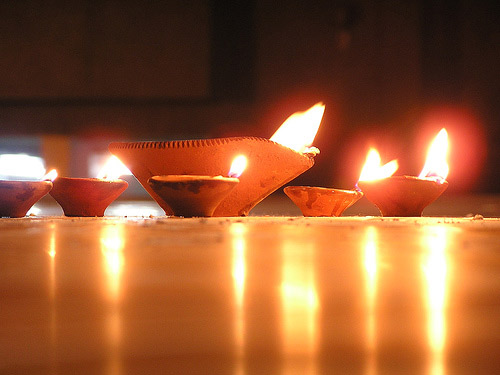
While Diwali has a religious significance for an estimated 1 billion Hindus world wide, Diwali is clearly much more than that. It is a truly Indian festival which is celebrated by Indians throughout the world in a joyous mood, with zeal and enthusiasm. Diyas [oil lamp usually made from clay, with a cotton wick dipped in Ghee or vegetable oils] and candles are burnt in every home. People clean their homes, sweets are shared and people wish each other well.

It heralds the beginning of new year as per the Hindu calendar. Diwali is normally celebrated in October or November.

Diwali is also an important event for Sikhism, Jainism and Buddhism.

Diwali is truly an Indian festival, not just a Hindu festival!

In NSW, Diwali celebration takes the highest spot on the Indian community Calender.
It is estimated that there are over 150 thousand people of Indian heritage in NSW. It can be safely said that Most of them celebrate Diwali each year in one or the other form. The number is growing each year  as more skilled migrants and students arrive from India and make NSW their home.

With multiculturalism recognised as part of the Australian way of life and as a valued asset of New South Wales, it is highly commendable that the Government of NSW recognised this major festival by hosting an official annual celebration at NSW Parliament for Diwali – the festival of light – symbolising and renewing the vows of the people of NSW to uphold the true values of life.

Indian Australian community believe in integration and participation of Indian Australians in the general Australian community. We are strong believers and supporters of multiculturalism and multicultural Australia.

We are thrilled with the new status of Diwali celebration and applauds NSW Govt for their decision to host Diwali celebration in the NSW Parliament. We are committed to working with the NSW government through the appropriate ministry, minister and agency to organise a grand Diwali celebration this year and in future.

~~~~~~~~~~~~~~~~~~~~~~~~~~~~~~~~~~~~~~~~~~~~~~~
10 Reasons to Celebrate Diwali.
The Festival of Lights is for All

Why do we celebrate Diwali? It’s not just the festive mood in the air that makes you happy, or just that it’s a good time to enjoy before the advent of winter.

There are 10 mythical and historical reasons why Diwali is a great time to celebrate. And there are good reasons not just for Hindus but also for all others to celebrate this great Festival of Lights.

1. The Victory of Rama: According to the epic ‘Ramayana’, it was the new moon day of Kartik when Lord Ram, Ma Sita and Lakshman returned to Ayodhya after vanquishing Ravana and conquering Lanka. The citizens of Ayodhya decorated the entire city with the earthen lamps and illuminated it like never before.

2. Special Day for the Sikhs: The third Sikh Guru Amar Das institutionalized Diwali as a Red-Letter Day when all Sikhs would gather to receive the Gurus blessings. In 1577, the foundation stone of the Golden Temple at Amritsar was laid on Diwali. In 1619, the sixth Sikh Guru Hargobind, who was held by the Mughal Emperor Jahengir, was released from the Gwalior fort along with 52 kings.

3. Goddess Lakshmi’s Birthday: The Goddess of wealth, Lakshmi incarnated on the new moon day (amaavasyaa) of the Kartik month during the churning of the ocean (samudra-manthan), hence the association of Diwali with Lakshmi.

4. Krishna Killed Narakaasur: On the day preceding Diwali, Lord Krishna killed the demon king Narakaasur and rescued 16,000 women from his captivity. The celebration of this freedom went on for two days including the Diwali day as a victory festival.

5. The Return of the Pandavas: According to the great epic ‘Mahabharata’, it was ‘Kartik Amavashya’ when the Pandavas appeared from their 12 years of banishment as a result of their defeat in the hands of the Kauravas at the game of dice (gambling). The subjects who loved the Pandavas celebrated the day by lighting the earthen lamps.

6. Coronation of Vikramaditya: One of the greatest Hindu King Vikramaditya was coroneted on the Diwali day, hence Diwali became a historical event as well.

7. Special Day for the Arya Samaj: It was the new moon day of Kartik (Diwali day) when Maharshi Dayananda, one of the greatest reformers of Hinduism and the founder of Arya Samaj attained his nirvana.

8. Special Day for the Jains: Mahavir Tirthankar, considered to be the founder of modern Jainism also attained his nirvana on Diwali day.

9. Special day for Buddhism: Newar Buddhists celebrate it because Emperor Ashoka converted to Buddhism on this day.

10. The Pope’s Diwali Speech: In 1999, Pope John Paul II performed a special Eucharist in an Indian church where the altar was decorated with Diwali lamps, the Pope had a ‘tilak’ marked on his forehead and his speech was bristled with references to the festival of light.

[With input and contribution from Tony Colaco, President, Goan Overseas Association of NSW].

UPDATE: Community Relations Commission [CRC] is the body on behalf of NSW Govt to organise/conduct Deepavali celebration in NSW Parliament on 10th Nov, 2011. 

Yadu Singh/Sydney/1st Oct, 2011
www.facebook.com/dryadusingh

www.twitter.com/dryadusingh