Why Section 18C of Racial Discrimination Act should not be repealed

Racial discrimination Act 1975, section 18C is in news, and is creating quite a bit of debate, discussion and disquiet in Australia.

United against Racism

It has become quite intense ever since Federal Attorney General, Senator George Brandis, said in the Senate recently that “People do have a right to be bigots, you know,” and “People have the right to say things that other people would find insulting, offensive or bigoted.”

I find these statements troubling. I do not agree with them.

Let us see what exactly is section 18C and what is exempted from 18C (Section 18D).

RACIAL DISCRIMINATION ACT 1975 – SECT 18C:
Offensive behaviour because of race, colour or national or ethnic origin:

(1) It is unlawful for a person to do an act, otherwise than in private, if:

(a) the act is reasonably likely, in all the circumstances, to offend, insult, humiliate or intimidate another person or a group of people; and

(b) the act is done because of the race, colour or national or ethnic origin of the other person or of some or all of the people in the group.
(2) For the purposes of subsection (1), an act is taken not to be done in private if it:
(a) causes words, sounds, images or writing to be communicated to the public; or
(b) is done in a public place; or
(c) is done in the sight or hearing of people who are in a public place.
(3) In this section:
“Public place” includes any place to which the public have access as of right or by invitation, whether express or implied and whether or not a charge is made for admission to the place.

RACIAL DISCRIMINATION ACT 1975 – SECT 18D:
Exemptions: Section 18C does not render unlawful anything said or done reasonably and in good faith:

(a) in the performance, exhibition or distribution of an artistic work; or
(b) in the course of any statement, publication, discussion or debate made or held for any genuine academic, artistic or scientific purpose or any other genuine purpose in the public interest; or
(c) in making or publishing:
(i) a fair and accurate report of any event or matter of public interest; or
(ii) a fair comment on any event or matter of public interest if the comment is an expression of a genuine belief held by the person making the comment.
—————————————————————————————————-
In summary, Section 18C of the Act makes it unlawful for anyone to do an act that is reasonably likely to “offend, insult, humiliate or intimidate” anyone because of their race or ethnicity. Section 18D of the Act outlines exemptions with the purpose of protecting freedom of speech. Thus, artistic works, scientific debate and fair comment on matters of public interest are exempt from section 18C, provided they are reasonable and are in good faith.
———————————————————————————————————-
Background of Racial Discrimination Act:
International Covenant on Civil and Political Rights (ICCPR) and the International Convention on the Elimination of All Forms of Racial Discrimination (ICERD) are two very important international agreements for the human race. Australia is a signatory to them, and thus has obligations to implement protections against racial hatred.

Furthermore, National Inquiry into Racist Violence and the Royal Commission into Aboriginal Deaths in Custody established the linkage between racial hatred and vilification and emotional and psychological harm. It was also found that such abuse reinforces other forms of discrimination and exclusion. The enquiry found that even low-level behaviour of this type can create the environment for more severe acts of harassment, intimidation or violence by impliedly condoning such acts.

Taking all these into consideration, Australian Law Reform Commission published its 1992 report, Multiculturalism and the Law, which recommended the introduction of legislation to deal with racial hatred.
Sections 18C and 18D were therefore introduced in 1995 in response to recommendations of major inquiries, and for the right reasons.

Freedom of speech Vs freedom from racial vilification:
Freedom of speech is important in a free society, but it must also be emphasized that people have a right to have freedom from racial vilification too.

Freedom of speech can, and is, never an absolute right. Laws applying to defamation, advertising and national security do restrict the right of freedom of speech.

Australian courts have repeatedly held that for conduct to be covered by section 18C, the conduct must involve “profound and serious” effects, not “mere slights”. They have also found 18C to be an appropriate measure to implement Australia’s obligations to prohibit racial hatred under the ICCPR and ICERD.

Having said that, Andrew Bolt, a right wing Journalist, was found to have breached Section 18C in regards to Fair-skinned aborigines. It led to statements from Coalition leaders, promising before the 2013 Federal election to repeal section 18C of the Racial Discrimination Act ”in its current form”.

Senator Brandis has said recently that “Never again in Australia will we have a situation in which a person may be taken to court for expressing a political opinion.”

Senator Brandis told the Senate recently that “he would soon be bringing forward an amendment that would ensure The Andrew Bolt case would never be repeated.”

Here is the Exposure Draft from Attorney General, Senator George Brandis, which is open to comment from the Public until 30 April 2014 at s18cconsultation@ag.gov.au

———————————————————————————————–
Exposure Draft

(http://www.attorneygeneral.gov.au/Mediareleases/Pages/2014/First%20Quarter/25March2014-RacialDiscriminationAct.aspx)

Freedom of speech (Repeal of S. 18C) Bill 2014
The Racial Discrimination Act 1975 is amended as follows:
1. Section 18C is repealed.
2. Sections 18B, 18D and 18E are also repealed.
3. The following section is inserted:

1. “ It is unlawful for a person to do an act, otherwise than in private, if:
a. the act is reasonably likely:
i. to vilify another person or a group of persons; or
ii. to intimidate another person or a group of persons,
and
b. the act is done because of the race, colour or national or ethnic origin of that person or that group of persons.
2. For the purposes of this section:
a. vilify means to incite hatred against a person or a group of persons;
b. intimidate means to cause fear of physical harm:
1. to a person; or
2. to the property of a person; or
3. to the members of a group of persons.
4. Whether an act is reasonably likely to have the effect specified in sub-section (1)(a) is to be determined by the standards of an ordinary reasonable member of the Australian community, not by the standards of any particular group within the Australian community
5. This section does not apply to words, sounds, images or writing spoken, broadcast, published or otherwise communicated in the course of participating in the public discussion of any political, social, cultural, religious, artistic, academic or scientific matter.”
—————————————————————————————————-
You need to read the Exposure Draft (above) very carefully.
(http://www.attorneygeneral.gov.au/Mediareleases/Pages/2014/First%20Quarter/25March2014-RacialDiscriminationAct.aspx)

Three points are very disturbing.
1. This proposed legislation really would allow for almost any racist speech you can imagine. Any “public discussion of any political, social, cultural (or) religious, artistic, academic or scientific” matter will be exempt, irrespective of its seriousness and intentions. Basically, every racial abuse can be exempt under the proposed legislation. There is no limit here.

2. Whether something is “reasonably likely” to vilify is “to be determined by the standards of an ordinary reasonable member of the Australian community”, “not by the standards of any particular group within the Australian community.” That means that the vilification will not be judged by the standard of whatever racial minority is being vilified. Instead, the ordinary reasonable Australian, meaning thereby White Anglo-Saxon Australians, will decide whether the minority groups are racially vilified or not.

If we have to trust “Ordinary reasonable Australians” to decide what we should think or find racially vilifying, we may end up in serious troubles. You do not have to go too far. Just go to the comments column of any newspaper to have the taste of what some of the “Ordinary reasonable Australians” think about minorities. You will find that plenty of members of “ordinary reasonable Australians” are good at telling people from minority racial groups what they should and shouldn’t find racist, without having an idea of what is right or wrong in racial vilification sense.

3. There is more. This is in regards to the proposed offence of racial “intimidation”. To “intimidate” is “to cause fear of physical harm” according to the Exposure draft. Who decides whether a member of a minority racial group should have a “reasonably likely” chance of feeling “fear of physical harm?” Obviously, that too will be decided for them by someone else, not themselves. That is plainly unacceptable, grotesque and wrong.

Australia is a success story of multiculturalism, where almost half the population was either born overseas or has a parent who was born overseas.

This is in danger, if section 18C and 18D are tampered with, repealed or diluted.

With any change with 18C and 18D, the clear line between legitimate public debate and hate speech will be removed. “Anything goes’ will become the law.

We need the protection from Hate speech and racial vilification because not everyone is in a position of parity to speak back to those who denigrate them on racial grounds. Not everyone is Adam Goodes, Ben Barba and Ali Abbas, who can stand up for themselves, when racially attacked or vilified.

It is important that the average person had a way of holding others accountable for racial abuse and harassment.

I do not believe that the Federal Court’s ruling in the case involving Andrew Bolt in 2011 (which was never challenged by appeal) provides sufficient cause for dismantling part of our system and laws of racial tolerance and harmony.

We need to promote civility and tolerance, not bigotry, racism, racial abuse, racial vilification and racial intimidation. If Section 18C and 18D are repealed, tampered with or diluted, this is exactly what is going to happen.

I therefore, like a vast majority of people (as per a recent poll on this matter), do not want Section 18C repealed, tampered with or diluted!

I have had a discussion with many from various communities including Indian Australians, and know for sure that they too are opposed to the proposed repeal of Section 18C.

I have sent my submission to s18cconsultation@ag.gov.au. I urge you to do the same by 30th April 2014.

You could do so just by saying “I am opposed to the proposed repeal of Section 18C of Racial Discrimination Act”!

Dr Yadu Singh/Sydney/27th April, 2014
dryadusingh@gmail.com
http://www.twitter.com/dryadusingh
http://www.facebook.com/dryadusingh
au.linkedin.com/in/dryadusingh

Proud and privileged to be in the list of “Goldmine” leaders from the Western Sydney!

The Daily Telegraph Newspaper published a list of key people from Western Sydney, calling them “Goldmine” leaders!

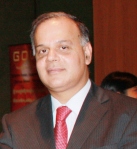
I feel proud and privileged to be included in this list! Image

I must admit that it was a humbling experience to see my name in this list of great people.

Here is the article from The Daily Telegraph newspaper! http://www.dailytelegraph.com.au/newslocal/competitions/fair-go-for-the-west-meet-the-goldmine-leaders/story-fngy6zqs-1226881501042

—————————————————————————————————————————————————————————-

Fair Go for the West: Meet the goldmine leaders!

Sydney’s West is a goldmine of single-minded leaders who would rather make a difference than make excuses. 

Whether it be building some of Australia’s most successful businesses, mentoring new arrivals to the West, leading sports teams worth cheering for or simply breeding the best darn chickens you’ll taste, they are making Sydney a better place.


Paul Lederer

Paul Lederer runs Primo Smallgoods at Chullora.

Paul Lederer runs Primo Smallgoods at Chullora. Source: News Limited


The Primo Group chief executive has transformed a Hungarian family tradition of smoking meats into a $1.4 billion international enterprise run from Chullora with 4000 employees.

Estimated to hold a personal fortune of $630 million, he will indulge his passion for soccer when he takes control of the Western Wanderers from July 1, leading a new ownership team including Pirtek founder Peter Duncan and Filipino-Chinese businessman Jefferson Cheng.


Katie Page and Gerry Harvey,

Harvey Norman chief executive and chairman

This dynamic duo have been working and playing hard in Western Sydney since Harvey Norman opened its Auburn store in 1982.

The Harvey Norman business, of which Harvey is chairman and Page CEO, now has eight stores in the West, employing more than 1400 locals.

Harvey, who went to high school in Katoomba, is also Australia’s biggest horse breeder, while Page’s passions include the West’s exotic food and restaurant scene. They live in the northwest.

Harvey Norman chairman Gerry Harvey with managing director and wife Katie Page.

Harvey Norman chairman Gerry Harvey with managing director and wife Katie Page. Source: News Limited


Jihad Dib

For eight years, the Punchbowl Boys High School principal has been inspiring his students to lift their sights.

The results are easy to see. The school where drug gangs once ruled and barbed wire topped the fences now wins educational awards.

While only a handful of year 12 boys once thought about going to university each year, now about a third of the class go on and many more do vocational training.

Dib was able to joke recently that the school may be getting too soft when a fight broke out over hand cream.

Jihad Dib with students out the front of Punchbowl Boys High School

Jihad Dib with students out the front of Punchbowl Boys High School Source: News Limited


Raelene Castle

Since becoming the first female to lead an NRL club eight months ago, Canterbury Bankstown Bulldogs CEO has won respect as a no-nonsense operator focused on instilling an honest, hardworking culture.

As she builds the Bulldogs’ appeal to the families and businesses of the West, she has shown a strict attitude to player behaviour and doesn’t tolerate fools — as Cronulla’s Andrew Fifita recently discovered when Canterbury terminated his $3.5 million deal after some ill-chosen comments.

New Canterbury Bulldogs CEO Raelene Castle pictured at Bemore Oval.

New Canterbury Bulldogs CEO Raelene Castle pictured at Bemore Oval. Source: News Limited


Nick Moraitis has built a huge fresh produce business in the west.

Nick Moraitis has built a huge fresh produce business in the west. Source: News Limited

Cate Sydes, Marist Youth Care CEO.

Cate Sydes, Marist Youth Care CEO. Source: News Limited

Nick Moraitis


The Moraitis Group founder has worked in the West for 60 years, building a multifaceted food empire with revenues pushing $1 billion.

Through his partnership with fellow western tycoon Paul Lederer, he recently joined forces with Hungry Jacks’ founder Jack Cowin to produce salads and fresh soups for major retailers.

“The West is full of talented people but we need more businesses based here and more jobs,’’ said Moraitis, 79, who owned champion thoroughbred Might and Power.


Cate Sydes

The Marist Youth Care CEO is Western Sydney’s Good Samaritan, having worked with those on Struggle St since helping Aboriginal children in Mount Druitt 30 years ago.

Based at Blacktown, she leads one of Australia’s largest service providers for youth at risk.

“I’ve always been drawn to kids and young people in need,” says Sydes, who lost both of her parents while still in her teens. “My dream is that one day I’ll be out of work.’’


TELL US WHY YOU LOVE YOUR AREA

SEND US YOUR IMAGES AND WIN


Tony Shepherd

From advising the PM on how to get our national finances under control to building Western Sydney freeways and a new sports franchise, the diminutive Greater Western Sydney Giants chairman is a serious power player.

As the outgoing Business Council of Australia president and former chairman of construction giant Transfield Services, he has a contact book than sprawls from west to east, as evidenced by his recent appointment as chair of the SCG Trust.


Jim Marsden

Described by “Mr Olympics” Rod McGeoch as the “smartest man in the west”, the Marsdens Law Group senior partner has been at the centre of Campbelltown life since growing up in the local pub.

Whether it be handling the legal affairs of the region’s business elite or personally lobbying NRL chief Dave Smith to settle a team (ie his beloved Wests Tigers) in Campbelltown, Marsden is a passionate advocate of the southwest, where he has raised his four children.

He still gets a chuckle out of his late brother John Marsden’s famous quip: “There are two great cities in the world — Rome and Campbelltown.’’


Louise Cordina

The Cordina family have been feeding Australia “cage-free” chicken since pioneering the concept in the 1950s.

The 34-year-old is the first fourth-generation member of the Cordinas to help lead the family’s famous business with her father John. It is now one of the top 100 family-owned firms in the nation.

She grew up next door to the family’s Girraween factory and adopts a typically unpretentious Western Sydney style, saying: “We have never had aspirations to be out there being the biggest.’’

John and Louise Cordina.

John and Louise Cordina. Source: News Limited


Lyall Gorman

The Wanderers chairman tapped into Western Sydney’s passion and energy to create the A-League soccer franchise.

Gorman, highly rated by soccer supremo Frank Lowy, leads a board which includes distinguished Australian-Chinese businessman Benjamin Chow and influential Aboriginal leader Warren Mundine.

“One of our major goals is to be a catalyst for true social change across western Sydney — part of that is inspiring young people to be the absolute best they can be,’’ he says.

Executive Chairman Lyall Gorman.

Executive Chairman Lyall Gorman. Source: AAP


Christopher Brown

When the history is written of how an airport finally came to be built at Badgerys Creek, at least once chapter should be devoted to Brown.

As a member of the federal government’s panel that recommended Badgerys, the Parramatta-bred tourism advocate kept talking when others didn’t want to listen. He was also one of the first to talk up his home town as a genuine CBD.

Today, he chairs the Eels Round Table Forum and sits on the board of the University of Western Sydney and the Moorebank Intermodal Company.


Grant O’Brien

The electrical apprentice who rose to become CEO of supermarket giant Woolworths, headquartered in north-western Sydney’s Bella Vista, still keeps a focus on the workers of tomorrow.

O’Brien leads 190,000 employees, but is spearheading a major youth employment initiative called Generation Success to find ways to give more young people improved career prospects.


Jeremy Donovan

Jeremy Donovan Source: Supplied

Jeremy Donovan


Donovan, an internationally renowned didgeridoo player, was tapped last year to become the national ambassador in mining magnate Andrew Forrest’s GenerationOne indigenous initiative when Warren Mundine stepped down as CEO.

The 34-year-old, who is raising four children at Mulgoa, near Penrith, is part of the new breed of indigenous leaders who believes lives are only transformed through education and work, not welfare dependency.


Lionel Lee

The grandson of Chinese immigrant Bing Lee runs what has become the largest privately held electrical retail business in NSW with more than 40 stores visited by 120,000 people a week.

Old Guilford continues to serve as Lee’s corporate headquarters, harking back to the company’s early days in Fairfield selling black and white TVs to new immigrants who did not have a credit rating.


Rawand Al-Hinti

The Jordanian-born 21-year-old has been identified as one of the West’s articulate young voices.

“I believe if you work hard and aim for success you’ll flourish regardless of what suburb you are from or what school you went to,’’ she says.

The Macarthur Girls High School vice-captain, who mentors other university students while studying law and international relations, was recently appointed to the NSW government’s Youth Advisory Council.


Stuart Ayres

The enthusiastic Liberal MP for Penrith is winning praise since being promoted to become Premier Barry O’Farrell’s Minister for Western Sydney late last year.

The 33-year-old, who is the partner of federal Liberal Senator Marise Payne, has helped drive the government’s decision to relocate more than 3000 bureaucrats to western Sydney and understands the urgent need to create jobs and build new houses.


David Borger

The former Labor State Minister and Parramatta Mayor remains a strong campaigner for change as Sydney Business Chamber’s Western Sydney director.

“It sometimes feels like those in the east aren’t interested in the west and that’s a problem,’’ he said in his typically frank style last October.

James and Gretel Packer have sought his advice in relation to their $30 million arts gift to the West.


Barney Glover

The newly appointed University of Western Sydney Vice-Chancellor has wasted little time settling in, winning in-principle approval from his board this week to build a major campus in Parramatta’s CBD.

The former VC at Charles Darwin University will work closely in his new role with the UWS’ well-connected Chancellor Peter Shergold.


Yadu Singh

The Indian Australian Association of NSW president set up shop as a cardiologist in Baulkham Hills soon after arriving from India in 1991.

He has been writing and speaking passionately ever since as a leader of Australia’s — and Western Sydney’s — fastest-growing immigrant group.

His 12,400 Twitter followers are rarely left in doubt about his views, whether it be his advocacy on behalf of Indian students, his defence of Australia against claims it is racist or his support of a Western Sydney airport.


Tony Perich

The son of Croatian immigrants, the Greenfields Development Co managing director is turning dairy country into up-market housing developments in the buzzing southwest.

Estimated by BRW to be worth more than $850 million, the Perich family was once the biggest dairy farmer in the southern hemisphere through its Leppington Pastoral Company.

The family’s assets include the iconic former Oran Park raceway where at least 5500 houses and units are being developed, along with the biggest Woolworths in Australia.

——————————————————————————————————————————————————————————

The End

———————————————————————————————————————————————————————————–

Dr Yadu Singh/Sydney/23rd April, 2014

http://www.twitter.com/dryadusingh

http://www.facebook.com/dryadusingh

Monika Chetty: Background story comes out through ABC Radio National programme!

http://www.abc.net.au/radionational/programs/backgroundbriefing/the-secret-life-of-monika-chetty/5359350

Transcript

Hide

Hagar Cohen: In May last year the Malloch family in Sydney’s south-west noticed a homeless woman sleeping rough in a bush reserve near their house.

Joanne Malloch: The kids would see her up the park, and they’d say, ‘Oh the weird person is up the park,’ and I’d be like, ‘Just stay away, it’s okay, come back down.’ But it wasn’t enough to say that this person is a worry so we need to ring the police on them. Otherwise you’d be ringing the police on a lot of people.

Hagar Cohen: So she didn’t scare you or anything?

Joanne Malloch: No. It didn’t even scare the kids, not once did she approach the kids or anything. If anything she’d just turn down and walk away.

Hagar Cohen: Then, three days into the new year, while driving up her street, Joanne Malloch saw the homeless woman again. This time she looked like she was burnt.

Joanne Malloch: We passed her at about 4.10 on the day that she was found. And when I got home I said I think it looks like they’ve been burnt on the arm.

Hagar Cohen: Can you describe a little bit more of what you saw?

Joanne Malloch: It was just raised, like a severe burn, like a raised black kind of a colour. But then to me it’s like the bread you buy from Bakers Delight that’s like a tiger bread, so it’s like raised. Yeah, it didn’t look good. It was about 6 o’clock or just after 6 when police came and got her out of the bush up here.

Hagar Cohen: When the police arrived, they found Monika Chetty so severely burnt, she was barely alive. She was taken to hospital, but three weeks later, in late January, she died. It was reported that she died from an acid attack.

In countries like India, Pakistan or Bangladesh, acid attacks are well documented. Usually a jealous man will disfigure a woman by throwing acid at her, to restore his pride. But this type of assault is almost unheard of in Australia.

Heading the investigation into Monika Chetty’s death is Detective Sergeant Lidia Hill.

Lidia Hill: She was pretty severely burnt, to at least 80% of her body we were later informed by medical experts.

Hagar Cohen: When Lidia Hill met Monika Chetty at the hospital, she revealed she’d been attacked.

Lidia Hill: After she went to hospital, she was obviously transferred to the Concord Burns Unit due to the extent of her injuries. We did have a conversation with her at some point in time, but however it was quite limited.

Hagar Cohen: And that conversation was to do with the attack?

Lidia Hill: Yes, it was. She just reiterated that she was attacked in Bigge Park, confirming that it was Bigge Park at Liverpool, and that somebody had thrown acid on her at the park, or what she believed to be acid thrown at her at Bigge Park

Hagar Cohen: Did she say anything at all about the perpetrator, whether she knew the perpetrator or not?

Lidia Hill: She did not describe the person of interest at all, and did not give any further information about knowing the person of interest.

Hagar Cohen: So do you now believe that it was an acid attack?

Lidia Hill: We are able to say that she definitely sustained a direct contact with a chemical substance.

Hagar Cohen: Detective Sergeant Lidia Hill.

I’m Hagar Cohen. Today on Background Briefing, the secret life and horrific death of Monika Chetty.

Lidia Hill: At this stage we are treating it as a homicide investigation. We have consulted with a number of experts and one of those experts is a burns specialist that has confirmed the fact that we are looking at it as a homicide investigation. The investigation is complex and protracted, and these type of incidents are not common in Australia, and certainly not common in a homicide investigation that I’ve been a part of in my policing experience.

Hagar Cohen: When you talk about these kinds of investigations, to you mean the acid attack itself?

Lidia Hill: Yes, that’s correct, yes.

Hagar Cohen: So are there any suspects?

Lidia Hill: No, we have not identified any suspects at this stage. We are preparing a brief of evidence for the Coroner. A brief has been requested but we probably will need to extend on the due date of that. So an inquest date has not been formally set.

Hagar Cohen: And is that because of the complexity of the investigation?

Lidia Hill: Yes, that’s correct.

Hagar Cohen: While the police are still looking for her attacker, Background Briefing can reveal that Monika Chetty was involved in a visa scam, charging $40,000 for a fake marriage visa. We’ll hear how people went out of their way to try to help Monika Chetty, but she consistently rejected any offers. And we’ll also hear that Monika Chetty was trying to escape Australia because she feared for her life.

Memedrafeek Abdulmaleek [translated]: She told me she is having trouble with some relatives who are blackmailing her. She received death threats as well and she wanted to seek asylum immediately somewhere.

Raj Maharaj: There was threat to the children and the husband, that’s why she was not disclosing her matters to the family. And that’s why she wanted to stay on her own and solve the problem.

Hagar Cohen: Had she been blackmailed? Were there any threats to her children?

Lidia Hill: We can’t comment on that at the moment, it’s still subject to the investigation.

Hagar Cohen: Monika Chetty was 39 and a member of Sydney’s tightknit Fijian Indian community. Monika was divorced twice and had three children from her last marriage to Ronald Chetty. It ended in 2009. A year later he took full time custody of the kids, because Monika told him she couldn’t look after them anymore. She said she’s about to become homeless.

Ronald Chetty is reluctant to talk about his former wife. But he did say that after they divorced she’d occasionally ask him for money.

Ronald Chetty: Whenever she was in some kind of problem, she needed money and that’s about it. I helped her whatever I could.

Hagar Cohen: Do you know if maybe she was hanging out with some people who were trying to get a lot of money out of her?

Ronald Chetty: I don’t know dear, because I don’t know. After we separated I didn’t really want to know what’s going on because her life and my life was different. It was no point digging into someone else’s life. She never told us exactly what was happening with her life.

Hagar Cohen: Was she always a secretive kind of person or was it unusual that she would behave…?

Ronald Chetty: No, no, she was like that. It was really hard to get something out of her.

Hagar Cohen: His last contact with Monika was a phone call early in the afternoon of January 3. Ronald Chetty says she sounded distressed.

Ronald Chetty: Her voice wasn’t like 100% Monika, she was like someone maybe sick.

Hagar Cohen: So she sounded like she was sick?

Ronald Chetty: Sort of, yeah, it was a different voice.

Hagar Cohen: And did you ask her if everything is okay?

Ronald Chetty: I did ask her, I said, ‘Are you okay or not?’ And she said, ‘Yes, I’m okay.’

Hagar Cohen: But Monika Chetty wasn’t okay. That evening she was found lying face down in a bush reserve in the suburb of Hoxton Park. Green Valley police arrived just after 7pm.

Detective Sergeant Lidia Hill:

Lidia Hill: She did not really want police or assistance from ambulance personnel. However, she was given that assistance and was taken to hospital, and she subsequently told us that she was attacked at a park in Liverpool.

Hagar Cohen: What do you mean she didn’t want help?

Lidia Hill: She did make a comment that she didn’t want any fuss, and she didn’t want to go to hospital, yes.

Hagar Cohen: Was that strange?

Lidia Hill: Yes, it definitely was strange, but we know that Monika was quite a private individual, and that members of the public had offered her assistance in the past, and she had declined that, politely declined that assistance.

Hagar Cohen: As we’ll hear, the community in south-western Sydney reached out to Monika Chetty. She was offered a job, accommodation, counselling and food. But she persistently declined the offers. Monika Chetty was only after money, and urgently. As a beggar, she became a familiar sight on the streets of suburbs like Parramatta, Carnes Hill and Liverpool.

Lidia Hill: It is well known that Monika was begging around the railway stations and CBD areas within south-west Sydney. I can definitely confirm that we do have information that people were giving her small amounts of money.

Hagar Cohen: A five-minute walk from the train station in Liverpool is Bigge Park, where Monika was allegedly attacked. Overlooking the park is the local Salvation Army branch.

Belinda Spicer: This part of Liverpool is very much the heart of Liverpool, it’s surrounded by medical services, business, corporates, and we’re very much a part of this place in the community here, being the heart of the community.

Hagar Cohen: Major Belinda Spicer is the Salvo’s mission leader in Liverpool.

Belinda Spicer: It’s highly populated and any given day including the weekends there are hundreds of people who pass through this part of Liverpool.

Hagar Cohen: What goes on at nights here at Bigge Park?

Belinda Spicer: At night it is a very isolated, lonely, dark part of Liverpool. The only thing that would happen here, particularly in the winter months, is it would be home to the homeless people of Liverpool.

Hagar Cohen: Belinda Spicer says Monika Chetty was known in this area as one of the regular beggars.

Belinda Spicer: Everybody knew Monika Chetty. She was always around the station, which is just across the road. She would roam around this area, and she would ask people for money, and people gave her money. We’ve had people from our own congregation here who when they saw that she was in trouble and she was in the media, they immediately recognised Monika, and they would comment on how they would help her out, give her five dollars or give her some money, and feeling very sorry for her.

Hagar Cohen: In the central shopping district of Liverpool, the Fijian Indian community is prominent, with plenty of spice shops and restaurants. This is a hard working community, so it was a bit embarrassing that one of their own was roaming the streets here and begging for money.

Man: Yes, she did ask for money. So I told her that, you know, Centrelink is giving it to you. But don’t condemn the Indian society please.

Hagar Cohen: The owner of one Fijian Indian restaurant said her begging was shaming the
community.

Man: ‘Just go look after yourself, don’t do that.’ That’s all I said

Hagar Cohen: Did you know she was Fijian Indian?

Man: Yes, by the look. I told her it is a disgrace for us.

Hagar Cohen: Oh you told her it was a disgrace for you?

Man: Yes.

Hagar Cohen: Because she was begging for money?

Man: Yes. We don’t want that, you know, because here, the government is looking after the people, but it’s no good to do that kind of thing in a society. I don’t condemn anybody but, you know, what her background is, what her life is, she’s supposed to look after herself.

Hagar Cohen: A few blocks away Jagdish Lodhia runs a jewellery shop. He says that in October last year, Monika Chetty came into his shop twice, asking for money.

Jagdish Lodhia: And she just asked me if I could help her with $5, which I did.

Hagar Cohen: And what did she look like? Did she have any burns at all?

Jagdish Lodhia: Yes, she definitely had burns on her face, and also on her arms, basically the fingers were a little burnt, she had some bandages on. And that’s about it basically, but she was normal, and she could talk normal. Everything was pretty normal. The only thing is the second time when she came over to me is when I got a little concerned.

Hagar Cohen: Why is that?

Jagdish Lodhia: Because first of all, being a person of my community, we normally don’t see too many beggars on the streets. And she was asking for money, which we didn’t like, and I just happened to ask the question why was she doing this, because this could become an ongoing thing. And she just said that, ‘Look, I don’t have a house, my husband has left me, I sleep in my car.’ Immediately we were a little concerned, even my wife was a little concerned, so we said, ‘Look, this is Australia and I don’t see any reason why you should sleep in the car. And if your husband has left you that does not mean that’s the end of the world.’ I said, ‘Why don’t you go to Centrelink and ask them, tell them about your story and I’m sure they will help you.’ But she said, ‘No, no, no, they would not help me.’  So immediately I said, ‘Look, I don’t see any reason why they would not help you. If you want I’ll come over and I’ll ask them, I’ll talk to them.’ She said, ‘No, no, no,’ and then she just quickly left. She didn’t want to talk about it.

Hagar Cohen: Jagdish Lodhia thought it was strange that Monika was so articulate and well-mannered and yet was begging on the streets.

At around the same time, a woman who was living in a local women’s refuge saw Monika Chetty sleeping rough in a park. She rang the manager of her refuge and asked if they could help Monika. The manager of the Joan Harrison refuge, Inayet Erol, sent two caseworkers.

Inayet Erol: The events on that particular day was that we received a phone call about a woman that had been sleeping rough.

Hagar Cohen: Who was that phone call from?

Inayet Erol: The phone call was actually from another client that we were supporting in one of our external transitional supported housing properties. She said that she had come across this woman who was homeless, had been sleeping rough. She asked if we could help her. So two staff members got some blankets, it was a very cold day, and made a little parcel of food items, and they went down to Liverpool, and they spoke to her. She said that she was homeless and had been sleeping in a park, and they offered her the blanket, they offered her accommodation because we had a vacancy on that particular day. She declined to come in to the service. She said she wasn’t comfortable in a refuge.

She was even reluctant to take the food and the blanket because she said that it would just be something else that she needed to carry. She asked if they could assist her with money, but she was told that the service doesn’t assist with cash. She was asked if she was on a benefit, and she said that there was some problems with her benefit currently, so one of our workers said to her that we could assist her with that, so an appointment was made for the next day at 1 o’clock to meet her in front of Centrelink to assist her with her benefit. The worker that had made the appointment with her went in at 1 o’clock and hung around for about half an hour waiting for her, inside and outside, looking out for her, but she didn’t turn up.

Hagar Cohen: In another suburb, Carnes Hill, Jameel Ahmed saw Monika Chetty begging at the car park of a shopping centre. When he approached her, he noticed she was injured, and she told him she’s homeless, lonely and desperate for money. He was moved by her story, and decided to raise her plight with the wider Fijian Indian community.

He sent an email to their community organisation which reads:

Reading: ‘A few days back I ran into a 38-year-old lady in the Carnes Hill shopping complex car park, she identified herself as a homeless. Her tragic story goes as follows. She used to live with her elderly parents in a mortgaged house in Blacktown and was separated from her partner.

Since then, both her parents have departed this world, and her only sister severed her ties with the family when she ran away with a Pakistani man. All other distant family and friends have distanced themselves from her, leaving her to fend for herself in this cruel world.

She used to work as a nurse until fate dealt her a cruel blow leaving her unemployable and homeless. Monika is recovering from burns sustained from opening the radiator cap on her Ford Laser car (which she sleeps in) when it stopped on the freeway. Also bandaged were her hands which she hurt when the bonnet of the car fell accidently.

The women’s refuge in Liverpool took her in but she was being subjected to torment by other young youths, so she opted to move out. I saw it as my social obligation or duty to highlight Monika’s plight to a Fijian communal welfare organisation, in particular due to her cultural background.’

Hagar Cohen: It’s unclear whether these statements about her life are true. But Jameel Ahmed told Background Briefing that Monika seemed hysterical when they spoke. To help her, he deposited cash into her account twice, a total of $500. In the meantime, the community members on the email list decided to send a representative to see how they could help Monika.

Restaurant owner Raj Maharaj volunteered to get in touch with her.

Raj Maharaj: We were having email correspondence through our association which is FISCAA. When we had the meeting I volunteered to check on her. I spoke to the president and I said to him, ‘Leave it to me and I’ll see if I can get some story out of her.’

Hagar Cohen: Raj Maharaj runs a takeaway joint on a busy road. He says he spoke to Monika Chetty on the phone and even offered her a job as a kitchen hand. But he says she wasn’t interested in any of that. She only wanted cash.

Raj Maharaj: When I rang the mobile she said that she was in trouble and that she needed some money in the bank, and she wanted $700. She said, ‘I urgently need the money.’ And I said to her, ‘Why do you want money?’ She said, ‘I urgently need it.’ And I said, ‘I cannot sort of know anybody over the phone and post so much money, I’ve got to see you and know you.’

 So I gave her my restaurant’s address, I told her to come over. She said, ‘I’m in Fairfield.’ I said, ‘Well, I’ll direct you if you want, but if you come real closer and if you don’t find the place, you give me a call and I’ll guide you in and then we can sit down and talk.’ I said, ‘I can give you some work to do over here too, kitchen work or whatever, so at least you can earn.’

Hagar Cohen: And what did she say?

Raj Maharaj: She always was emphasising on that extra money she wanted, you know, $700 in the bank, you know, ‘I need money urgently for something.’ I think a couple of days later I had another call from her and I said…

Hagar Cohen: She rang you?

Raj Maharaj: Yes, she rang me up. She said to me, ‘I’m here and I want that money.’ I said, ‘Well, I told you what to do, come and see me personally and then I can give you the money.’ But she never turned up. After she started refusing to co-operate with me, my wife said to me, ‘I don’t think she’s genuine, she looks like she’s a fraud.’

Hagar Cohen: She looks like she is a fraud? What does that mean?

Raj Maharaj: It means if she was keen and if she really wanted help, she would have come over and volunteer herself to at least show her face.

Hagar Cohen: Raj Maharaj told his community group that Monika Chetty wasn’t interested in their help. He also said her plight didn’t seem genuine. The community members became suspicious about her motives. For example, community member Dr Anil Kumar responded by email saying that:

Reading: ‘My initial trepidation and suspicions about this case may appear to have been borne out with time. That is that perhaps the person in question may be a beggar rather than a bona fide destitute. Further developments may perhaps be more revealing. We must guard against the fallibility of falling into a trap of gullibility and naivety when approached by such needy.’

Hagar Cohen: After Monika Chetty’s tragic death, the Fijian Indian community started soul searching. Had they done enough for a fellow citizen who was so visibly distressed? Now the community is swirling with rumours. How did she die? Why did she need so much money? And who was after her?

Raj Maharaj says that one of his restaurant costumers told him Monika had faced extortion threats.

Raj Maharaj: He was a truck driver, and he came over and he spoke to me, and he told me why she needed the money. She said that other people are behind her that are getting her to… there was an extortionist, they’re trying to extort money out of her with some jewellery.

Hagar Cohen: With some jewellery? What does that mean?

Raj Maharaj: I don’t know whether she left the jewellery over there, or she bought some jewellery from them, and then she had to pay back.

Hagar Cohen: Were there threats to her children or anything like that?

Raj Maharaj: According to the gentlemen who spoke to me, he said that there was threat to the children and the husband, that’s why she wasn’t disclosing her matters to the family. And that’s why she wanted to stay on her own and solve the problem.

Hagar Cohen: Raj Maharaj hasn’t been able to verify the truck driver’s story. But as we’ll hear, only days before she died, Monika Chetty confided in an online companion about being blackmailed, and wanting to escape death threats. And it’s clear she was prepared to do anything to get the money she needed.

Background Briefing has learnt of her participation in an elaborate visa scam, selling the promise of fake marriage visas for tens of thousands of dollars.

Monika Chetty also contacted a number of her long-lost friends. Jarvis Prasad hadn’t seen Monika for many years when she rang out of the blue.

Jarvis Prasad: I heard from her mid last year. She called me. I didn’t even know it was her and then she said, ‘It’s Monika.’ And she goes, ‘I need some money.’ And I said, ‘Okay, I can do that,’ but I was a bit worried. All of a sudden after so many years now she is asking for money, I was concerned. So I told her, ‘Can we meet up? I’m willing to give you the money but I need to see you,’ because I had no idea, like maybe she was in trouble. The only problem was she didn’t want to meet.

Hagar Cohen: Did you ask her why did she need the money?

Jarvis Prasad: Yes, I did ask her. She didn’t want to discuss. First I thought maybe somebody is trying to make her get money. And that’s the reason we wanted to see her. But she didn’t want to see us.

Hagar Cohen: Jarvis Prasad wasn’t the only one getting the strange phone calls from Monika. She rang at least seven of the friends from Jarvis’s circle, asking for money. Next on her contact list was insurance broker Raj Singh.

Raj Singh: She gave me a call and said, ‘Look, Raj, can I see you?’ And I said, ‘What’s wrong,’ and she said, ‘No, I just want to meet you.’ So we had an appointment and she came round and said, ‘Look Raj, I’m behind in my payments.’ And I said, ‘What?’ She goes, ‘Just the car payments.’ So I gave her $150. She was pretty happy, and I offered her a job too.

Hagar Cohen: Was she homeless?

Raj Singh: No, she didn’t say that, nothing, all she said is, ‘I’ve got a car, I’ve got a licence.’ I asked her, because with this job you need a license. So that was the first. And then after maybe two or three months later she rang me again but that’s when she sounded desperate, like she needed more money. She kept on ringing me and telling me, look, just transfer the money, transfer the money. So that was the last…and I knew something was wrong, and I said, ‘Look, I’m in Albury, when I come back I’ll talk to you.’ And then I was away for a week or two I think, two weeks, and when I came back she never called back and nothing else.

Hagar Cohen: And then you found out that she was asking money from all of your friends?

Raj Singh: All my mates, yes. So then later I found out, all my mates rang me, ‘Has Monika rang you?’ I said, ‘Yes.’ ‘And have you given her money?’ I said, ‘Yes, I have, the first time.’ And they said, ‘Well, let’s find out because she asked everyone.’ Then I knew something was wrong.

Hagar Cohen: The group of friends met to discuss Monika Chetty’s desperation. It then came out that she had told some of them about her connection to a visa scam. Jarvis Prasad says she’d been asking a few of them if they knew men in Fiji who wanted to purchase permanent residency in Australia. She said she could organise fake marriage visas for the right amount of money.

Jarvis Prasad: What she was trying to tell my mate was that is if you know someone who wants to get married, they can arrange someone for money to marry that person, for a sum of money.

Hagar Cohen: So she was asking your mate whether he knows of any men who want to get married?

Jarvis Prasad: Yes, like if he has clients, she can pretty much help but it’s going to cost.

Hagar Cohen: So that they can get marriage visa in Australia?

Jarvis Prasad: Yes, they can organise that for a sum of money. I said, ‘Maybe she’s lying, trying to get some money,’ and he said, ‘No, no, she was serious.’

Hagar Cohen: Raj Singh was hearing the same stories.

Raj Singh: She was doing arranged marriages for the money. The way it works is people from overseas when they want to get here someone has to have Australian visa or passport and then they get married, and they give them a lump sum of money. And they stay with them for a year or two to get the visa.

Hagar Cohen: Background Briefing can reveal that Monika Chetty did offer to broker a fake marriage and took payments from at least one man.

Gokul Mochi is an Indian citizen from the Gujarat region. Background Briefing met him in Sydney. The young man agreed to tell his story but not to record an interview. His account has been corroborated by others Background Briefing spoke to.

Mr Mochi came to Australia on a student visa five years ago, hoping to settle here permanently as a skilled migrant. However, when the migration rules changed, it became impossible for him to gain permanent residency here as a student.

Mr Mochi’s friends told him about a woman who could arrange permanent residency for him. That woman was Monika Chetty. They first met in her car next to the train station in the suburb of Harris Park. She said she could arrange for him to marry an Australian citizen, but it would cost him a bit over $40,000. Mr Mochi agreed to pay her in instalments $1,000 at a time. He paid in cash fortnightly, every time meeting her at the same place at Harris Park station. Sometimes he’d pay even more then the agreed $1,000.

Gokul Mochi said he gave Monika his passport, which she claimed she needed for the permanent residency stamp. To pay for the visa, Mr Mochi worked 7 days a week from 9am until midnight, initially at a car wash, and later as a kitchen hand in a an Indian restaurant called Billu’s Eatery. But when he discovered that Monika Chetty had died, he realised he’d been duped of $30,000.

His visa to stay in Australia ran out, and he didn’t have a passport. He stayed in Sydney unlawfully, and kept working at Billu’s Eatery. On Feb 12, immigration officials went to Billu’s Eatery after a tip-off about illegal workers. They found four Indian men whose Australian visas had expired.

All of them were sent to Villawood Detention Centre, and by now they’ve all been deported back to India. Background Briefing understands Green Valley police interviewed Gokul Mochi in Villawood Detention Centre twice.

Around Australia, arranging fake marriages is a growing business. Earlier this year in Brisbane, a migration agent was charged over an alleged visa scam where Indian students paid for bogus marriages to Australian women.

In Sydney too there are similar allegations.

Chandrika Subramaniyan: At the moment I understand that a lot of fake marriages and visa things are going on in the community.

Hagar Cohen: Lawyer Chandrika Subramaniyan says there are elaborate fake marriage rackets in the Indian community in Sydney.

This is how it works: the first fake marriage happens in India. A person whose English is good enough to pass the English test to study in Australia, marries a person who has the money to sponsor them both in Australia. If they can’t obtain permanent residenc, they’ll divorce and look for an Australian resident to marry.

Chandrika Subramaniyan: Once this permanent residency is not happening, the people who get divorced they go and get married to people who have permanent residency, like somebody from the Fiji community or somebody from the New Zealand or some Australian or anybody who’s willing to get married. But I don’t know how far it is genuine.

Hagar Cohen: Under their visa conditions, once they divorce, the student’s partner can remain in Australia for a maximum of 28 days, unless he or she is able to remarry. Chandrika Subramaniyan says she sees many people in her western suburbs practice who want to remarry quickly after divorcing.

Chandrika Subramaniyan: People come to us all the time for divorce applications, so if it’s genuine we do the divorces. But the same client, when they come back and say, ‘Now we want to do spouse visa,’ I refuse to do it, because I have my own doubts about whether it’s a genuine one, or just within a month’s time somebody is getting married, that creates some doubt.

Hagar Cohen: So someone who was divorced through your practice would come back to you a month later to get married.

Chandrika Subramaniyan: Yes, it’s for visa purposes. See, once they are divorced they have a certain number of days, they have to get married 28 days…they have to leave if the visa is cancelled. So once the wife tells that we are divorced and the other party has to go, he may have 28 days, and he comes on the 27th day and he wants to get married to somebody and put the papers for visa, which is not my kind of…I don’t like to do that.

Hagar Cohen: But how many clients came to you, say, on the 27th day?

Chandrika Subramaniyan: Out of 10, at least three came back to us.

Hagar Cohen: Did they acknowledge to you it was fake marriage?

Chandrika Subramaniyan: No, no one acknowledges, they always come and say it’s a very genuine marriage and I love my wife and look at my jewelleries, look at my sindoor, we are in a very happy life and stuff.

Hagar Cohen: Migration lawyer, Chandrika Subramaniyan.

When Monika Chetty told her friends that she could arrange fake marriages, it didn’t surprise Jarvis Prasad. He says these kinds of arrangements are well known in the Indian community, and he’s also been approached.

Jarvis Prasad: Asking me if I know someone who would marry them for money. To tell you the truth this practice is still happening here. I can’t physically tell you who or…

Hagar Cohen: But it happened to you? Someone asked you to marry someone?

Jarvis Prasad: Yes, definitely. Someone did mention it, if I know someone or if someone knows someone and if I can actually organise something for them.

Hagar Cohen: How much money?

Jarvis Prasad: It’s a lot of money, they pay up to $30,000-$40,000, sometimes $50,000, it depends how rich they are, and how desperate they are.

Hagar Cohen: Just how much money Monika Chetty received from the visa scam is now being investigated by police.

Detective Sergeant Lidia Hill:

Lidia Hill: We are looking into all aspects of her life and her background, which include looking into all her finances, which include bank accounts et cetera.

Hagar Cohen: Are you able to tell me why did she need so much money?

Lidia Hill: We’re still looking into that whole issue regarding the finances, what people were giving her, where that money was going. It’s still part of the investigation. We are still seeking specific information about the injuries she received days prior to 3 January, 2014. I encourage anyone with information to contact Green Valley detectives or Crime Stoppers on 1800 333 000. I’d like to remind the public that they can provide the information anonymously through Crime Stoppers.

Hagar Cohen: It also appears that Monika’s desperation for money extended to people she met on the internet. On Facebook she contacted a young man, a Tamil Sri Lankan who lives and works in Saudi Arabia. Background Briefing spoke to that man a number of times, through an interpreter.

Memedrafeek Abdulmaleek [translated]: I am from Ampara District in Sri Lanka. I am here for the past seven years.

Hagar Cohen: Memedrafeek Abdulmaleek says he first went to Saudi Arabia to work in a military camp guarding the king’s residence in Mecca. He didn’t like the work and he ran away. But his passport was confiscated, so he’s stuck in Saudi Arabia and he’s lonely. He says Monika Chetty approached him on Facebook.

Memedrafeek Abdulmaleek [translated]: I randomly got connected to her through Facebook. She said that she can help me come to Australia, and that she can help me get a visa.

Hagar Cohen: He says they continued the relationship via email, and that Monika Chetty sent him dozens of emails. It was then that she started opening up to him and wrote about her own problems. He says that she revealed to him that she wanted to escape Australia because she was receiving death threats and that she feared for her life.

Memedrafeek Abdulmaleek [translated]: Initially she was going to help me come to Australia. That’s how she started, but then I started getting different emails. Now I will tell you the truth, she has sent me more than 30 to 40 emails, but later her emails were only about her problems. Then I dropped the idea of coming to Australia.

Now the problem is she wrote to me asking help. She wanted help to escape from Australia. She told me she is having trouble with some relatives who are blackmailing her. But she didn’t say why they are troubling her or what their names are. She received death threats as well and she wanted to seek asylum immediately somewhere.

She told me that she was not living in peace there, she wants to seek asylum somewhere to get away from those three or four people who are giving her trouble. In December 2013 I received another email, and that was the last one from her. The details she sent me were very, very heavy details. I replied to her stating this is unbelievable, and then I did not have any contact with her.

You know she sent me her bank balance, bank manager details, and account details, and the ID, like that, a lot of information. Can you tell me, in this day and age, will anybody provide someone with their bank balance, father’s details, family background details?

Hagar Cohen: It’s unclear why Monika Chetty disclosed her financial details to Memedrafeek, and the police have no knowledge of her plans to leave Australia.

Her last email to her Facebook friend in Saudi Arabia was in December. In early January Monika was found lying in bushes, with burns to 80% of her body. She died three weeks later.

Yadu Singh: Once it happened, everybody was reflecting; meeting her, giving her a bit of money, offering help, was it enough? Obviously not.

Hagar Cohen: Community leader Dr Yadu Singh had met a homeless Monika Chetty in a shopping mall last May. He was sure she would soon get her life sorted out.

Yadu Singh: And then it came, how come she got burns? ‘That somebody came and threw acid on me.’ That’s what she said. A 39-year-old lady, mother of three, sister of somebody, daughter of somebody, died at 39 in this cruel manner, after being burned 80%. That is the biggest story in this whole saga, that this type of behaviour, throwing acid on people, is not uncommon in south Asia, India, Pakistan, Bangladesh and other places. Mostly among young people when the relationship is not going well and some issue happens, it happens in India and Pakistan. I wasn’t aware of acid being thrown at somebody in Australia. What are we doing here? What is going on here? How come this is…are we going towards the same direction which happens in India?

Hagar Cohen: Background Briefing‘s coordinating producer is Linda McGinness, research by Anna Whitfeld, with thanks also to freelance journalist Fiona Harari and interpreter Balasingham Prabhakharan. Technical production by Leila Shunnar, the executive producer is Chris Bullock, and I’m Hagar Cohen.

Credits

Reporter
Hagar Cohen
Researcher
Anna Whitfeld
Supervising Producer
Linda McGinness
Sound Engineer
Leila Shunnar
Executive Producer
Chris Bullock

Basava philosophy is as relevant today as it was 800 years ago!

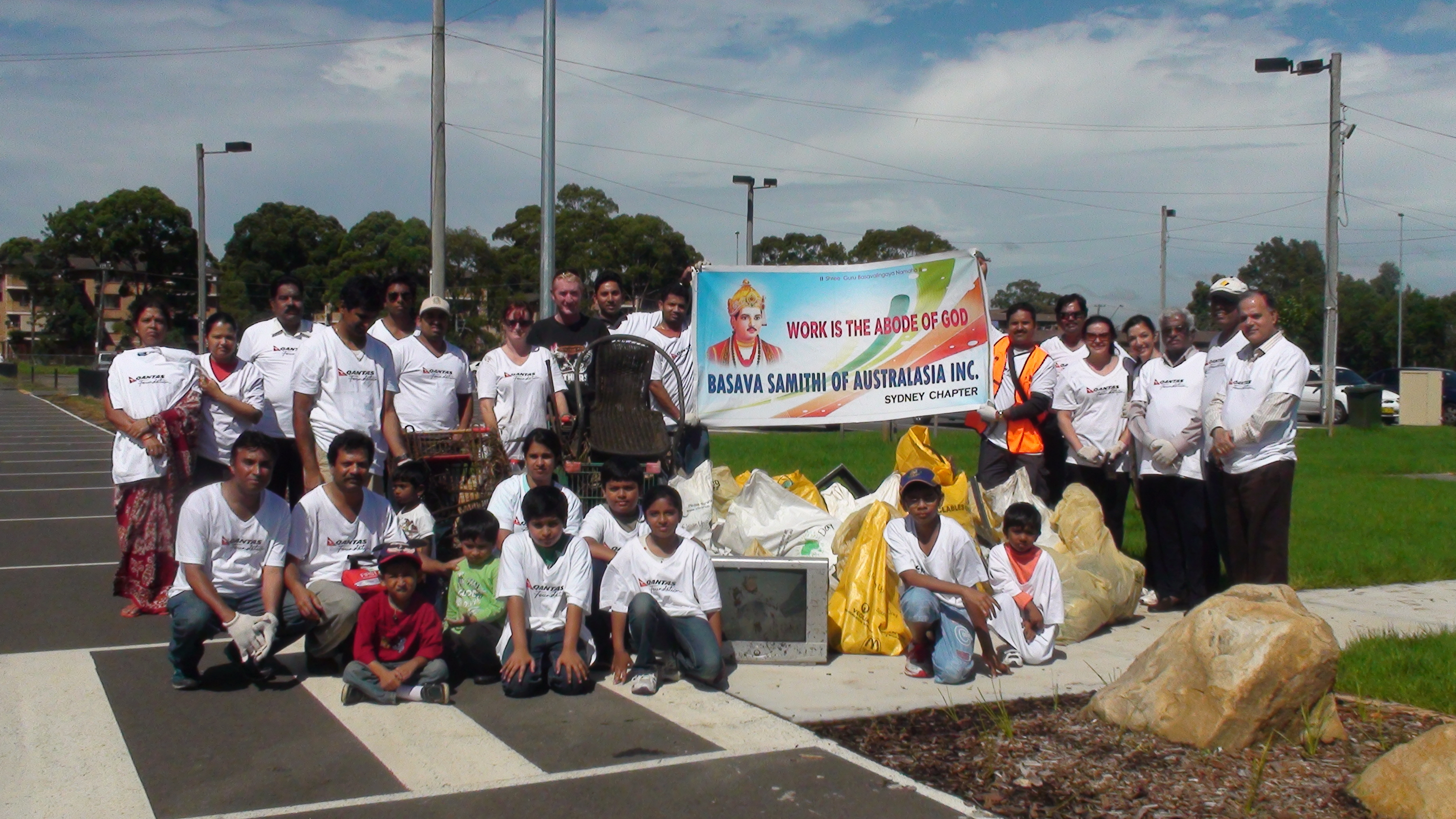
Coming in contact with people who follow Basava philosophy in Sydney 4 years ago, I became a formal member of Basava Samithi, Sydney more than a year ago. I have attended Basava Jayanthi events and taken part in many of their community events, including “Clean Up Australia” day events.

Basava philosophy takes the name from Sree Basaveshwara, who was born in 1134 in a Brahmin family in Karnataka, India, and was later the Prime Minister in the court of King Bijjala. He was also known as Basavanna, which means an elder brother. He died in 1196.

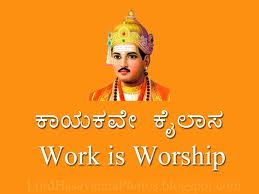
ImageHe was a progressive leader andfought against the dreaded practice of the Caste system, which was based on people’s birth, thus discriminating against people from lower castes. He was also against rituals in Hinduism. He preached eradication of untouchability and establishment of equality of all human beings and genders. His Vachanas (teachings) became an invaluable source of knowledge and were instrumental in spreading social awareness.

There is no doubt that his ideas and thoughts were rational and progressive way back in the twelfth century.

Sree Basava is regarded as one of the pioneers of the concept of Democracy. He created a model Parliament called the “Anubhava Mantapa,” which not only gave equal proportion to men and women, but also had representatives from different socioeconomic backgrounds.

He was a man ahead of his time. He believed that conflict should be resolved through debate and not violence.

He was a statesman who practised what he preached. An example of this was that he ignored societal rules associated with the caste system. He allowed untouchables to have lunch at his residence. He praised and supported the historic marriage of a Brahmin woman and an untouchable man. When King Bijjala asked Basava to agree with the caste system, and agree with the punishment given to the above-mentioned couple (Haralayya and Madhuvaras), Basavanna strongly opposed it, saying that they both followed Basava philosophy, and the rules of the caste system were not applicable to them. Basava chose to quit King’s Court in Kalyana, rather than accept Caste based rules and punishment to the couple.

Basava philosophy is not based on Manu dharma, or its distorted current version, of Hinduism which discriminates people based on their birth. Veerashaivism, based on Basavanna’s teachings has no place for, and fought against the caste system. He spoke against the importance of rites and rituals, fasts, and pilgrimages in the contemporary society. The excesses of polytheism were deplored and the idea of monotheism was encouraged.

Unlike prevalent beliefs in Hinduism, which permit only males to participate in the Upanayana Christening) ceremonies, both men and women from Basava community participate in these ceremonies. This practice was begun by Basavanna himself, who refused to undergo Upanayana, because it discriminated against women. This is another example of practising what he preached.

He was a humble man. Using wit, he said that the cow does not give milk to the one who sits on her back, but she gives milk to the one who squats at her feet. He believed in humility and propagated humility.

He admitted high and low alike into his fold, without discriminating anyone.

“Let them not say, O Lord Whose is he?,

Whose, O whose?,

Let them say rather, “He is ours, He’s ours, He’s ours,

O Lord Kudalasangama say that He is the son of Thy own house”

-Lord Basaveshwara

He declared that engaging in work itself is heaven, thus elevating the meaning and value of labour, without discriminating any particular work or putting any special value on any type of labour.

It will not be out of place to quote what has been said about him.

Mahatma Gandhi said this in 1924:“It has not been possible for me to practise all the precepts of Basaveswara which he taught 800 years ago and which he also practiced… Eradication of untouchability and dignity of labour were among his core precepts. One does not find even shades of casteism in him. Had he lived during our times, he would have been a saint worthy of worship”.

The Speaker of the British Parliament, Rt Hon John Bercowt said 21st of Jan 2013: “It’s amazing and extraordinary that Basaveshwara professed, campaigned and advocated genuine democracy, human rights, gender equality way back in the 11th century even before anyone in United Kingdom had even thought about it”.

In honour of Basava, President of IndiaAbdul Kalam inaugurated Basaveshwara’s statue on April 28, 2003 in the Parliament of India in New Delhi.

Basaveshwara is the first Kannadiga in whose honour a commemorative coin has been minted in recognition of his social reforms. The Prime Minister of India, Dr Manmohan Singh was in Bangalore, the capital of Karnataka to release the coins only a few years ago.

The British Cabinet Minister for culture, media and sports has approved the planning permission to erect the statue of Basaveshwara along the bank of the river Thames at Lambeth in London.

From his thought, actions and teachings, there is no doubt that Lord Basaveshwara was a great philosopher, statesman and a social reformer.               

Today, Basava followers constitute 17% of the total population of 61,130,704 (2011 Census) in Karnataka and are the largest community followed by the Vokkaligas in Karnataka. They are dominant in approx 100 of the 224 assembly seats in Karnataka, and nine Karnataka chief ministers have come from this community. Hon B. D. Jatti, Vice President of India was from this community.

Finally, Basava philosophy is a progressive and philosophy, which is as relevant today as it was 800 years ago. It is  relevant Image

not only in Karnataka but also throughout India.
Clean-Up_Australia-Day-BS1
(I have read and used material from multiple sources including Wikipedia)

Dr Yadu Singh/Sydney/11th April, 2014

www.twitter.com/dryadusingh

http://www.facebook.com/dryadusingh

Indian Community farewells Sydney’s Indian Consul General with class and style!

28th March, 2014

Sydney’s Indian community gave a touching farewell to Indian Consul General in Sydney, Arun Goel and his wife Alka Goel, on Friday, 28th March, 2014. Approx 150 people attended the event, held at the newly opened event Centre, The Grand Marion, Harris Park, NSW. The gathering included Hon David Clarke MLC (Parliamentary Secretary, NSW Gov), Geoff Lee (State MP for Parramatta), Hon John Robertson (State Opposition Leader) and Lord Mayor Clr John Chedid (Mayor of Parramatta).

The organising committee included Balvinder Ruby, Harry Walia, Sukhvinder Rajput, Dr Bharathi Reddy, Thiru Arumugam, Venkata Prasad Ragipani, Padmanabhan Karamil and Dr Yadu Singh, who super-headed the committee in multiple ways.

Dr Yadu Singh and Hemu Negi produced and presented a short video (see above) about Consul General, which was very touching, and was appreciated by everyone. Comments were made in lighter tones about the talent of the leading member of the organising committee, Cardiologist Dr Yadu Singh, who can easily dabble in script writing. Dr Singh conducted the event as the Master of Ceremonies, and conducted the event with his signature spontaneity, flair and flamboyance, thus entertaining and endearing everyone.

Electric Korma band, comprising of 3 Anglo-Saxon guys singing some beautiful Bollywood songs, The band was definitely a novelty. There were few dances too.

Catering was done by Mahidhar Raval of Celebrations Sydney Restaurant. He and his team did a wonderful job.

The owners of The Grand Marion (TGM), Sanjay and Manish Patel of Patel Brothers did not leave any stone unturned in providing the best facilities at the Event centre. Decoration, ambience, facilities including Audio-Video system were all superb. This has established TGM as a landmark event centre.

The most important features of this event were the facts that organisers grouped themselves individually, without using or promoting the names of their associations, and presented the event as an event of the whole community. This was appreciated by all. This was definitely a new trend and an attempt by the organisers to unite the community.

Consul General spoke about the achievements during his tenure in Sydney, and wished for some further work towards unifying the community. He lamented about the division in the community, which is not helping the progress of the community. This was echoed in the comments by Dr Singh too, who said that community associations and community leaders have become a problem in the path of the community’s progress. Dr Singh felt that the word “Community Leader” has become a word of abuse. There is a real need for consolidation of community groups.

A memento was presented on behalf of the community to Consul General, and Bouquets of Flowers were presented to him and his wife. Wishes were made for their future endeavours.

Everyone enjoyed the ambience, fun, Flair, Food and songs.

It was a hugely successful event, delivered beautifully by the community in the honour of popular, down to Earth and helpful Consul General.

———————————————————————————————————————————–

Report was compiled with the inputs from several people who attended the event.

————————————————————————————————————————————

Sydney/7th April, 2014

WESTPAC Bicentennial Foundation with a $100 million fund is a great initiative!


ImageI was very pleased, and felt privileged, to be a part of the launch of a great initiative, Westpac Bicentennial Foundation recently.

I was invited as the one representing Indian Australian community.

Mr Lindsay Maxsted (Westpac Group Chairman), Mrs Gail Kelly (Chief Executive Officer), and the Hon. Julie Bishop MP (Minister for Foreign Affairs) launched WESTPAC Bicentennial Foundation on 2nd April, 2014.


ImageThe announcement was made during a high profile Luncheon at Hyde Park Barracks, in which close to 400 people from Sydney’s “who is who”, including Malcolm Turnbull (Federal Telecommunication Minister) and Barry O’Farrell (Premier of NSW) were present.


This Foundation is a part of Westpac’s upcoming 200th anniversary year in 2017, and is the single largest private education scholarship program in Australia’s history, and will have an exclusive focus on the education and advancement of Australians.


I was not surprised to hear about Westpac’s already very impressive list of benevolent and charity activities, and contributions to our communities.  In 2013, their community contributions totalled $131 million.  This is in addition to The Family of Giving, which encompasses their four existing charitable funds of Westpac Foundation, St George Foundation, Bank of Melbourne Neighbourhood Fund and BankSA & Staff Charitable Fund, which last year distributed more than $4.1 million in grants to support charities and social enterprises. Today’s announcement further builds on their community outreach and support, and will help build Australia’s future leadership capabilities.


Details of the Scholarships


Scholarships and awards will be granted by the Foundation in partnership with Australian universities.  Currently planned scholarships and awards programs are:


  • Future Leaders scholarships will be awarded to new or recent graduates for post-graduate study at a prestigious global institution, with preference given to Australia’s relationship with Asia and Technology & Innovation.


  • Best and Brightest program will provide awards to post-doctoral researchers in Australia’s leading research universities, with focus of helping strengthen Australia’s ties with Asian economies


  • The Young Technologists program will offer 30 to 40 three-year undergraduate scholarships each year, awarded for merit, to encourage diversity.


  • Asian Exchange scholarships will provide the opportunity for Australian undergraduate students to spend a semester at a leading Asian University, with a focus on increasing the number of Asia-literate graduates in Australia.


  • The Community Leaders program will provide 10 awards annually to community leaders to undertake a personal educational opportunity that will have a direct value to their community.


The programs will be developed progressively and are expected to be fully operational by 2017.

Image

I was particularly happy to see that scholarships will be available to Australian students to do a semester in one of the leading Universities of Asia, which will increase the numbers of Asia-literate students in Australia. This is very important because we’re in an Asian Century, and many of our major trading partners are from Asia.

The new Foundation will ensure Private Sector continues to play an important part in shaping Australia’s future and economic prosperity.


With this great initiative from Westpac, I am hopeful that other major Private Institutions in Australia will come forward with their initiatives in this arena.

Dr Yadu Singh/Sydney/7th April, 2014

http://www.twitter.com/dryadusingh

http://www.facebook.com/dryadusingh